🚚 Free Shipping (3-5 Business Days) | 🛡️ 30-Day Money-Back Guarantee | 🏆 6-Month Warranty | ⭐ Trusted by 1000+ Happy Customers
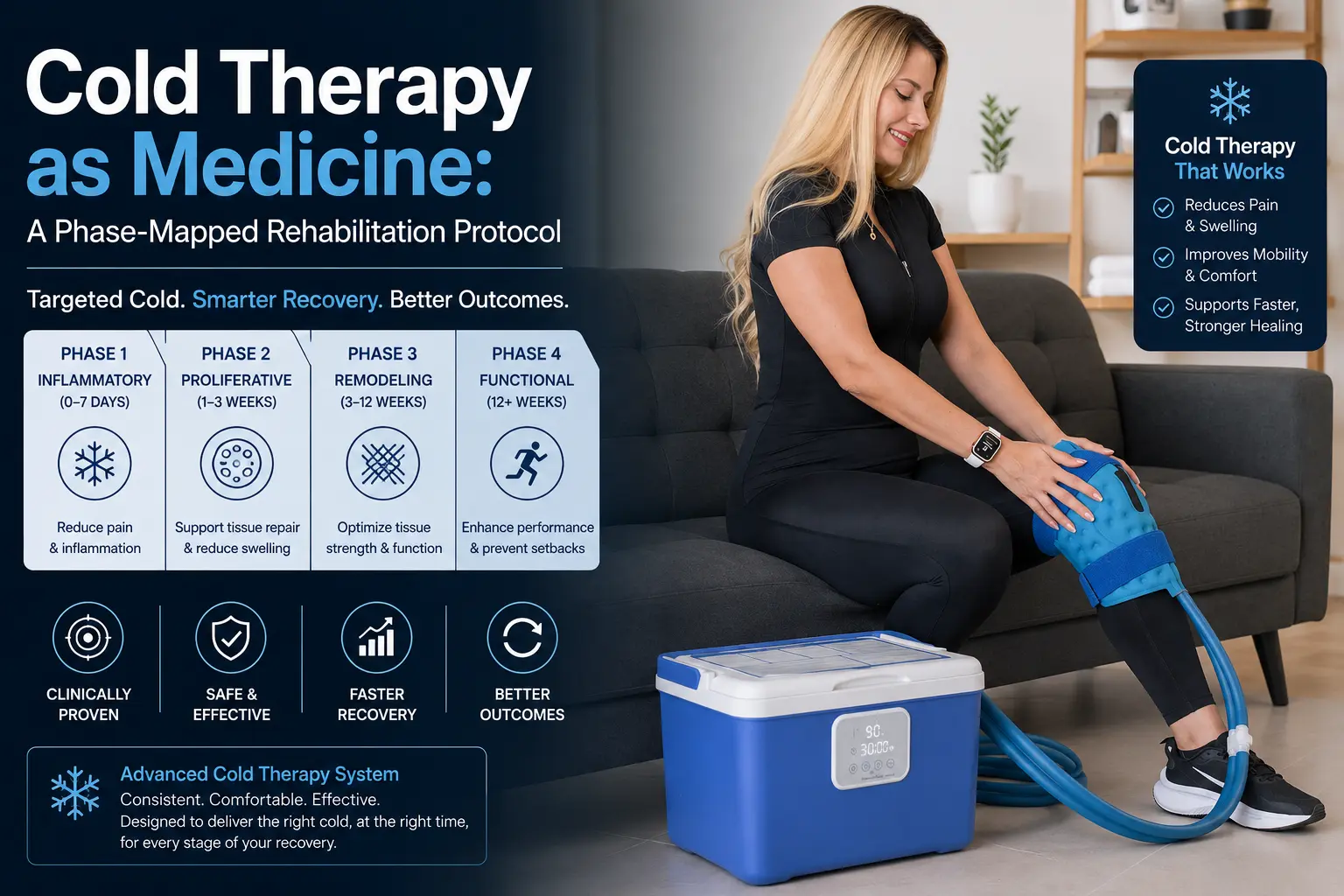

Cold Therapy as Medicine: A Phase-Mapped Rehabilitation Protocol
Cold therapy is everywhere. Every locker room has a tub every athlete posts a plunge. Yet the same week you hear that ice baths are essential for recovery, you read that they block muscle growth. The advice is loud, contradictory and dangerously vague.
This guide cuts through the noise. It treats cold therapy as a dose-dependent medical intervention not a wellness trend. You will get a phase-mapped, temperature-specific operational manual for rehabilitation from acute injury through return to play.
Key Takeaways
Cold therapy is a dose-dependent intervention temperature, duration and timing are the active ingredients not just ‘cold enough.’
The 48-hour post-injury window demands aggressive cold for inflammation control after that taper to avoid blocking tissue remodeling.
Different temperatures produce different biological outcomes very cold water (<5°C) for acute trauma modulation, moderately cold (10-15°C) for DOMS and autonomic recovery and cool (around 12°C) for chronic tendinopathy micro-dosing.
Safety is non-negotiable cardiovascular screening, nerve protection and precise temperature monitoring prevent non-freezing cold injury and systemic stress.
Cold therapy must be periodized around training avoid whole-body immersion within roughly 4 hours pre-strength training and use next-day cold during hypertrophy blocks to preserve muscle adaptation.
The Ice Bath Paradox: Why Better Recovery Feels More Confusing Than Ever
You have seen both headlines in the same week. One study declares cold water immersion accelerates recovery. Another warns it blunts strength gains. Coaches, influencers and even clinicians repeat protocols that boil down to “get cold enough, stay in long enough.” Generic “cold enough” advice is the real danger. It ignores the three variables that determine whether cold therapy helps or harms temperature, duration and timing.
Without precise temperature control, you risk nerve damage. Prolonged exposure to water just above freezing especially in wet conditions can cause non-freezing cold injury, a condition that damages nerves and vasculature long before you feel alarming pain.
Timing discipline is equally critical. Cold applied too aggressively after the first 48 hours suppresses the macrophages that clear debris and drive repair. Periodization around training matters too: whole-body immersion too close to a resistance session can mute the mTOR signaling that underpins hypertrophy.
The missing variable is not more ice, but rather knowing when to choose heat versus cold therapy. It is a protocol that maps temperature, duration and frequency to the biological stage of your injury or training cycle. This guide provides exactly that.
You will learn to modulate inflammation during the acute window, taper cold exposure as remodeling begins and micro-dose for chronic tendinopathy. Periodizing cold around strength work lets you recover without sacrificing gains. Every protocol is built on a specific temperature range, a defined duration and a clear safety guardrail.
Now that the stakes are clear, we start with the physiological mechanisms that make cold therapy a precision tool not a blunt instrument.
The Physiology of Cold: Mechanisms, Temperature and Biological Outcomes
Before you can execute a protocol, you must understand the physiological levers cold therapy actually pulls. Temperature is the active ingredient. Cold therapy works through three primary mechanisms: vasoconstriction, metabolic rate reduction and neural analgesia. Each has distinct temperature thresholds and time windows. The protocols in this guide are built on these mechanisms not on tradition or toughness.
Vasoconstriction, Edema Control and the Vascular Response
When cold contacts tissue, smooth muscle in arterioles contracts, narrowing the vessel lumen. This vasoconstriction reduces blood flow to the area, limiting the volume of fluid that can leak from damaged capillaries into interstitial spaces. The result is a protective pressure gradient that contains edema without shutting down perfusion entirely. Research consistently shows that cold-water immersion produces local reductions in blood flow and cell swelling, which may aid recovery by limiting secondary tissue damage.
One underappreciated fact cryotherapy can create a deep state of vasoconstriction that persists long after cooling stops and local temperatures have rewarmed. This prolonged effect underscores why temperature and duration must be prescribed precisely, not guessed.
Metabolic Rate Reduction and Tissue Protection in Acute Trauma
Lowering local tissue temperature slows enzymatic reactions and reduces cellular oxygen consumption. In the hours after trauma, when blood supply is compromised, this metabolic brake prevents cells from exhausting their energy reserves and dying from hypoxia. That’s why cold is applied most aggressively in the immediate post-injury window: it buys time for the vascular system to repair itself.
Inflammatory Cytokine Attenuation and the 48-Hour Macrophage Window
In the first 48 hours after injury, cold therapy can modulate inflammatory cytokines, dampening the acute inflammatory cascade that drives pain and swelling. This is a targeted modulation, not a shutdown.
After 48 hours, the biological priority shifts. Macrophages arrive to clear debris and orchestrate tissue remodeling. Aggressive cold during this phase can suppress macrophage activity, stalling the very repair processes you need. The evidence is clear: continued aggressive cold after the first 48 hours may interfere with macrophage-driven tissue remodeling.
Expert Tip: Aggressive cold therapy is most beneficial in the first 48 hours post-injury after that, taper frequency to avoid suppressing macrophage-driven tissue remodeling essential for healing.
The tapering strategy is straightforward shift from frequent compression cycles in the acute phase to fewer, milder sessions as healing progresses. This respects the macrophage window and lets the body finish the job.
Gate-Control Analgesia and Nociceptive Modulation
Cold provides pain relief through a separate mechanism gate-control analgesia. Thermal receptors in the skin send fast signals to the spinal cord that can close the “gate” on slower nociceptive pain signals. This is not about reducing inflammation; it is a direct neural effect. Research shows that cryotherapy significantly increases pain threshold and pain tolerance while decreasing nerve conduction velocity.
For a patient who needs to begin range-of-motion exercises early, cold therapy after knee surgery is a powerful tool. It reduces reliance on pharmaceuticals and enables movement when tissue is still fragile.
Temperature as Medicine: Why 12°C and 3°C Produce Different Outcomes
Temperature is not a binary choice. A 12°C bath feels mild, but it’s precisely calibratedfor autonomic recovery without triggering excessive vasoconstriction. At 10–15°C, the primary effect is a gentle parasympathetic shift: heart rate slows, vagal tone increases and systemic inflammation markers can drop without the deep tissue vasoconstriction that risks non-freezing cold injury. This range is ideal for DOMS and chronic tendinopathy pain management.
Below 5°C, the biological response changes dramatically. Vasoconstriction becomes profound, metabolic rate plummets and the analgesic effect intensifies. This is the range reserved for acute trauma modulation, where the goal is to contain edema and limit secondary injury.
The athlete who mistakes the absence of extreme cold shock for ineffectiveness is missing the point. A 12°C bath is not a failed ice bath; it is a different prescription entirely.
Specific temperature ranges are distinct therapeutic prescriptions: 10-15°C targets DOMS and autonomic recovery, while <5°C is reserved for acute trauma modulation, each with distinct biological effects.
With the mechanisms clear, the next step is matching the right modality to the injury stage and therapeutic goal.
Modality Comparison: Ice Baths, Compression, Chambers and Cold Packs
Mechanisms mean nothing without the right delivery system. Here’s how to match the modality to the injury and why “cold enough” is never a clinical number.
Selecting a cold therapy tool is a clinical decision not a convenience grab, so verify you have the correct power adapter for cold therapy before starting. The modality you choose dictates how deep the cold penetrates, how precisely you can hold a target temperature and whether you’re modulating inflammation or just numbing the skin. The table below maps the four primary options against the variables that matter most for rehabilitation.
Side-by-Side Evaluation Table
| Modality | Target Temp Range | Typical Duration | Cost/Access | Best For (Injury Stage) | Evidence Strength | Key Limitation |
|---|---|---|---|---|---|---|
| Ice Bath (Cold Water Immersion) | 5-15°C (41-59°F) | 5-15 min | Low (home tub, ice) | Acute systemic inflammation, DOMS, whole-body recovery | Strong for acute analgesia and edema reduction | Systemic only cannot target a single joint risk of overcooling |
| Localized Cold Compression Wrap | 5-10°C (41-50°F) at skin | 15-30 min per cycle | Moderate (device purchase) | Acute joint sprains, post-surgical edema | Moderate combines vasoconstriction with mechanical compression | Requires proper fit and device access not for deep muscle tears |
| Whole-Body Cryotherapy Chamber | -110 to -140°C (-166 to -220°F) | 2-4 min | High (clinic session) | Sub-acute systemic inflammation, autonomic reset | Moderate; RCTs show reduced inflammatory response but risk of cold burns and respiratory irritation (e6) | Contraindicated for many cardiovascular conditions short exposure limits tissue penetration |
| Topical Cold Packs (Gel/Ice) | 0-10°C (32-50°F) at skin | 10-20 min, barrier required | Very low (reusable packs) | Acute superficial injuries small joint sprains | Low to moderate effective for surface analgesia | Limited depth rapid warming inconsistent temperature maintenance |
How to Choose Based on Body Coverage and Temperature Precision
Superficial joint sprains need a different delivery vehicle than deep muscle tears or whole-system fatigue. A replacement knee wrap draped over a swollen knee provides surface cooling but won’t reach the deeper tissues where cytokine activity is ramping up. A whole-body chamber, by contrast, bathes the entire system in extreme cold for a brief window, useful for systemic inflammation but imprecise for a single knee.
Where Most Recovery Goes Wrong
In practice, one of the most common mistakes I’ve observed especially among athletes is the overuse of ice baths regardless of the recovery phase.
Cold exposure absolutely has its place. But timing and application matter far more than most people realize.
For example, I worked with a runner recovering from a Grade 2 ankle sprain. By day 5, the acute inflammation phase had already passed, yet they continued daily ice baths assuming “colder is better.”
In reality, this approach was counterproductive.
At this stage of healing, the body relies heavily on macrophage activity to support tissue repair and remodeling. Prolonged exposure to extremely low temperatures (like ice baths) can suppress this biological process ultimately slowing recovery instead of accelerating it.
A more effective approach would have been controlled cold compression therapy at a moderate temperature (around 10°C / 50°F).
This would have:
- Managed residual swelling (edema)
- Maintained circulation balance
- Supported tissue repair instead of suppressing it
The key takeaway is simple:
Recovery isn’t about going colder. It’s about applying the right type of cold at the right time.
Product Recommendation: Measure What Matters
One critical mistake in home recovery is relying on guesswork.
“Cold enough” isn’t a clinical standard.
To apply cold therapy effectively, two tools make a significant difference:
- Digital Waterproof Thermometer
Ensures your therapy stays within the optimal therapeutic range (typically 10-15°C / 50-59°F) - Interval Timer
Helps maintain proper session duration (usually 15-20 minutes), preventing overexposure
Together, these tools allow you to:
- Avoid overcooling (which can delay healing)
- Maintain consistent therapy sessions
- Apply cold therapy with clinical-level precision at home
Precision not intensity is what drives better recovery outcomes. Precision demands verification. An ice bath that drifts from 10°C to 15°C over five minutes delivers a different biological signal than one held steady at 8°C.
For compression wraps check that the cooling unit maintains the prescribed range for cold packs use a barrier and a timer to prevent skin damage. Without measurement, you’re guessing at the active ingredient.
Your Personalized Protocol: The Cold Therapy Decision Matrix
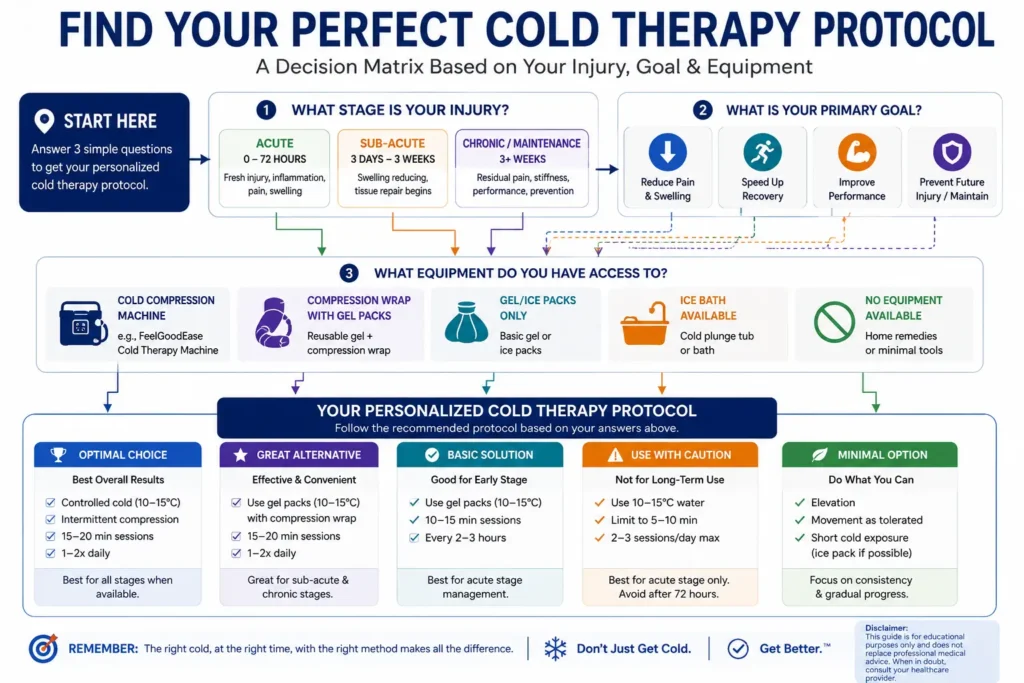
The matrix eliminates guesswork. Answer three diagnostic questions and the path leads to a specific modality, temperature and frequency. No more defaulting to whatever is in the freezer.
Question 1: What Phase Are You In?
Acute (0-48 hrs), Sub-Acute (Days 3-14) or Remodeling (Weeks 2-6+). The phase dictates whether your priority is vasoconstriction to limit edema, gentle modulation of inflammation or supporting tissue remodeling without suppressing repair cells.
Question 2: What Is Your Primary Goal Today?
Analgesia, inflammation reduction or autonomic recovery. Each goal demands different temperatures and durations. Pain relief can be achieved with shorter, milder cold exposure; deep inflammation control requires colder, sustained application; autonomic recovery after heavy training leans on brief, systemic cold to drive a vagal response.
Question 3: What Equipment Do You Have Access To?
Home tub, compression wrap, clinic chamber or basic cold packs. Your available tools, including a replacement hose tube for the machine, narrow the protocol. If you only have cold packs, you won’t be running whole-body sessions, but you can still execute an effective localized protocol with the right timing.
Routed Protocol Examples
Acute + Inflammation + Home Tub
Immersion at 5-10°C for 10 minutes, 3× daily during the first 48 hours. Use a thermometer to hold the lower end of the range if edema is severe.
Sub-Acute + Analgesia + Cold Packs
Apply a gel pack (wrapped in a thin cloth) at 10°C for 15 minutes directly over the painful area, up to 4× daily. Stop if numbness persists.
Remodeling + Autonomic Recovery + Cryo Chamber
A single 2-3 minute session at -110°C post-training, 2-3× per week, to drive parasympathetic rebound without interfering with muscle protein synthesis pathways.
Before you step into any cold protocol, you must clear the safety screen. The next section is your pre-session checklist.
Safety and Contraindications: The Pre-Session Safety Screen
Every protocol in this guide assumes you’ve passed the safety screen. Skip this section and you’re guessing with your nerves and cardiovascular system.
Cold therapy is a dose-dependent medical intervention. The temperature, duration and timing that make it effective also make it dangerous when applied to the wrong person. Contraindications are absolute, not suggestions.
A single overlooked red flag can trigger a vasospastic crisis, a cardiac event or a non-freezing cold injury (NFCI) that persists long after the skin has rewarmed. Research confirms that cryotherapy can create deep vasoconstriction that outlasts the cooling period, predisposing tissue to NFCI even in above-freezing conditions. This is not a wellness hack; it is a clinical tool that demands a pre-session gate.
Cardiovascular and Circulatory Red Flags
Cold immersion drives systemic vasoconstriction. Peripheral blood vessels clamp down, shunting blood centrally and increasing systemic vascular resistance. For a healthy heart, this is a manageable load. For a heart with uncontrolled hypertension, an arrhythmia or a history of syncope, the added cardiac workload can be dangerous.
Peripheral vascular disease already compromises blood flow cold can worsen ischemia. If you have any of these conditions, whole-body immersion requires physician clearance. Do not self-experiment.
Neurological and Dermatological Contraindications
Raynaud’s phenomenon causes exaggerated vasoconstriction in the digits, often triggered by cold. An ice bath can provoke a prolonged, painful vasospastic episode. Peripheral neuropathy, common in diabetes, strips away the protective withdrawal reflex.
You cannot feel when tissue is approaching frostbite or NFCI. Cold urticaria, a rare condition where cold exposure triggers hives and potentially anaphylaxis is an absolute contraindication. Impaired sensation of any kind removes your body’s built-in alarm system.
When Cold Therapy Backfires
Not every body responds to cold therapy the same way and this is where a structured decision approach becomes critical.
I once encountered a case where a patient unknowingly had Raynaud’s phenomenon, a condition that causes blood vessels to overreact to cold exposure.
Following general advice online, they attempted a brief ice bath session for recovery.
Within minutes, they experienced a vasospastic episode their fingers turned pale and numb due to sudden restriction in blood flow. What was intended as recovery quickly became a medical concern.
This situation could have been easily avoided.
A simple pre-treatment checklist or decision matrix like the one outlined above would have flagged:
- Sensitivity to cold exposure
- Risk factors related to circulation
- The need to avoid extreme cold methods like ice baths
Instead, a safer alternative such as controlled cold compression therapy at a moderate temperature would have provided therapeutic benefits without triggering a harmful response.
Open Wounds, Infection Risk and Post-Surgical Incisions
Immersion in cold water with an open wound or a non-sealed surgical incision is contraindicated. The risk of infection and delayed healing outweighs any analgesic benefit. Sealed, sutured incisions may tolerate localized cold compression through a sterile barrier but never direct ice contact. When in doubt, wait until the wound is fully closed and cleared by your surgeon.
The Printable Pre-Session Checklist
This is not optional. Before every cold therapy session run through this checklist.
All six items must be confirmed before you touch cold water or begin treatment.
Print it. Keep it visible. Use it every time.
Pre-Session Screening Checklist
| Screening Item | Pass? |
|---|---|
| No active chest pain or irregular heartbeat in the last 48 hours | ☐ |
| No diagnosis of Raynaud’s, peripheral neuropathy or cold urticaria | ☐ |
| No open wounds or unsealed surgical incisions | ☐ |
| Hydration confirmed (at least 500 ml water within the last hour) | ☐ |
| No alcohol consumption in the last 6 hours | ☐ |
| Medications reviewed (vasodilators, beta-blockers, anticoagulants) | ☐ |
Critical Rule
If any box remains unchecked, skip the session.
Cold therapy can wait. Your nerves, circulation and safety cannot.
Phase-Mapped Protocols: From Acute Trauma to Return-to-Play
Cold therapy is not a one-size-fits-all tool, which is why cold therapy for arthritis pain requires its own tailored protocol. The same immersion that saves an acutely sprained ankle can stall a healing tendon two weeks later. The difference is timing, temperature and intent. This section maps four distinct rehabilitation phases, each with its own protocol, barrier solutions and step-by-step instructions. The goal is not to eliminate inflammation. It’s to modulate it within the right biological window.
Acute Inflammatory Phase (0-48 Hours): Aggressive Modulation
The first 48 hours after injury or surgery are a unique window. Edema and nociceptive pain dominate. Cold’s job here is vasoconstriction and analgesia, applied aggressively but safely. You are not trying to freeze the tissue; you are trying to keep swelling from becoming a secondary injury that restricts oxygen delivery and prolongs recovery.
This phase tolerates the coldest temperatures and highest frequency. Target 10-15°C for localized compression or 10-12°C for brief immersion. Sessions can repeat every 2–3 hours while awake. The key is to start cold and stay consistent but never exceed 20 minutes per session. Longer exposures risk non-freezing cold injury especially in extremities.
One of the most common patterns I’ve seen in athletes is the belief that more icing equals faster recovery.
In reality, the opposite is often true.
A clinician I worked with shared a case involving a competitive athlete recovering from a moderate ankle sprain. The athlete was disciplined but misinformed.
They applied ice aggressively:
- Multiple sessions per day
- Extended durations beyond 20 minutes
- Continued well into the sub-acute phase
At first glance, it looked like they were doing everything right. But progress stalled.
Swelling lingered longer than expected, mobility improvements slowed and their return-to-sport timeline was delayed by several weeks.
Barrier, Uncontrolled Swelling / Solution, Localized Compression Elevation Protocol
Swelling that outpaces cold alone demands mechanical assistance. Use a targeted cold compression wrap set to 10-15°C with intermittent pneumatic cycles. The wrap applies sequential pressure from distal to proximal, physically pushing interstitial fluid toward lymphatic drainage.
Raise the limb above heart level during each 15-minute cycle. Repeat every 2 hours for the first 24 hours, then taper to every 3-4 hours as swelling stabilizes. This protocol is especially effective after ACL reconstruction or severe ankle sprains where gravity-dependent edema pools overnight.
Barrier, Post-Surgical Pain Spikes / Solution, Scheduled Cold Compression Cycles
Pain spikes often coincide with medication troughs and early mobilization attempts. Schedule 15-20 minute cold compression sessions every 2-3 hours while awake, aligning them with analgesic windows. For example, if pain medication peaks at 90 minutes post-dose, start a cold session 30 minutes before the expected trough to blunt the spike. This timed overlay reduces breakthrough pain without increasing narcotic reliance. Use a digital timer. Do not rely on sensation numbness can mask over-cooling.
Step-by-Step Home Immersion for Acute Injury
- Fill a tub or large container with cold water. Verify temperature is below 15°C with a digital thermometer for acute injuries, aim for 10-12°C.
- Enter at 15°C and lower incrementally over 2-3 minutes by adding ice or cold packs. Never plunge directly into sub-10°C water.
- Wear thin neoprene gloves and socks to protect fingers and toes from non-freezing cold injury.
- Hydrate with 500ml of water before and after immersion to support circulatory stability.
- Immerse for 10 minutes. Monitor heart rate; if it spikes or becomes irregular, exit immediately.
- Exit slowly. Do not take a hot shower for at least 30 minutes. Rapid vasodilation can cause rebound swelling and orthostatic hypotension.
Sub-Acute Repair Phase (Days 3-14): Controlled Transition
After 48 hours, the inflammatory window closes. Macrophages arrive to clear debris and orchestrate tissue remodeling. Aggressive cold now becomes a liability. Evidence indicates that cold water immersion can attenuate hypertrophy and that prolonged cold after the first 48 hours may suppress macrophage-driven repair. The protocol must shift from suppression to selective modulation.
Tapering Cold Frequency to Protect Macrophage Activity
Reduce sessions from 3× daily to 1-2× daily. Raise target temperatures toward 10-15°C for immersion or use localized cold packs at 12-15°C. Never apply aggressive cold after 48 hours without a deliberate taper. If you continue icing an injury as if it were day one, you risk stalling the very cells that rebuild tissue. The taper is not optional: it’s a biological requirement.
Introducing Contrast Therapy
If swelling is resolving but stiffness persists, contrast therapy can restore mobility without re-aggravating inflammation. Alternate 3-4 minutes of warm water (38-40°C) with 1 minute of cold (10-15°C). Repeat for 3 cycles. End on cold if any residual inflammation is present; end on warm if your primary goal is joint mobility and tissue extensibility.
Practical Contrast Therapy at Home
For those looking to move beyond basic icing, contrast therapy offers a powerful upgrade without the need for expensive or impractical setups.
A dual-basin system or shower-attachment contrast setup provides a simple, accessible way to alternate between cold and warm exposure at home.
Temperature Adjustments for Swelling vs. Pain
Teach yourself to read morning versus evening symptoms. Morning stiffness with minimal swelling often responds better to a brief warm-up followed by a short cold session at 12°C. Evening swelling after a day of loading calls for a 10-minute localized cold application at 10-12°C with elevation. This simple modulation prevents over-treatment and keeps the protocol aligned with the tissue’s daily cycle.
Remodeling and Return-to-Activity Phase (Weeks 2-6+): Integration
As loading progresses, cold’s role shifts again. It must not mask pain that signals tissue overload. The protocol now serves to manage residual soreness while protecting the quality of strength and power work.
Coordinating Cold with Range-of-Motion and Loading Milestones
Cold should never be used to numb a joint before loading. If a patient cannot distinguish therapeutic soreness from sharp, nociceptive pain after a cold session, they are not ready for that loading progression. Apply cold only after loading sessions, not before and keep temperatures at 12-15°C for no more than 10 minutes. This preserves the sensory feedback loop that guides safe progression.
Barrier, Delayed Return-to-Play / Solution, Phase-Appropriate Cold Scheduling
Whole-body cryotherapy or ice baths within 4 hours before resistance training or plyometric sessions may reduce eccentric force production and motor unit activation. Research consistently shows that post-exercise cold immersion can blunt hypertrophy. Schedule any cold exposure for the evening after training or on rest days. Never let cold compromise the quality of a strength session.
The Surgery-to-Sport Bridge Window
The transition from clinical PT discharge to full athletic participation is where protocols often collapse. Athletes either abandon cold entirely or cling to daily ice baths out of fear. A sample weekly schedule for this bridge window:
- Monday: 10-minute localized cold (12°C) after morning mobility work no cold before afternoon strength session.
- Wednesday: Contrast therapy (3 cycles, end on warm) if stiffness is present; otherwise, skip.
- Friday: No cold before plyometric or agility drills. Optional 5-minute cold pack post-session if swelling flares.
- Saturday: Full rest or light active recovery; use a 10-minute cold immersion at 15°C only if soreness is limiting daily function.
Taper cold frequency week by week as sport-specific drills intensify. The goal is to wean the tissue off external analgesia so it can self-regulate.
Chronic Tendinopathy and Overuse: The Micro-Dosing Approach
Overuse injuries demand a different logic. Weekly extreme plunges do not help a stubborn patellar tendon. Instead, use 3-5 minute localized cold applications at 12°C, 3-4 times daily. This micro-dosing modulates pain without suppressing the adaptive collagen synthesis that tendons need to remodel.
Expert Tip: Precision Cold for Overuse Injuries
When dealing with overuse injuries, more cold is not better smarter application is.
Instead of long or aggressive icing sessions, a micro-dosing approach delivers better outcomes without interfering with tissue repair.
The Micro-Dose Protocol
- Temperature: ~12°C (53-55°F)
- Duration: 3-5 minutes per session
- Frequency: 3-4 times per day
- Application: Localized (targeted area only)
Step-by-step: Apply a targeted compression wrap or cold pack directly to the tendon. Set a timer for 5 minutes. Remove promptly and allow full rewarming. Wait at least 20 minutes before reapplication. Never stack sessions back-to-back; the rewarming interval is part of the protocol.
The protocols are phase-mapped, but the hardest gap is the one between clinical discharge and full sport. The next section bridges it.
The gap between “cleared for activity” and actually performing is where most athletes lose protocol precision. The next section closes that gap.
The Surgery-to-Sport Bridge: Integrating Cold Therapy with Physical Therapy Milestones
When the structured PT environment disappears, so does the cold therapy scaffolding. Supervised cryotherapy units, timed sessions and clinician feedback vanish. Home protocols feel less official. Athletes often default to one of two extremes abandoning cold entirely or substituting aggressive, unstructured plunges. The daily ice bath becomes a badge of toughness, not a targeted intervention.
When Cold Becomes a Crutch
A pattern I’ve repeatedly seen especially after athletes are discharged from structured rehab is the shift from guided recovery protocols to unsupervised daily ice baths.
At first, it feels productive.
The athlete experiences temporary relief, reduced soreness and a sense of “doing something” for recovery. So they continue… daily.
But over time, progress stalls.
In one case, an athlete recovering from a lower limb injury replaced their structured cold therapy plan with routine full-body ice baths.
Within weeks:
- Strength gains plateaued
- Muscle adaptation slowed
- Recovery markers stopped improving
They had unknowingly developed cold habituation where the body becomes less responsive to repeated cold exposure while also suppressing the very signals needed for adaptation and tissue strengthening.
Mapping Cold Sessions to PT Progressions
Cold therapy after discharge must be re-prescribed as a PT-aligned tool not a standalone recovery habit. Every session should answer one question: what am I modulating today? The answer changes as you move through range-of-motion work, loading and plyometrics. The following three phases map cold directly to your PT milestones.
Range-of-Motion Restoration
Early after discharge, the priority is restoring pain-free movement. Localized cold (gel packs, compression wraps) supports this without the systemic fatigue of full immersion. Apply cold to the target area for 10 to 15 minutes before mobility work to reduce nociceptive input and ease into stretches.
Avoid whole-body immersion here. It can blunt the autonomic drive needed for active movement.
Loading Progression
As loading begins, cold shifts to a post-session tool. Use cold after resistance sessions to manage soreness and modulate inflammation. Never use it before a session that demands maximal motor unit recruitment. Pre-loading cold reduces neural drive and can compromise force output.
An immersion of roughly 10 minutes at around 10-15°C within 30 minutes post-loading is sufficient. Research indicates that frequent post-exercise cold water immersion can attenuate hypertrophy gains, so reserve it for sessions that produce significant soreness, not every routine lift.
Plyometrics and Return-to-Play
When plyometrics and sport-specific drills enter the program, whole-body immersion becomes a recovery tool only. Reserve it for post-session use to reduce edema and muscle soreness.
Never use cold immersion as a pre-session primer during this phase. It dampens the reactive strength and proprioceptive sharpness needed for explosive work.
A short immersion of 5-10 minutes at around 10-12°C post-session is the ceiling.
Avoiding Dependency: When Cold Becomes a Crutch
Pain scores should trend downward week-over-week. If pain returns to baseline within 30 minutes of every cold session, you are masking a loading error, not supporting adaptation.
This is cold habituation, a pattern where the analgesic effect becomes a crutch and the underlying tissue issue goes unaddressed.
Set objective weaning criteria reduce cold frequency by one session per week when pain scores drop below 3 out of 10 at rest and swelling is absent for 72 hours.
If pain rebounds, step back and reassess loading, not cold.
Transitioning From Cold to Active Recovery Modalities
Shift to heat, blood-flow restriction or active movement-based recovery when three criteria are met swelling absent for 72+ hours, pain predominantly muscular (not joint or ligamentous) and loading capacity increasing week-over-week without inflammatory rebound.
At this point, cold has done its job.
Replace it with modalities that promote tissue remodeling and blood flow, not vasoconstriction.
Cold therapy doesn’t exist in a vacuum. It interacts with your training. The next section resolves the hypertrophy debate head-on.
Cold Therapy and Resistance Training: Resolving the Hypertrophy Debate
The hypertrophy debate isn’t a yes/no question: it’s a timing and periodization problem. Here’s how to schedule cold so it supports recovery without stealing your gains.
What the Research Actually Says About Cold and Muscle Adaptation
A systematic review and meta-analysis confirms that post-exercise cold water immersion can attenuate resistance training-induced hypertrophy. Gains in muscle size are smaller compared to active or passive control conditions. But the effect is dose- and timing-dependent not absolute. The real mistake is treating this finding as a blanket ban on cold therapy.
Acute recovery and long-term adaptation are distinct phases with different biological priorities. In the hours after training, cold reduces edema and nociceptive signaling, which can be valuable for an athlete who needs to perform again quickly. Over weeks and months, however, the same cold exposure may blunt the signaling cascades, particularly mTOR, that drive muscle protein synthesis and fiber growth. The key is to match the protocol to the goal, not to abandon a powerful tool because it’s been misapplied.
The 4-Hour Pre-Training Rule
The 4-hour pre-training rule is non-negotiable. Avoid whole-body cryotherapy or ice baths within four hours before resistance training. Cold exposure immediately prior to loading can reduce eccentric force production and motor unit activation. You walk into the session with a blunted neuromuscular drive, which compromises the very stimulus you need for adaptation.
If you must use cold on a training day, schedule it for after the session or, at minimum, allow a full four-hour buffer. This rule holds regardless of whether you’re in a hypertrophy, strength or rehabilitation block.
Post-Training Timing: Same-Day vs. Next-Day Cold Application
The decision to apply cold immediately after training or wait until the next day is where most athletes get it wrong. The choice pivots on whether your primary objective is acute analgesia and readiness or long-term tissue adaptation.
Same-Day (Immediate)
Immediate post-training cold prioritizes pain relief and rapid recovery of perceived readiness. It’s appropriate during competition peaking, when you need to train or compete again within 24 hours or for managing acute trauma where swelling control is urgent. But you must accept the trade-off same-day cold can interfere with the early mTOR signaling that initiates muscle protein synthesis. If you’re in a hypertrophy block and chasing every gram of lean mass, this is not your default.
Next-Day (Delayed)
Next-day cold allows the inflammatory and adaptive cascade to initiate. Macrophage activity, cytokine signaling and the early rise in mTOR all get their window before you apply cold to modulate residual soreness and stiffness. This timing preserves the anabolic signal while still reducing DOMS and improving range of motion for the next session. Next-day cold is the default for hypertrophy blocks. It’s the protocol that respects both recovery and growth.
When Cold Therapy Kills Strength Gains
A common mistake I’ve seen especially during hypertrophy phases is using ice baths immediately after training.
One athlete I worked with was in a dedicated muscle-building block. Training intensity was high, nutrition was on point and recovery habits seemed disciplined.
After every session, they would jump straight into an ice bath.
At first, it felt effective:
- Reduced soreness
- Faster perceived recovery
- Less post-workout discomfort
But after a few weeks, something was off.
- Strength gains plateaued.
- Muscle growth slowed.
- Performance improvements stalled.
Periodizing Cold Exposure Around Training Blocks
Cold therapy isn’t a fixed habit; it’s a variable you adjust across mesocycles. During a hypertrophy block, limit whole-body cold to once weekly or use localized applications only, targeting a specific joint or muscle without systemic cooling.
In a strength or power peaking phase, deploy cold strategically after competition or after a high-volume deload session, when acute recovery matters more than chronic adaptation. For rehabilitation return, prioritize tissue modulation over adaptation maximization.
The goal is to manage edema and pain without suppressing the cellular cleanup and remodeling that rebuild durable tissue. Taper cold frequency as loading tolerance improves and never let a protocol become a crutch.
Cold therapy also recalibrates your nervous system, a dimension most protocols ignore. The next section puts autonomic reset at the center.
The Nervous System Recalibration Framework
Cold therapy isn’t just about inflammation; it’s a direct line to your autonomic nervous system. Master this and you turn a physical stressor into a neural reset.
Cold Therapy as a Neuroplasticity Tool
Most people think of cold therapy as a simple way to reduce inflammation.
That’s outdated.
Modern research reframes cold exposure as a neurophysiological intervention one that directly influences how the brain and nervous system process pain.
The Science: Pain Is Not Just in the Tissue
Pain is not purely a local issue. It’s a signal processed and modulated by the nervous system.
Cold therapy interacts with this system through mechanisms like:
1. Gate-Control Analgesia
Cold stimulation activates sensory nerve fibers that can “close the gate” to pain signals traveling to the brain.
In simple terms:
Cold doesn’t just reduce pain it can override it at the spinal level.
2. Autonomic Nervous System Reset
Cold exposure shifts the body toward a parasympathetic (recovery) state after stress.
This helps:
- Lower perceived pain intensity
- Reduce stress-driven inflammation
- Improve recovery signaling
3. Neuroplastic Adaptation
Repeated, controlled cold exposure can train the nervous system to become less reactive to pain.
Over time, this leads to:
- Better control over chronic discomfort
- Improved pain tolerance
- Reduced hypersensitivity
Cold as Autonomic Reset, Not Just Inflammation Reduction
Chronic pain states after injury often lock the nervous system in sympathetic overdrive. The body stays braced, heart rate raised, cortisol patterns disrupted. Repeated, controlled cold exposure can break that loop. Each immersion becomes a training session for autonomic recalibration, teaching the brain to shift from fight-or-flight toward a parasympathetic-dominant state.
This is not the same as numbing tissue. Cold also gates nociceptive input at the spinal cord. Research on gate-control analgesia shows that cryotherapy significantly increases pain threshold and pain tolerance while decreasing nerve conduction velocity.
In plain terms, cold turns down the volume on pain signals while largely preserving the macrophage activity and cytokine signaling that drive tissue repair. For a patient with centralized sensitization, that means a window to move, load and retrain without the brain interpreting every sensation as threat.
The Gradual Descent Protocol and Vagal Response
Plunging straight into frigid water triggers a sympathetic storm: gasp reflex, hyperventilation, hypocapnia. Carbon dioxide drops, cerebral blood flow constricts and the vagal brake disengages. That is the opposite of recalibration.
Enter at around 15°C. After 30 seconds, lower the temperature to roughly 12°C. Another 60 seconds, drop to about 10°C. The 2- to 3-minute descent lets the vagus nerve stay online. You avoid the panic-driven breath stack and preserve CO₂ balance.
This is not a comfort measure. It is an autonomic modulation technique that keeps the nervous system in a trainable zone.
Box Breathing for Immersion (4-4-4-4 Nasal Protocol)
The first 90 seconds are where most people lose control. Use a structured breath pattern to override the gasp reflex and stabilize heart rate variability.
- On initial contact, nasal inhale for roughly 4 seconds.
- Hold full for roughly 4 seconds.
- Nasal exhale for roughly 4 seconds.
- Hold empty for roughly 4 seconds.
- Repeat without pause for the first 90 seconds or so.
Nasal-only breathing forces diaphragmatic engagement and preserves vagal tone. The box cadence prevents the shallow, rapid breathing that drives hypocapnia. After about 90 seconds, you can shift to a slower, natural rhythm. The goal is not to endure; it is to stay neuroregulated.
The Sleep Buffer Zone
Cold exposure creates a core temperature rebound. After you exit the water, vasoconstriction reverses and your body shunts warm blood back to the periphery. Core temperature can overshoot, delaying sleep onset and fragmenting deep sleep architecture.
The 2-hour pre-sleep buffer is non-negotiable. Finish any whole-body cold protocol at least two hours before you plan to sleep. If you ignore this, you may feel a sedative-like drowsiness immediately after, but the subsequent temperature spike will wake you or degrade slow-wave sleep. Recovery depends on sleep quality. Protect it.
Passive Rewarming for Metabolic Afterburn
The moment you step out, resist the urge to jump into a hot shower. Towel dry, put on dry clothes and let your body rewarm itself for 10 to 15 minutes. Shivering thermogenesis activates brown adipose tissue and generates a metabolic afterburn that extends the session’s benefit. Gradual vasodilation also prevents the lightheadedness that can follow rapid external heating.
A hot shower right after cold immersion short-circuits this process. It blunts the metabolic signal and can cause a sudden blood pressure drop. Let the body do the work. That passive window is part of the protocol, not dead time.
To execute these protocols safely at home, you need the right setup. The next section is your DIY clinical-grade blueprint.
DIY Clinical-Grade Home Setup: Blueprints, Equipment and Ratios
Clinical precision doesn’t require a clinic. With the right equipment and ratios, your home setup can match professional standards. Safely. The home cold therapy station is built on three pillars: precise temperature control, targeted compression and consistent session logging. This is your protocol for clinical-grade precision at home.
Core Equipment for Precision and Safety
A digital waterproof thermometer is non-negotiable. Guessing temperature by feel leads to under-dosing or dangerous overcooling. Never guess temperature. A probe accurate to 0.1°C lets you hit exact targets, session after session. Without it, you are not following a protocol; you are taking a cold bath.
Your immersion vessel matters. An insulated collapsible ice bath tub maintains temperature longer and uses less ice. A chest freezer conversion offers superior insulation but demands safety modifications. Either way, insulation stabilizes the thermal environment.
Targeted cold compression wraps bridge full-body immersion and localized care. Gel pack inserts with adjustable straps apply cold and pressure directly to a joint or muscle belly, modulating edema and nociceptive signaling without systemic cooling. For acute-phase use, this is the safer starting point.
A wearable heart rate monitor adds autonomic feedback. Cold exposure drives vagal activation; tracking heart rate and HRV tells you whether you are achieving a parasympathetic shift or just stressing the system. This data prevents overdoing intensity.
A recovery tracking log closes the loop. Without logging temperature, duration, pain scores and swelling markers, you cannot correlate cold therapy with progress. The next section provides a 14-day log; here, you just need the tool.
Build a Clinical-Grade Cold Therapy Setup at Home
If you want real results from cold therapy, guesswork isn’t enough. The difference between basic recovery and clinical-grade outcomes comes down to one thing precision.
A well-designed home setup allows you to control temperature, timing and physiological response just like a professional rehab environment.
The Core Setup
To achieve this, five tools form the foundation:
1. Digital Waterproof Thermometer
Ensures your cold exposure stays within the therapeutic range (10-15°C / 50-59°F)
No more guessing what “cold enough” means.
2. Insulated Tub or Converted Chest Freezer
Provides a stable cold environment for immersion therapy
- Better temperature retention
- More consistent sessions
- Scalable for full-body or limb-specific use
3. Targeted Cold Compression Wrap
Delivers localized cooling + compression, which is critical for:
- Swelling reduction
- Joint recovery
- Post-injury rehabilitation
4. Wearable Heart Rate Monitor
Tracks physiological response to cold exposure
Helps you:
- Avoid overstressing the system
- Monitor recovery readiness
- Stay within safe limits
5. Recovery Tracking Log
Turns recovery into a measurable system
Track:
- Performance changes
- Temperature
- Duration
- Frequency
- Pain levels
Water-to-Ice Ratios for Target Temperature Ranges
For a standard 100-liter home tub, start with these baselines: 15°C requires 2-3 kg of ice; 12°C needs 4-5 kg and sub-5°C demands 8-10 kg, pre-chilled water and minimal ambient exposure. These ratios assume tap water at roughly 20°C and a moderately insulated tub. They are starting points only. Ambient heat, tub insulation and pre-chill time shift the curve. Always verify with a thermometer.
The Moment Precision Changes Everything
The first time you stop guessing and actually measure your cold exposure the difference is immediate. I’ve seen this repeatedly with athletes transitioning from casual ice baths to structured protocols.
One athlete had been relying on “feel”:
- Water that was “as cold as possible”
- No temperature tracking
- Inconsistent session outcomes
Some days the cold felt manageable. Other days, it triggered excessive shivering, discomfort and poor post-session recovery.
Then we introduced a simple change a digital thermometer targeting exactly ~12°C (53-55°F).
Building a Compression Wrap Station
Compression adds mechanical pressure to cold enhancing edema reduction and providing a localized, dose-controlled intervention. You can build this station at two levels.
Consumer-Grade Wrap Setup
Gel pack inserts with adjustable straps are the entry point. Keep multiple gel packs in the freezer so you can rotate them without waiting. Wrap the pack snugly around the target area, using the straps to apply moderate compression enough to feel firm but not restrict circulation. This setup works well for ankle sprains, knee effusions and muscle strains in the acute inflammatory window.
Clinical-Style Pump Setup
Pneumatic compression sleeves with integrated cooling reservoirs raise the protocol. These devices circulate chilled water through a sleeve while inflating chambers in a sequential pattern, mimicking manual lymphatic drainage. The combination of cold and intermittent pneumatic compression drives fluid out of interstitial spaces more effectively than static cold alone. This is the standard for post-operative knee rehabilitation and severe edema.
If you are managing a surgical recovery, this investment pays for itself in reduced swelling days.
Chest Freezer Conversions and Safety Modifications
A chest freezer conversion is cost-effective but not plug-and-play. You are modifying an electrical appliance for human immersion. Safety modifications are mandatory.
Install a thermostat override controller that cuts power when the water reaches your target temperature, preventing freezing. Plug the freezer into a GFCI-protected outlet to guard against electrical shock. Line the interior with a food-grade liner to prevent direct skin contact with metal walls, which can cause cold burns.
If children are present, add a lid safety lock that prevents accidental entrapment. Place a sturdy step-stool beside the freezer for safe entry and exit slipping while climbing out is a preventable injury.
Session Workflow: From Setup to Log Entry
A consistent workflow eliminates variables that corrupt your data. Follow this checklist every session:
- Verify tub and equipment cleanliness. Contaminants introduce infection risk, especially with open wounds or post-surgical incisions.
- Set your thermometer target and start a timer. Know your intended temperature and duration before you enter the water.
- Position your heart rate monitor and have hydration within reach. Monitoring autonomic response and staying hydrated support safe, effective sessions.
- Complete the session. Stay within your prescribed time do not extend it to prove toughness.
- Record immediately in your recovery log. Note actual temperature, duration, heart rate response, subjective pain and swelling scores and any unusual sensations. Memory fades; data sticks.
A precise setup is worthless without tracking. The next section gives you the 14-day log that turns subjective cold exposure into objective recovery data.
Why Precision Equipment Makes the Difference
Recovery improves when every session is consistent. Measuring water temperature, timing each session and using targeted compression remove the guesswork that often limits results. Instead of relying on ice that quickly warms or temperatures that vary from session to session, a controlled cold therapy system helps deliver the same therapeutic conditions every time. That consistency makes it easier to follow a phase-based rehabilitation plan and monitor progress with confidence.
Tracking Progress: The 14-Day Rehabilitation Cold Log
If you don’t log it, you’re guessing. A 14-day cold log turns subjective sensation into a data set you can act on. The previous section gave you the physical setup this section gives you the feedback loop that keeps your protocol honest. Without it, even a perfectly built ice bath becomes a ritual not a medical tool.
Turn Recovery Into Measurable Data
Most people rely on guesswork when it comes to recovery.
This log transforms cold therapy into a structured, trackable protocol so you can adjust based on real results, not assumptions.
Use this for 14 consecutive days to identify what actually works for your body.
How to Use
Before each session:
- Define your goal (pain relief, swelling reduction, recovery, etc.)
- Apply cold therapy with measured precision
- Record outcomes immediately after
14-Day Cold Therapy Log Template
| Day | Temp (°C) | Duration (min) | Goal Tag | Pain Score (1-10) | Swelling (1-10) | ROM (Range of Motion) | Notes |
|---|---|---|---|---|---|---|---|
| 1 | |||||||
| 2 | |||||||
| 3 | |||||||
| 4 | |||||||
| 5 | |||||||
| 6 | |||||||
| 7 | |||||||
| 8 | |||||||
| 9 | |||||||
| 10 | |||||||
| 11 | |||||||
| 12 | |||||||
| 13 | |||||||
| 14 |
Field Definitions
- Notes: Shivering, comfort, response, timing, etc.
- Temp (°C): Exact measured temperature (no guessing)
- Duration: Session length (ideally 3-20 mins depending on protocol)
- Goal Tag: Pain / Swelling / Recovery / Performance
- Pain Score: 1 (none) → 10 (severe)
- Swelling: 1 (none) → 10 (significant)
- ROM: Mobility level (e.g., limited / moderate / full or % scale)
Why Objective Tracking Prevents Protocol Drift
Subjective “feeling better” is a poor proxy for tissue healing. Cold therapy can produce powerful analgesia that masks nociceptive input while the underlying injury still needs careful loading. Without logging, patients gradually increase duration or lower temperatures as a proxy for progress. This is protocol drift and it often leads to non-freezing cold injury or suppressed macrophage activity during the remodeling window.
The log is your guardrail. It forces you to ask: am I modulating inflammation or am I just chasing numbness? A daily record of exact variables creates a feedback loop that prevents the drift toward longer, colder sessions driven by psychological comfort rather than physiological need.
Daily Variables to Record
Record these variables immediately after each session, while the data is fresh:
- Date and injury phase (acute, subacute, remodeling)
- Modality (ice bath, cold plunge, localized ice pack, contrast therapy)
- Exact temperature (in degrees, not “cold” or “really cold”)
- Exact duration (minutes and seconds)
- Pre-session goal tag: analgesia, inflammation reduction or autonomic recovery
- Pain score 0-10 (at rest and with movement)
- Swelling rating (mild, moderate, severe or a circumferential measurement)
- Range of motion (ROM) measurement (degrees or a functional benchmark)
- Notes on sleep quality and any training interaction that day
This template turns a vague ritual into a precise intervention. The goal tag is especially critical: it anchors your session in a specific physiological target, preventing the default drift toward analgesia when you actually need to preserve some inflammatory signaling.
Correlating Data with Functional Milestones
Look for week-over-week trends, not session-to-session miracles. If pain scores drop steadily but ROM stalls, the protocol may be masking rather than supporting recovery. That pattern suggests you are achieving analgesia without the tissue remodeling that restores function.
Tracking swelling and ROM alongside pain scores distinguishes a genuine reduction in edema from a temporary vasoconstriction effect that wears off in an hour. The log also becomes a communication tool for your clinician. Instead of relying on patient recall (“I think I iced it a few times”), you hand over concrete data that allows precise protocol adjustment: taper frequency, shift goal tags or hold steady.
7-Day Cold Therapy Session Tracker (Printable)
Anchor Every Session With Purpose
This 7-day tracker is designed to make every cold therapy session intentional, measurable and repeatable. The highlighted Goal Tag field ensures each session starts with a clear purpose not guesswork.
Weekly Cold Therapy Log
| Day | Date | Modality | Temp (°C) | Duration (min) | Goal Tag | Pain (1-10) | Swelling (1-10) | ROM | Notes |
|---|---|---|---|---|---|---|---|---|---|
| 1 | ████████████ | ||||||||
| 2 | ████████████ | ||||||||
| 3 | ████████████ | ||||||||
| 4 | ████████████ | ||||||||
| 5 | ████████████ | ||||||||
| 6 | ████████████ | ||||||||
| 7 | ████████████ |
Field Breakdown
- Notes: Shivering, comfort, timing, response, adjustments
- Modality: Ice bath / Cold compression / Contrast / Local icing
- Temp (°C): Always measured (no guessing)
- Duration: Total session time
- Goal Tag (Highlighted):
- Pain Relief
- Swelling Reduction
- Recovery
- Performance
- Pain / Swelling: Scale from 1 (low) → 10 (high)
- ROM: Range of motion (limited / moderate / full or %)
A one-week spread fits on a single page. The shaded goal-tag row sits at the top of each day’s column, forcing you to declare intent before you record outcomes. This simple design turns a notebook into a clinical tool. Print a stack and keep it near your cold therapy station.
Even with perfect tracking, you must know the difference between a normal response and a danger signal. The next section is your post-session response guide.
Warning Signs and Post-Session Response Management
You’ve tracked your sessions. Now you need to know when a session’s aftermath is a warning, not just a response. Cold therapy is a dose-dependent intervention your body’s post-session signals tell you whether the dose was therapeutic or toxic.
Expected Sensations vs. Danger Signals
Cold immersion produces a predictable sequence initial vasoconstriction, numbness, then rewarming erythema. The line between normal adaptation and injury is thin. Learn to read it.
Normal Responses
Controlled numbness that resolves within 15-20 minutes after exiting the cold is expected. Patchy redness (erythema) as blood flow returns and brief shivering during passive rewarming, signal your autonomic system recalibrating. These sensations fade without intervention.
Abnormal Responses
Numbness that persists beyond 30 minutes is not normal. Sustained vasoconstriction that hasn’t released shows up as white or waxy skin on fingers and toes. Nerve irritation often feels like sharp, electric or burning pain. Dizziness or confusion suggests cardiovascular strain. Any of these demands immediate action.
When Warning Signs Get Ignored
One of the biggest mistakes in cold therapy isn’t overuse it’s ignoring early warning signals. I’ve seen this firsthand with a runner who incorporated ice baths into their recovery routine.
During one session, they noticed something unusual:
- Toe numbness lasting over 45 minutes after exiting the bath
Instead of treating it as a red flag, they dismissed it as a normal response to cold. The next day, the situation escalated.
They developed:
- Burning, nerve-like pain in the toes
- Heightened sensitivity
- Discomfort even at normal temperatures
Recognizing Non-Freezing Cold Injury and Nerve Damage
Non-freezing cold injury accumulates with repeated marginal exposures. Vasoconstriction can persist long after local temperatures have rewarmed, leaving peripheral nerves in digits vulnerable to ischemic damage. If tingling evolves into burning or persists into the next day, discontinue all cold therapy for 72 hours and consult a clinician. Do not ‘tough it out.’
Cardiovascular Stress Indicators During Immersion
Full-body immersion triggers a vagal response that can spike heart rate. A sustained elevation of more than 20 beats per minute above your resting rate (a general threshold), chest tightness, visual aura or a sense of impending doom combined with mental confusion are red flags. Terminate the session immediately if these appear.
Smarter Monitoring Meets Controlled Cold Therapy
If you’re serious about safe and effective cold therapy, two things matter most:
Control + Feedback
While wearable tools like a chest-strap heart rate monitor (e.g., Polar H10) help you track your body’s response, they only tell half the story. The real upgrade comes when you combine monitoring with precision-controlled cooling.
The Smarter Setup
1. Heart Rate Monitoring (Awareness)
A chest-strap monitor gives real-time insight into:
- Sudden spikes in stress response
- Overactivation during cold exposure
- Recovery readiness
This helps you detect autonomic overload early especially during full-body immersion.
2. FeelGoodEase Cold Therapy Machine (Control)
Instead of relying on unpredictable methods like ice baths, the FeelGoodEase Cold Therapy Machine provides:
- Stable, controlled temperature delivery
- Targeted cold application (no overexposure)
- Integrated compression for better fluid movement
- Consistent, repeatable sessions
This eliminates the biggest risks of traditional cold therapy:
- Inconsistent results
- Overcooling
- Nerve stress
Emergency Stop and Rewarming Protocols
If any red flag appears, follow this sequence:
- Terminate the session immediately.
- Dry skin thoroughly to stop evaporative cooling.
- Rewarm digits and extremities first using lukewarm (not hot) air or water.
- Never apply direct high-heat sources to numb skin: you cannot feel a burn.
- Seek medical evaluation if symptoms do not normalize within 60 minutes.
Even with perfect execution, questions remain. The FAQ section addresses the most common clinical uncertainties.
We close by returning to the core principle temperature is medicine. The conclusion cements the precision mindset and gives you your first actionable steps.
Conclusion and Medical Disclaimer
Every protocol in this guide rests on one principle. Cold is a prescription not a lifestyle flex. The FAQs you just read all circle back to the same truth. Whether cold helps or harms depends entirely on how you dose it.
Temperature as Medicine: A Recap of Precision Principles
Cold is a dose-dependent intervention where temperature, duration and timing are the active ingredients. Treat it like a drug. The wrong dose at the wrong time can suppress the macrophage activity you need for remodeling, blunt mTOR signaling after hypertrophy work or trigger a non-freezing cold injury you never saw coming. The right dose, applied inside the correct biological window, modulates edema, provides nociceptive analgesia and lets you load tissue sooner without setbacks.
This is why the entire guide is phase-mapped. The acute inflammatory window demands brief, frequent, moderate cold to manage swelling without shutting down cytokine signaling entirely. The subacute phase shifts to contrast therapy and tapered frequency to promote vascular flushing and mobility.
Remodeling and return-to-play phases use cold sparingly, targeted to post-loading analgesia, never as a daily default. Each phase has its own protocol because your tissue’s needs change. Ignore the phase and you’re guessing.
Frequently Asked Questions (FAQs)
For the first 48 hours, target 10-12°C for immersion or 10-15°C for localized compression applied every 2-3 hours for 10-20 minutes. Use a digital thermometer to verify.
Post-exercise cold water immersion can attenuate hypertrophy if used immediately after training. To preserve gains, use next-day cold or avoid whole-body immersion within 4 hours before strength training.
Aggressive cold is most beneficial in the first 48 hours. After that taper frequency and raise temperatures to avoid suppressing macrophage-driven tissue repair essential for healing.
Risks include non-freezing cold injury, cardiovascular stress and nerve damage if temperature and duration aren’t controlled. Contraindications include Raynaud’s, neuropathy and open wounds.
Yes, micro-dose with 3-5 minute localized cold at 12°C, 3-4 times daily to manage pain without blunting collagen synthesis. Allow full rewarming between sessions.
