
🚚 Free Shipping (3-5 Business Days) | 🛡️ 30-Day Money-Back Guarantee | 🏆 6-Month Warranty | ⭐ Trusted by 1000+ Happy Customers
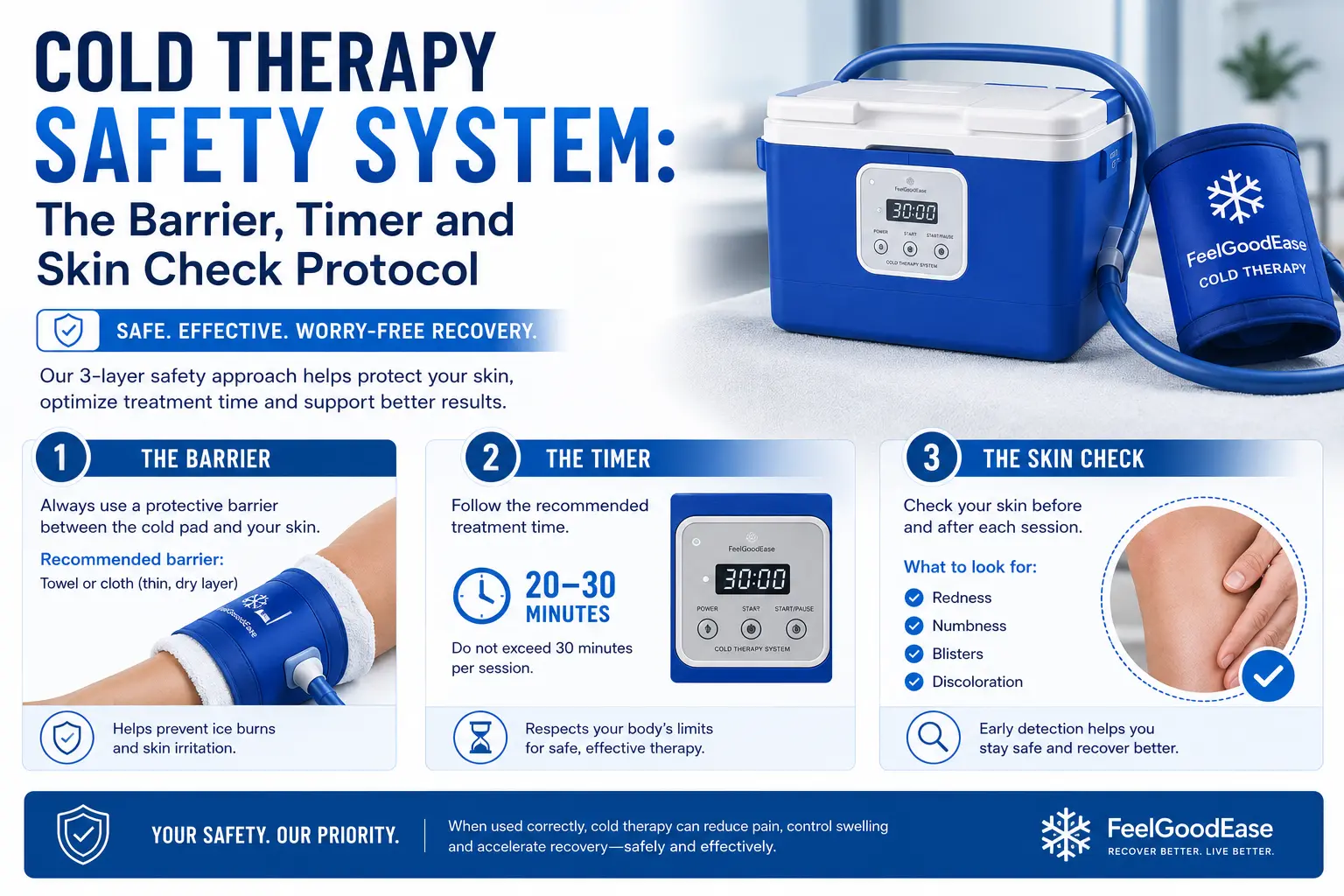

Ice Burn Prevention: A Complete Safety System for Cold Therapy
You ice a swollen ankle expecting relief. Twenty minutes later, the skin is waxy and numb and you’re not sure if that’s normal or the start of a real injury. It’s a quiet anxiety that most icing advice never addresses.
The truth is ice can burn you. Not in a metaphorical sense.
A thermal burn from cold follows the same cellular destruction pathway as a burn from heat. It can progress from a superficial warning sign to full-thickness tissue damage while you assume everything is fine.
This guide replaces guesswork with a clear repeatable safety system so you can use cold therapy confidently without fear.
Key Takeaways
- Ice burns can happen in minutes even with a gel pack. A proper barrier and timer are non-negotiable.
- Numbness is the first warning sign check your skin every 5 minutes.
- A dry cloth at least 1/4 inch thick is the minimum safe barrier. Paper towels are not enough.
- High-risk groups (children, elderly, diabetes, neuropathy) need extra precautions or medical clearance.
- Download the printable safety checklist to make safe icing a habit.
Most people think an ice burn only happens if you fall asleep on an ice pack or use it for hours. That’s the dangerous myth.
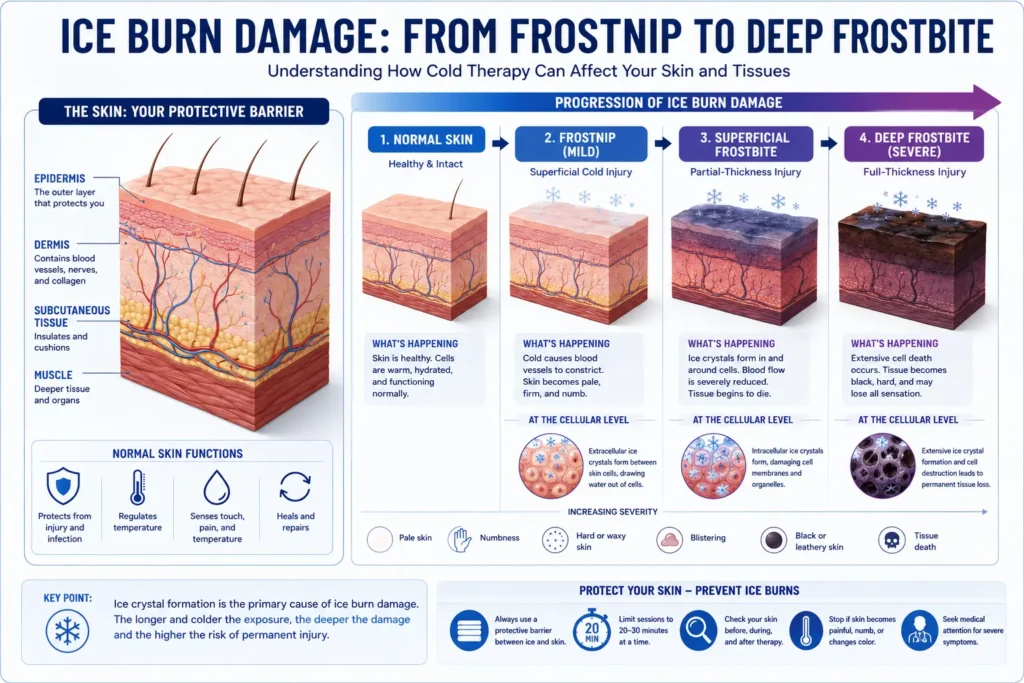
In reality, the damage begins at the skin surface as frostnip (superficial cooling): the area turns pale, numb and tingling. If you ignore that and keep the cold on, it can deepen into superficial frostbite with blisters and grayed skin and eventually into deep frostbite where tissue dies and turns black.
These are not rare, freak accidents. They happen when someone wraps a gel pack in a single paper towel, props their leg up for a show and loses track of time. Or when they ice a post-surgical knee directly over the skin because “the cold feels good” until it doesn’t.
The numbness that sets in after a few minutes isn’t a sign that the ice is working. It’s the first stage of a cold injury.
The standard advice, “use a barrier and don’t ice more than 20 minutes,” is a start but it’s not enough. A thin, damp paper towel offers almost no protection.
A bag of frozen peas conforms to the skin and drops the temperature faster than you’d expect. And if you’re icing an area where sensation is already reduced, you might not feel the warning signs at all.
This guide gives you a complete safety system the right barrier, a reliable timing protocol, a 5-minute skin check routine and a printable checklist that turns these steps into automatic habits. You’ll learn exactly what to look for at each stage, so you can stop icing before a problem starts.
Next, we’ll break down exactly what happens to your skin during an ice burn from the first cellular changes to the visible stages of frostnip, superficial frostbite and deep frostbite. Understanding that progression is what makes prevention stick.
Symptoms and Stages of Ice Burns
Understanding the damage cold can do at a cellular level makes the prevention steps that follow feel urgent not optional. An ice burn isn’t just surface irritation; it’s a thermal injury that follows a predictable, dangerous path. Once you see what’s happening beneath the skin, the 10-20 minute rule and a dry cloth barrier stop feeling like suggestions and start feeling like the only sensible choice.
The Science of Ice Burns: What Happens to Your Skin at a Cellular Level
When you place a cold source against your skin, your body’s first response is vasoconstriction, blood vessels tighten to conserve heat. That’s the therapeutic effect you want for swelling.
But prolonged cold pushes this too far. Blood flow to the area drops sharply, starving the tissue of oxygen and warmth. Skin temperature falls and the water inside and between your cells begins to freeze.
Ice crystals form. They’re sharp, jagged and they puncture cell membranes from the inside. As the tissue freezes, the fluid balance shifts, drawing water out of cells and causing them to shrivel. When you finally remove the cold and rewarming begins, the crystals melt but the damage is done.
The sudden rush of blood back into the area triggers inflammation and the ruptured cells release their contents, causing further injury. This is why a burn that looked mild at first can blister hours later.
That chain reaction (vasoconstriction, freezing, crystal formation, cell rupture and rewarming inflammation) is exactly why a thin, damp paper towel isn’t enough. A proper dry cloth barrier slows the temperature drop and a strict time limit prevents the tissue from ever reaching the freezing point. Skip either and you’re gambling with cellular destruction you can’t feel until it’s too late.
Expert Tip: Check your skin every 5 minutes during icing. Numbness is often the first sign of an ice burn and pain may only appear after damage has begun.
Recognizing the Stages: From Frostnip to Deep Frostbite
Ice burns don’t announce themselves with a sharp sting. The first warning is usually a quiet one numbness. Recognizing the progression lets you intervene before permanent harm sets in.
| Stage | Symptoms | Visual Cues | What to Do |
|---|---|---|---|
| Frostnip (superficial cooling) | Tingling, numbness, mild burning sensation | Pale or reddened skin; skin feels cold and firm | Stop icing immediately. Gently rewarm with body heat or lukewarm water. Full recovery within minutes. |
| Superficial frostbite | Numbness, then aching or throbbing; skin may feel waxy | Pale, grayish-yellow skin; blisters may form within 24 hours | Remove cold source. Do not rub. Seek medical evaluation; rewarm carefully. |
| Deep frostbite | Complete loss of sensation; joint and muscle stiffness | Darkened, blackened, or hard skin; large blood-filled blisters | This is a medical emergency. Go to the ER. Do not attempt to rewarm on your own. |
Frostnip is your early warning. The skin pales, tingles and goes numb, but it hasn’t frozen through. Stop icing the moment you notice these signs and the skin recovers quickly.
If you push past that point into superficial frostbite, the damage extends deeper. Blisters appear and the skin may take on a grayish cast.
Deep frostbite is a full-thickness injury: the tissue dies, turns black and loses all feeling. That’s a permanent, life-altering outcome and it’s entirely preventable.
Now that you know what an ice burn looks and feels like, let’s walk through exactly how to prevent one, step by step.
Step-by-Step Prevention Guide
You’ve seen what an ice burn can do. Now let’s make sure it never happens to you. Follow these steps every time you ice.
Choose the Right Cold Therapy Tool
Not all cold sources are equal. Gel packs, ice bags, frozen peas, cold compression machines and ice baths each have a place but some demand extra caution. For the safest start, choose gel packs or cold compression wraps or select a cold therapy machine with a compatible power adapter to deliver consistent cold without the extreme surface temperatures of loose ice. Homemade packs, a bag of ice cubes or frozen vegetables can work but they often get far colder than commercial gel packs and need a thicker barrier.
Product Recommendation: Reusable gel packs with integrated fabric covers (e.g., ColPaC) and cold compression wraps (e.g., FeelGoodEase, Aircast Cryo/Cuff) provide built-in insulation and compression, reducing direct contact risk.
Expert Tip: Let a homemade ice pack sit at room temperature for 2-3 minutes before applying to reduce the risk of extreme cold injury.
Prepare Your Skin and Barrier
A proper dry cloth barrier is non-negotiable. Start with clean, dry skin. If your skin is sensitive, a thin layer of barrier cream adds protection but the cloth does the heavy lifting. Fold a dry dish towel or purpose-made sleeve to at least 1/4 inch thick; a thin paper towel is never enough. Place the cloth on the skin first, then the cold pack and secure it loosely so you can easily lift it for checks.
Expert Tip: Always use a dry cloth barrier at least 1/4 inch thick, a folded dish towel or purpose-made sleeve, never a thin paper towel.
Set a Timer and Monitor Time
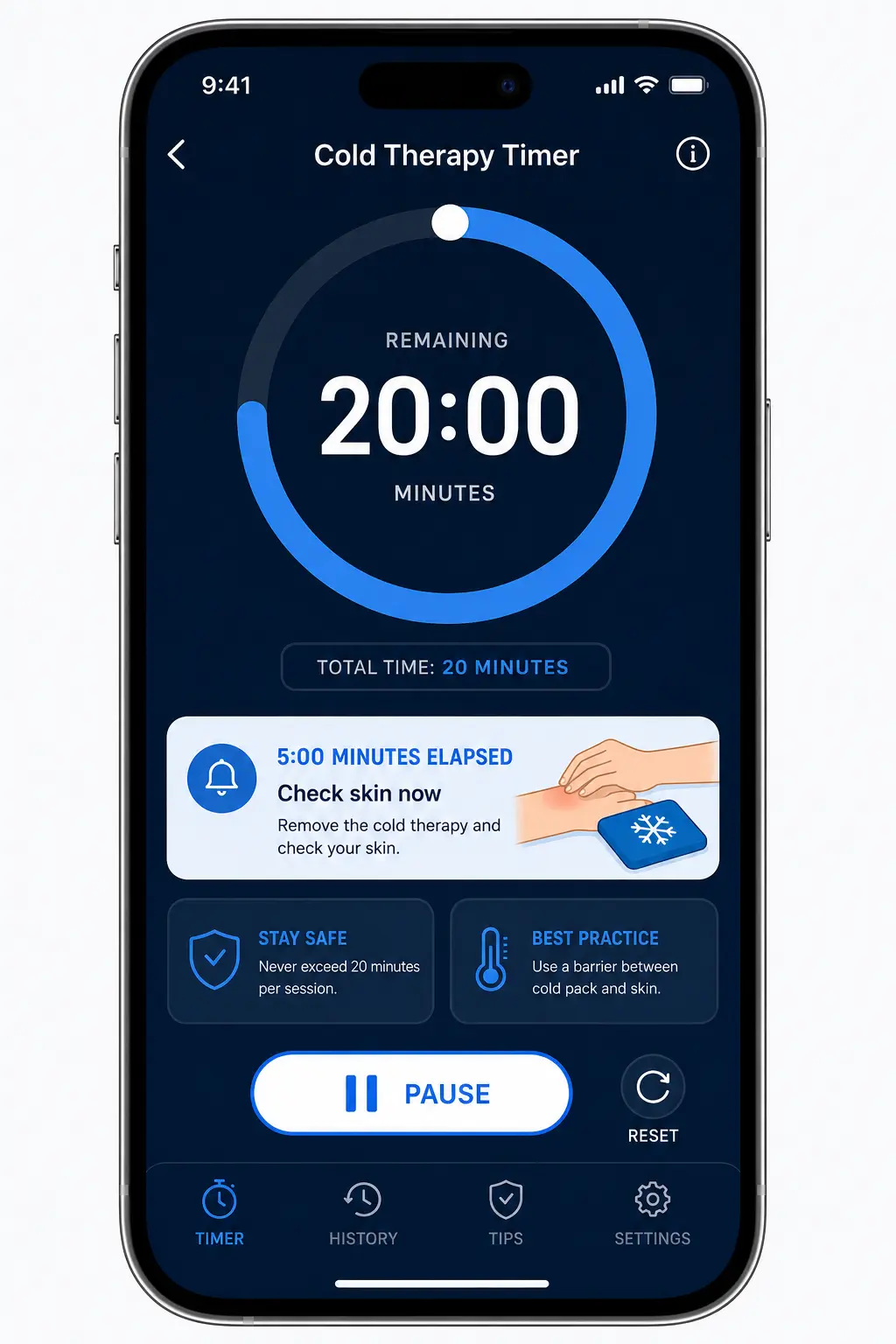
The safe window is 15 to 20 minutes, no exceptions. After that, the risk of cold injury climbs sharply. Leave at least 1 to 2 hours between sessions so tissues can rewarm fully. For children or older adults, shorten the session to 10 to 15 minutes; their skin is more vulnerable. Set a loud kitchen timer or a dedicated cold therapy app the moment you apply the pack and never rely on memory.
Expert Tip: Set a loud timer or smartphone app for 20 minutes every time you ice, never rely on memory.
Product Recommendation: A digital kitchen timer with a loud alarm or a dedicated cold therapy app ensures you never exceed safe icing time.
Check Your Skin Every 5 Minutes
Lift the pack and look. You’re watching for excessive redness, a waxy or white appearance, hardness to the touch, numbness, tingling or blistering. Use a mirror for hard-to-see spots like the back of the shoulder. If any warning sign appears, stop immediately don’t wait for pain. Cold-induced numbness can mask damage, so a visual check is your real safety net.
Expert Tip: Check for excessive redness, numbness, tingling or blistering every 5 minutes and stop immediately if any appear, don’t wait for pain.
Expert Tip: If you feel increasing pain or a burning sensation, stop immediately that’s a warning sign not the cold working.
Aftercare: What to Do After Removing the Ice
Once the timer goes off, remove the pack and pat the area dry with a clean towel. Let the skin rewarm naturally do not rub, massage or apply direct heat. Rubbing cold-injured tissue can worsen damage. If numbness or a pale, waxy patch persists beyond a few minutes, seek medical advice.
Expert Tip: After icing, pat the area dry and let it warm naturally never rub or massage cold-injured skin.
Product Recommendation: Keep a first aid kit with sterile gauze, aloe vera gel, and non-adherent dressings ready in case of accidental ice burn.
Cold Therapy by Body Part: Tailored Safety Rules
Knees
A cold compression wrap works best here because it hugs the joint and stays put. Avoid placing a heavy gel pack directly on the kneecap without a thick barrier; the skin over bone is thin and freezes faster. Keep the leg slightly bent during cold therapy for arthritis pain to prevent stiffness.
Shoulders
The shoulder’s rounded shape makes it hard to get even contact. Use a flexible gel pack or a cold therapy sleeve that conforms to the curve. Check the skin over the acromion (the bony point) every 5 minutes; it’s the first spot to show frostnip.
Ankles
Ankles are bony and have little padding. A bag of frozen peas molds well but you must use a 1/4-inch cloth barrier and never let the pack sit directly on the malleoli (the inner and outer ankle bones). Raise the ankle during icing to help with swelling.
Back
When using ice therapy for sciatica, icing the lower back often means lying on the pack, which compresses the barrier and increases cold transfer. Use a cold pack with a thick, integrated cover and set a timer you can hear from a lying position. If you can’t check the skin easily, have someone else do it.
Even with perfect prevention, accidents happen. Next, you’ll learn exactly what to do if you suspect an ice burn.
First Aid for Ice Burns: What to Do If You Get Burned
If you missed a warning sign or a barrier slipped, don’t panic. Here’s exactly what to do the moment you suspect an ice burn.
Immediate Steps for Mild Burns (Frostnip or Superficial Frostbite)
Stop the cold source right away and remove any wet clothing from the area. Wet fabric holds cold against the skin and can deepen the injury. The goal now is gradual rewarming not a sudden temperature shock.
Fill a clean basin with lukewarm water between 99°F and 104°F (37°C to 40°C). Submerge the affected skin and keep it there for 15 to 30 minutes. You’ll likely feel a stinging or tingling sensation as circulation returns. That’s normal.
Avoid hot water, heating pads or rubbing. These can cause further tissue damage.
Expert Tip: Stop the cold source immediately, then rewarm the area in lukewarm water (99-104°F) for 15-30 minutes. Never use direct heat or rub the skin.
Once the area is rewarmed, pat it dry with a soft, clean towel. Don’t rub. Apply a thin layer of pure aloe vera gel to soothe the skin and support healing. An over-the-counter pain reliever like ibuprofen or acetaminophen can help manage discomfort. If blisters have formed leave them intact. The skin over a blister is a natural barrier against infection popping it opens a direct path for bacteria.
Product Recommendation: Keep a first aid kit with sterile gauze, aloe vera gel and non-adherent dressings on hand for prompt ice burn care.
When to Seek Medical Help
Most mild ice burns heal with home care but some signs demand a professional evaluation. Watch for persistent numbness or a waxy, white or grayish discoloration that doesn’t improve after rewarming. Large blisters especially those filled with blood are another red flag.
Any sign of infection, such as increasing pain, pus or spreading redness, means you need medical attention. Burns on the face, hands, feet or genitals or any burn in someone with diabetes or a circulatory condition should be assessed by a healthcare provider without delay.
Some people face higher risks even with perfect technique. Next, we’ll cover special precautions for children, seniors and those with medical conditions.
Special Considerations for High-Risk Groups
Standard advice isn’t enough for everyone. If you or someone you care for falls into one of these groups, these tailored rules are essential.
Children:
Thinner skin, shorter time (10-15 min) check every 3-5 min never leave unattended use kid-friendly packs.
A child’s skin is thinner and their body surface area is larger relative to their weight, so they lose heat faster. What feels like a safe 20-minute session for an adult can push a child toward frostnip far sooner.
Limit cold therapy to 10–15 minutes and set a timer. Check the skin every 3–5 minutes by gently lifting the pack. Never leave a child unattended during icing. If they can’t reliably tell you when the cold becomes painful, you need to be their pain sensor.
Expert Tip: For young children, choose a cold pack with a soft, colorful cover to reduce fear and improve cooperation during icing.
Elderly Individuals:
Thin, fragile skin with reduced blood flow; limit to 10–15 min, avoid bruised areas, supervise if cognitive decline.
Aging skin loses its fatty cushion and the blood vessels that help regulate temperature. This means even a standard icing session can cause frostnip faster than you’d expect.
Use a double-layer dry cloth barrier and cap sessions at 10–15 minutes. Avoid placing cold over areas that are already bruised or showing signs of fragile capillaries. If the person has any cognitive decline, stay with them throughout the session. They may not notice or remember to report numbness.
People with Diabetes or Neuropathy:
Impaired sensation means damage can occur without pain. Doctor clearance required use shortest time (≤10 min) visual checks every 2-3 min consider temperature-controlled devices.
When neuropathy silences the body’s warning system, you lose the most critical safety signal pain. Tissue damage can progress to superficial frostbite without a single twinge.
Get explicit clearance from a healthcare provider before starting cold therapy. Keep sessions to 10 minutes or less. Set a timer and perform visual skin checks every 2-3 minutes. Look for pallor, grayish discoloration or blistering. A temperature-controlled device is far safer than a frozen gel pack because it removes the guesswork.
Expert Tip: For anyone with reduced sensation, verify the cold pack’s surface temperature with an infrared thermometer aim for 50-59°F (10-15°C) instead of freezing.
Product Recommendation: A non-contact infrared thermometer lets you quickly check cold pack temperature to ensure it’s safe for sensitive skin.
Circulatory Issues (Raynaud’s Disease, PAD):
Cold can trigger vasospasm avoid cold therapy on affected extremities unless specifically advised. If used very short sessions (5-10 min) with close monitoring.
For someone with Raynaud’s or peripheral artery disease, cold doesn’t just cool the skin. It can trigger a vasospasm that slams blood vessels shut starving fingers or toes of oxygen.
Avoid applying cold therapy directly to affected hands or feet unless a vascular specialist has specifically prescribed it. If it is necessary use a temperature-controlled device set to 50-59°F (10-15°C) and limit the session to 5-10 minutes. Watch the skin color continuously. Any sign of excessive blanching or a dusky blue hue means stop immediately.
To help you choose the safest method, the next section compares all common cold therapy tools side by side.
Cold Therapy Methods and Safety Comparison
Not all cold therapy tools are created equal, so reviewing a heat vs cold therapy comparison first is wise. The difference between a reusable gel pack and a bag of frozen peas isn’t just convenience: it’s the temperature they reach, how evenly they cool and how likely they are to damage your skin. This table breaks down the risks and rules for each method so you can choose the safest option for your situation.
| Method | Typical Use | Burn Risk Level | Max Safe Duration | Barrier Required | Special Precautions | Best For |
|---|---|---|---|---|---|---|
| Reusable gel pack with fabric cover | General injury care | Low | 15–20 minutes | Built-in cover acts as barrier; add dry cloth if thin | Check skin every 5 minutes; stop if numbness sets in | Convenient, repeatable use |
| Cold compression wrap (e.g., Aircast Cryo/Cuff) | Post-surgery, acute sprains | Low | 15–20 minutes | Integrated fabric sleeve | Monitor for excessive tightness; ensure wrap isn’t wet | Combining cold with compression |
| Homemade ice bag (ice cubes in plastic bag) | Quick, at-home pain relief | High | 10–15 minutes | Always use a dry cloth barrier | Ice cubes have sharp edges; melting water can soak barrier, increasing risk | Short-term, no-cost option |
| Frozen gel pack (no cover) | Direct application (not recommended) | High | 10–15 minutes | Must wrap in a dry cloth | Reaches sub-zero temperatures; never apply directly to skin | Only if a cover is added |
| Bag of frozen peas | Small joints (ankle, wrist) | Medium | 10–15 minutes | Wrap in a dry cloth | Conforms well but thaws quickly; discard after use for food safety | Irregular, bony areas |
| Ice bath (cold water immersion) | Full-limb or systemic cooling | High | 5–10 minutes | Not applicable (water contact) | Large surface area accelerates numbing; constant monitoring required; stop immediately if shivering or pain | Post-exercise recovery (under supervision) |
| Cold compression machine (e.g., Breg Polar Care) | Post-operative recovery | Low | As directed (typically 20–30 min cycles) | Integrated pad with fabric cover | Follow prescribed cycle times; check skin under pad regularly | Consistent, controlled cooling over hours |
The highest-risk tools are the ones that feel most familiar: a homemade ice bag or a gel pack without a cover. They can drop well below freezing and a thin, damp paper towel offers almost no protection. Vasoconstriction, the tightening of blood vessels, kicks in quickly and as the skin numbs, you lose the very sensation that warns you of damage. That’s why the rule to check skin every five minutes isn’t optional: it’s your only feedback loop.
Cold compression wraps and machines flip that dynamic. By circulating water at a controlled, less extreme temperature through a padded wrap, they deliver consistent cooling without the sharp temperature spikes. The compression also helps limit swelling, so you get the therapeutic effect with a lower burn risk.
If you’re considering a cold therapy machine, it’s worth comparing several reputable options rather than choosing based on price alone. Well-known systems from brands like Breg, Aircast, Ossur and FeelGoodEase all offer controlled cooling that can reduce the risk of accidental overexposure compared with traditional ice packs.
When evaluating any device, focus on consistent temperature control, comfortable wraps, replacement part availability and ease of daily use, especially if you’re recovering after surgery or managing long-term joint pain.
A bag of frozen peas deserves its reputation. It molds around a swollen ankle or wrist better than any rigid pack but it’s still a frozen item. Wrap it in a dry cloth and treat it with the same caution you’d give a gel pack.
Ice baths are a different beast entirely. The large surface area cools tissue fast, and the numbing effect can mask the early signs of frostnip (superficial cooling). Five to ten minutes is the hard stop, and you need someone watching the clock, and your skin, the whole time.
Still have questions? The FAQs ahead tackle the most common concerns and misconceptions about icing safely.
Interactive Self-Assessment: Is Your Cold Therapy Safe?
Knowledge is only useful if you apply it. Take 60 seconds. See how your routine stacks up against clinical safety guidelines. This quick self-assessment isn’t about judgment. It’s about catching the small habits that can lead to frostnip or worse long before they cause a problem.
Safety Quiz: Answer a few simple questions to discover your ice burn risk level and get practical recommendations for safer cold therapy.
1. What do you place between the ice pack and your skin?
- A) A dry, folded towel or thick cloth (0 points)
- B) A single layer of paper towel or thin pillowcase (1 point)
- C) Nothing, the ice pack touches my skin directly (2 points)
2. How long do you typically leave ice on one spot?
- A) 10-15 minutes and I always set a timer (0 points)
- B) 15-20 minutes but I sometimes lose track of time (1 point)
- C) More than 20 minutes or I ice until the area feels completely numb (2 points)
3. During an icing session, how often do you check your skin?
- A) I lift the pack at least once to look for color changes or excessive numbness (0 points)
- B) I check only if I feel discomfort (1 point)
- C) I never check, I just wait until the time is up (2 points)
4. After removing the ice, what do you do?
- A) I gently dry the skin and let it return to normal temperature before moving around (0 points)
- B) I wipe off moisture but immediately resume activity (1 point)
- C) I rub or massage the cold area to warm it up faster (2 points)
5. How do you decide when to reapply ice?
- A) I wait at least 2 hours, or until the skin has fully rewarmed and sensation is normal (0 points)
- B) I reapply whenever the pain returns, even if it’s been less than an hour (1 point)
- C) I keep ice on almost continuously, swapping packs back-to-back (2 points)
6. Have you ever noticed any of these after icing: hard, waxy-looking skin; blisters; or a patch that stays numb for hours?
- A) Never (0 points)
- B) Once or twice, but it went away (1 point)
- C) Yes and I didn’t seek medical advice (2 points)
Your risk score: Add up your points. A lower score means your routine aligns well with safe cold therapy a higher score signals habits that need immediate adjustment.
- 0-2 points, Low risk. Your approach is solid. You’re using a proper dry cloth barrier, respecting time limits and paying attention to your skin’s signals. Keep doing what you’re doing and stay consistent with your timer.
- 3-5 points, Moderate risk. You’re getting the basics right, but one or two habits are creeping into risky territory. The most common slip? A barrier that’s too thin or icing a few minutes too long. Switch to a dry, folded towel and set a timer for every session even if you think you’ll remember. Never ice for more than 20 minutes at a time.
- 6+ points, High risk. Your current routine puts you at real risk for frostnip or superficial frostbite. Direct skin contact, marathon icing sessions and ignoring warning signs can cause tissue damage that takes weeks to heal. Start with two non-negotiables always use a thick dry cloth barrier and never exceed 15 minutes per session. If you’ve experienced blisters or persistent numbness, let your skin fully recover before icing again and consider checking in with a healthcare provider.
Self-assessment works because it turns passive knowledge into active awareness. Now that you’ve identified where your routine stands, the next step is making safe icing effortless. Grab the printable checklist. It’s your fridge-door reminder for every session, so you never second-guess your barrier, your timer or your skin check again.
Downloadable Cold Therapy Safety Checklist
All the rules in one place. Print this, stick it on your freezer and never second-guess your icing routine again. The previous self-assessment showed you where your habits might be slipping but a PT’s audit of recovery mistakes can reveal more. This checklist turns those insights into a repeatable, five-second scan you can run every single time you reach for an ice pack.
The page is built around three simple checkpoints that mirror the article’s core safety sequence. First, a pre-icing skin check you confirm the area has normal sensation, no numbness and no open wounds.
Second, a barrier check you verify a dry cloth barrier is in place not a damp paper towel or a thin t-shirt. Third, a timer prompt you set a timer for 20 minutes before the cold ever touches your skin.
These three steps take less than ten seconds but they eliminate the most common causes of cold injury.
Below the checkpoints, the checklist splits into a clear do’s and don’ts column. The do’s reinforce the non-negotiables: use a dry cloth barrier, cap sessions at 20 minutes and inspect your skin after every icing. The don’ts are just as direct no direct ice contact, no icing over numb or compromised skin and no falling asleep with a pack in place. Never skip the barrier check. That single habit prevents more frostnip and superficial frostbite than any other rule.
A quick-reference strip at the bottom covers post-icing skin assessment. It gives you a simple three-level check normal pink and warm is good persistent redness or a waxy, white patch means you need a longer rewarming break any blistering, hardness or loss of sensation means you stop icing and seek medical help. This isn’t a diagnostic tool. It’s a guardrail that tells you when to pause and when to call your provider.
Tape it to the freezer door, fold it into your first aid kit or snap a photo on your phone. The goal is to make safe cold therapy automatic, so you never have to rely on memory when you’re hurting and tired.
Let’s wrap up with a clear summary and your next steps to ice safely every time.
Conclusion and Next Steps
You now have a complete, expert-backed system for icing without fear including a cold therapy rehabilitation protocol. Cold therapy is one of the most accessible tools for managing pain and swelling but it demands respect. The line between therapeutic vasoconstriction and tissue damage is thin. Three simple rules guard it: a dry cloth barrier, a strict timer and your own attention to what your skin is telling you. Master those and you turn a bag of ice from a potential hazard into a reliable recovery partner.
The real shift happens when you move from knowing to doing. That’s why the printable checklist exists. It’s not a reminder of things you’ve already read; it’s a physical tool designed to live where you ice, taped to the freezer, tucked in a first-aid kit or handed to a caregiver, so the right steps become automatic. Download it now and put it where you’ll see it before your next session.
Safe icing isn’t a solo practice consult this cold therapy for pain relief complete guide. If you’re an athlete, share this guide with your teammates and coaching staff. If you’re recovering at home make sure your family or anyone helping you understands the barrier and timing rules. A shared protocol prevents the well-meaning mistake of leaving an ice pack on too long.
And when your situation falls outside the standard advice, if you have a condition that affects circulation, if you’re managing post-surgical wounds or if you’re considering cold plunging during pregnancy, pause and consult your healthcare professional. A physical therapist or doctor can tailor a protocol to your specific needs and that personalized guidance is always the safest path.
Safe icing is a learned skill not a lucky guess. Every time you check your skin, set a timer and use a proper barrier, you’re protecting not just the next few hours of recovery but the long-term health of the tissue you’re healing. Start your next session with the checklist in hand. You’ve got this.
Frequently Asked Questions
Can I use a paper towel as a barrier?
No. A single paper towel is far too thin and it quickly becomes damp from condensation. Wet material conducts cold much faster than dry fabric, which sharply increases the risk of a burn. You need a dry, folded cloth at least about 1/4 inch thick: a clean dish towel or a couple of layers of cotton t-shirt works well.
Is it safe to ice while sleeping?
Never. Falling asleep with an ice pack removes your ability to monitor your skin and stop the cold before damage occurs. Prolonged, unmonitored exposure can cause deep frostbite. Set a loud timer, stay awake, and if you’re too drowsy, ask someone to watch the clock for you.
How do I know if I’m getting an ice burn?
Stop immediately if you notice any of these warning signs: numbness, tingling, a burning sensation or skin that turns pale, white or waxy. These are early indicators of frostnip (superficial cooling). Continuing past this point invites deeper injury.
Can I use heat and ice together?
Generally, no: not without specific medical guidance. For the first 48 to 72 hours after an acute injury, ice is the right tool to control swelling. Applying heat during that window can increase blood flow and make swelling worse. If you’re considering alternating them, consult your healthcare provider first.
What should I do if my skin is still numb after rewarming?
If numbness persists for more than 15 to 20 minutes after you’ve removed the cold source and gently rewarmed the area or if the skin remains discolored or feels hard, seek medical attention. That pattern can signal deeper tissue damage that needs professional evaluation.
Are there any conditions that make cold therapy unsafe?
Yes. Cold therapy can be risky if you have diabetes, peripheral neuropathy, Raynaud’s disease, poor circulation or open wounds in the area. These conditions can blunt sensation or reduce blood flow making it harder to detect an ice burn and harder for tissue to recover. Always check with your doctor before starting cold therapy.
