
🚚 Free Shipping (3-5 Business Days) | 🛡️ 30-Day Money-Back Guarantee | 🏆 6-Month Warranty | ⭐ Trusted by 1000+ Happy Customers

Heat vs Cold Therapy: When to Use Heat or Ice for Pain Relief
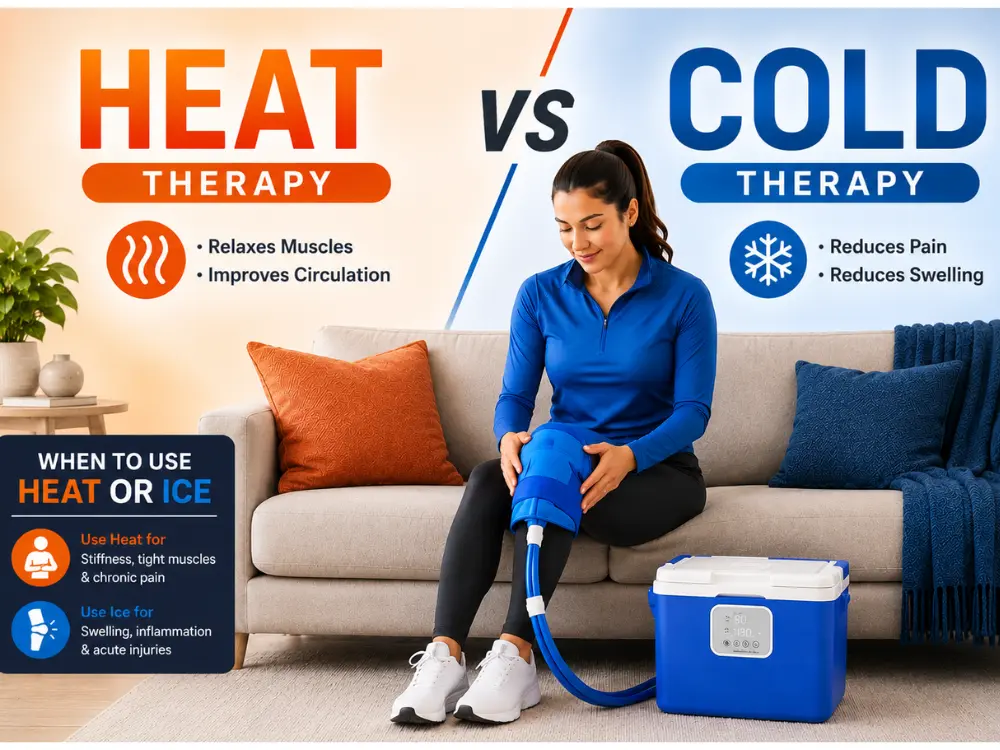
Heat vs cold therapy depends on the type of pain cold is best for reducing swelling and inflammation while heat helps relax muscles and improve stiffness. Choosing the right method at the right time is what makes pain relief effective.
I’ve seen many patients struggle with what seems like a simple decision whether to use ice vs heat therapy. Whether it’s muscle soreness, joint stiffness or a fresh injury most people rely on what feels comfortable in the moment without understanding how it impacts recovery.
In real recovery scenarios this often leads to a common mistake using heat on swelling or applying cold to long-term stiffness. Both can slow healing instead of supporting it.
That’s exactly why understanding when to use heat or ice matters. Based on clinical understanding and what I’ve observed in patient recovery, I’ll walk you through how each method works when to use it and how to apply it correctly.
You’ll also learn how to handle specific issues like inflammation muscle pain and joint discomfort using the right approach so you’re not guessing what works.
By the end, you’ll have a clear and practical understanding of heat vs cold therapy allowing you to manage pain more effectively and safely at home.
Medical Note: This content is for educational purposes only and is not a substitute for professional medical advice. If your pain is severe, persistent or worsening, consult a qualified healthcare provider.
Our Commitment to Medical Accuracy and Trustworthiness
Reliable guidance on heat and cold therapy should be based on clinical understanding real patient experience and trusted medical sources. Accurate information helps ensure safe recovery, better results and fewer common mistakes when managing pain at home.
I’ve worked with patients across different recovery stages including cold therapy after knee surgery and one thing is clear people need guidance they can trust. When it comes to decisions like heat vs cold therapy even small misunderstandings can lead to slower healing or unnecessary discomfort.
My Expertise and Clinical Perspective
This article is based on my experience working in global healthcare environments including roles with Medtronic and Johnson & Johnson.
I’ve seen firsthand how choices like ice vs heat therapy directly impact recovery outcomes. The insights shared here reflect both clinical understanding and real-world patient behavior focused on what actually works in everyday situations.
Commitment to Evidence-Based Information
Recovery guidance should always align with how the body responds to treatment.
Whether it’s cold therapy for inflammation or heat therapy for muscle pain the recommendations in this guide are grounded in established physiological principles such as circulation tissue response and inflammation control.
The goal is simple provide advice that is both safe and effective in real recovery scenarios.
Regular Review and Updates
Recovery science continues to evolve and so should the information patients rely on.
This content is reviewed and updated regularly to ensure it reflects current best practices in pain management and rehabilitation.
In my experience clear and accurate guidance doesn’t just inform it helps people recover with confidence and avoid common mistakes that can delay progress.
The Science of Cold Therapy: How It Works
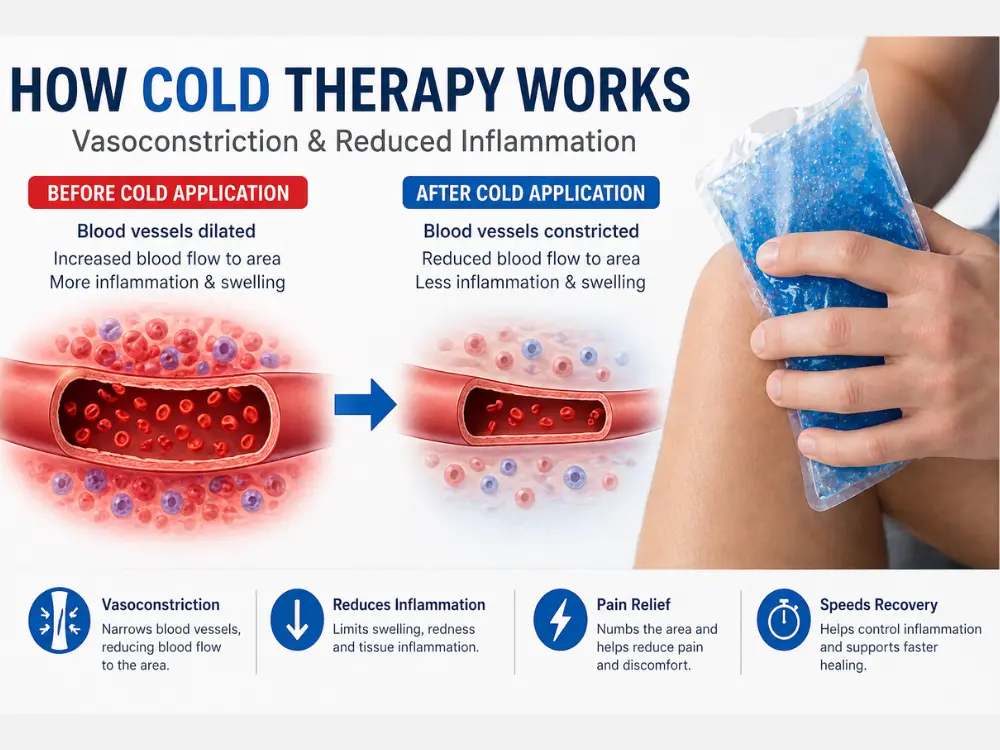
Cold therapy works by narrowing blood vessels, reducing inflammation and slowing nerve activity to relieve pain. It is most effective during the early stage of injury when swelling and tissue irritation are highest. This is why timing matters in cold therapy vs heat therapy.
Many people know that ice helps with swelling but they don’t fully understand why it works. That gap often leads to incorrect use either applying it too late or using it inconsistently.
What Happens in Your Body During Cold Therapy
From a physiological perspective cold vs hot therapy affects the body in very different ways. When cold is applied to an injured area several key responses occur:
1. Vasoconstriction (Reduced Blood Flow)
Cold causes blood vessels to narrow a process known as vasoconstriction.
This helps limit fluid buildup in the tissue which is why cold therapy for swelling is so effective especially in the first 24-48 hours after injury.
2. Reduced Inflammation and Swelling
Inflammation is a natural part of healing but excessive inflammation can increase pain and delay recovery.
Cold slows this response. This is why the answer to “does cold help with inflammation?” is yes it helps control the body’s reaction and prevents unnecessary tissue stress.
3. Numbing Effect (Pain Relief)
Cold therapy slows down nerve signals.
This creates a numbing effect reducing the sensation of pain. When people ask, “which is better for pain heat or cold?”, cold is usually more effective for sharp or recent pain.
4. Reduced Muscle Spasms
Cold can also reduce muscle guarding around an injured area.
By calming nerve activity and limiting inflammation, it indirectly helps muscles relax and prevents further strain.
Primary Benefits of Cold Therapy
From what I’ve observed in patient recovery cold therapy is most effective for:
- Reducing acute pain after injury
- Controlling swelling and inflammation
- Minimizing bruising by limiting internal bleeding
- Supporting early-stage healing in muscle and joint injuries
When to Reach for Cold: Specific Scenarios
Cold therapy should be used for recent injuries, swelling or inflammation especially within the first 24-48 hours. It helps reduce tissue damage control swelling and relieve pain. If the area feels hot, swollen or irritated cold is usually the right choice.
One of the most common mistakes I’ve seen with cold vs hot therapy is delaying ice application. That early phase is where cold therapy has the biggest impact on recovery.
When to Use Cold Therapy (Best Situations)
Acute Injuries (Sprains, Strains, Twists)
If you’ve just injured a muscle or joint cold should be your first step.
When people ask, “should I use ice or heat for a fresh injury?”, the answer is almost always ice. Cold helps limit internal bleeding and reduces swelling immediately after injury.
Swelling and Inflammation
Cold therapy is highly effective when visible swelling is present.
If the goal is to control inflammation not increase circulation cold is the better option. This is where cold therapy for inflammation plays a critical role.
Fresh Bruises
Applying cold early helps reduce both swelling and discoloration. By limiting blood flow, it prevents the bruise from spreading and becoming more painful.
Headaches and Migraines
Cold packs applied to the forehead or neck can reduce throbbing pain. This works particularly well for tension headaches where calming nerve activity provides quick relief.
Post-Workout Soreness (Immediate Phase)
Right after intense exercise inflammation begins at a micro level. Cold therapy at this stage helps prevent excessive soreness. However, it’s most effective immediately not 1-2 days later.
Insect Bites or Stings
Cold helps reduce itching, swelling and irritation quickly. This is a simple but often overlooked use of ice vs heat therapy where cold provides fast localized relief.
Real Recovery Scenario
I’ve seen many cases where patients delay using ice after an injury which leads to more swelling than necessary.
A better approach looks like this:
After twisting her ankle during a run, Sarah applied a cold pack within the first hour for 15 minutes. This helped control swelling early and reduced pain allowing her to rest more comfortably.
Early action like this can make a noticeable difference in recovery speed.
Beyond the Basics: When Cold Therapy Is Often Missed
Post-Injection or Medical Procedures
After injections, mild inflammation can occur. Applying cold helps reduce discomfort without interfering with the treatment.
Certain Types of Nerve Pain
Cold can help with sharp localized nerve irritation such as ice therapy for sciatica especially when inflammation is present.
However, this should be used carefully. Not all nerve pain responds well to cold so it’s important to monitor your response.
How to Apply a Cold Compress Safely & Effectively
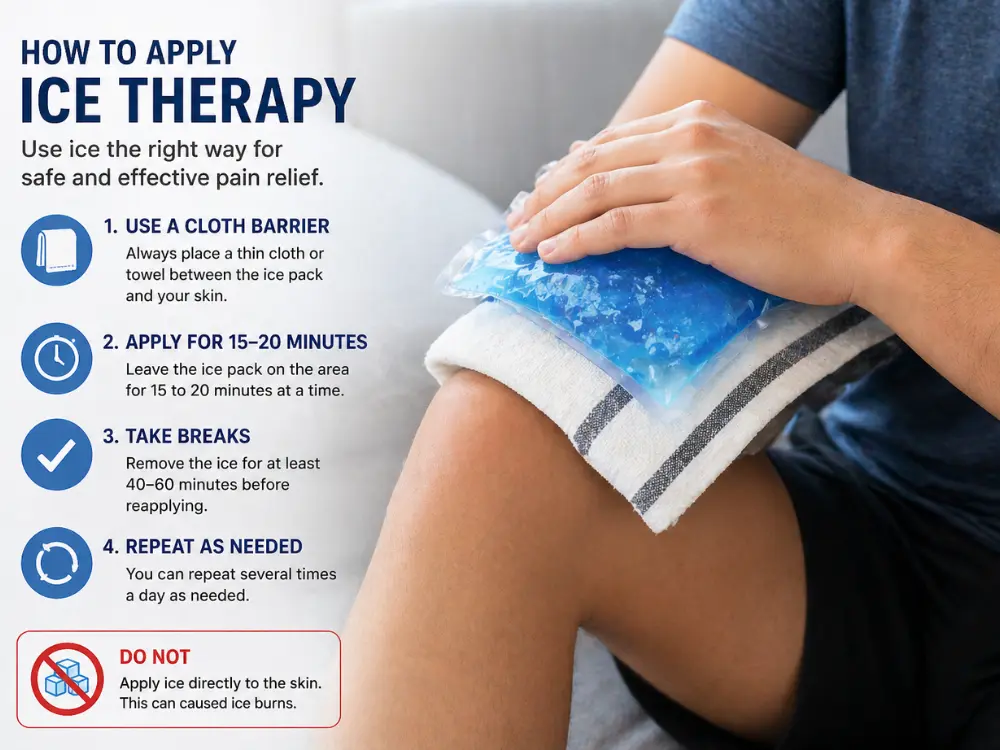
A cold compress should be applied with a barrier for 15-20 minutes followed by a break before reapplication. This method helps reduce pain and swelling while preventing skin damage. Proper technique is essential for getting the full benefits of cold therapy vs heat therapy including how to use and clean a cold therapy machine.
Many people know when to use cold vs heat therapy but they apply cold incorrectly either for too long or directly on the skin. These small mistakes can reduce effectiveness and even cause irritation.
Step-by-Step: Safe Cold Therapy Application
1. Preparation
Choose your cold source such as an ice pack, gel pack or frozen vegetables. What matters most is consistent controlled cooling not the specific product including a replacement hose tube.
2. Always Use a Barrier
Never apply ice directly to your skin.
Skipping this step can lead to skin irritation or mild frostbite. Always wrap the cold source in a thin towel or cloth to protect the skin.
3. Apply to the Target Area
Place the wrapped cold pack directly over the affected area. Targeted application is more effective than general cooling focus on where the pain or swelling is present.
4. Follow the Right Duration
Limit each session to 15-20 minutes.
Longer exposure does not improve results and may irritate the skin. This is a common mistake when using ice vs heat therapy.
5. Allow Recovery Between Sessions
Wait at least 20–30 minutes before reapplying.
This allows the skin and tissue to return to normal temperature which is important for safe and effective treatment.
6. Monitor Your Body’s Response
Pay attention to any unusual sensations.
If you feel excessive numbness, burning or discomfort remove the cold source immediately. Cold therapy should ease pain not create new issues.
Types of Cold Sources & Practical Options
Cold therapy doesn’t require expensive equipment to be effective. Reusable gel packs, instant cold packs, crushed ice and simple DIY methods can all provide meaningful pain relief when used safely and consistently. In most cases, how you apply cold therapy matters more than the specific product you choose.
For people recovering from knee surgery, sports injuries or joint procedures, standard ice packs are no longer the only option. Continuous cold therapy systems from manufacturers such as Game Ready, Breg, DonJoy and FeelGoodEase provide controlled, consistent cooling over longer treatment sessions and may be more convenient during the early stages of recovery. The best option depends on your injury, recovery goals, budget and your healthcare provider’s recommendations.
Common Cold Therapy Options
Reusable Gel Hot/Cold Packs
These are one of the most practical and widely used options.
They work well because they:
- Conform easily to joints like knees, shoulders and ankles
- Maintain a steady temperature
- Can be reused for ongoing recovery
They’re especially useful for targeted areas like heat or cold for knee pain or shoulder discomfort often requiring a replacement knee wrap.
Instant Cold Packs
These are single-use packs that activate instantly when squeezed.
They’re ideal for:
- Travel
- Sports injuries
- Emergency situations
While not designed for repeated use they are very effective when immediate cold therapy is needed.
Large Ice Packs or Ice Bags
This is the traditional method and still highly effective.
For larger areas like the back or thigh ice packs provide better coverage. When people consider ice vs heat therapy for back pain this is often the most practical option during acute flare-ups.
DIY Cold Therapy Solutions
You don’t always need specialized products.
Simple Homemade Cold Pack
A reliable option includes:
- A bag of frozen vegetables (such as peas)
- Ice cubes sealed in a plastic bag
These adapt well to body contours and provide effective cooling.
Expert Tip: Always seal DIY packs properly and avoid direct skin contact. Even homemade solutions should follow the same safety guidelines as medical cold therapy.
Enhancing the Effectiveness of Cold Therapy
Combining cold therapy with simple recovery techniques can significantly improve results.
Elevation for Swelling
If swelling is present elevation makes a noticeable difference.
Raise the affected area above heart level when possible. This helps reduce fluid buildup and works alongside cold therapy for better results.
This is especially important when deciding what’s better for swelling ice or heat where cold combined with elevation is far more effective.
Compression Support
Using a light compression wrap can:
- Keep the cold pack in place
- Provide gentle pressure to reduce swelling
The combination of cold + compression + elevation is one of the most effective approaches I’ve seen for managing early-stage injuries.
The Science of Heat Therapy: How It Works
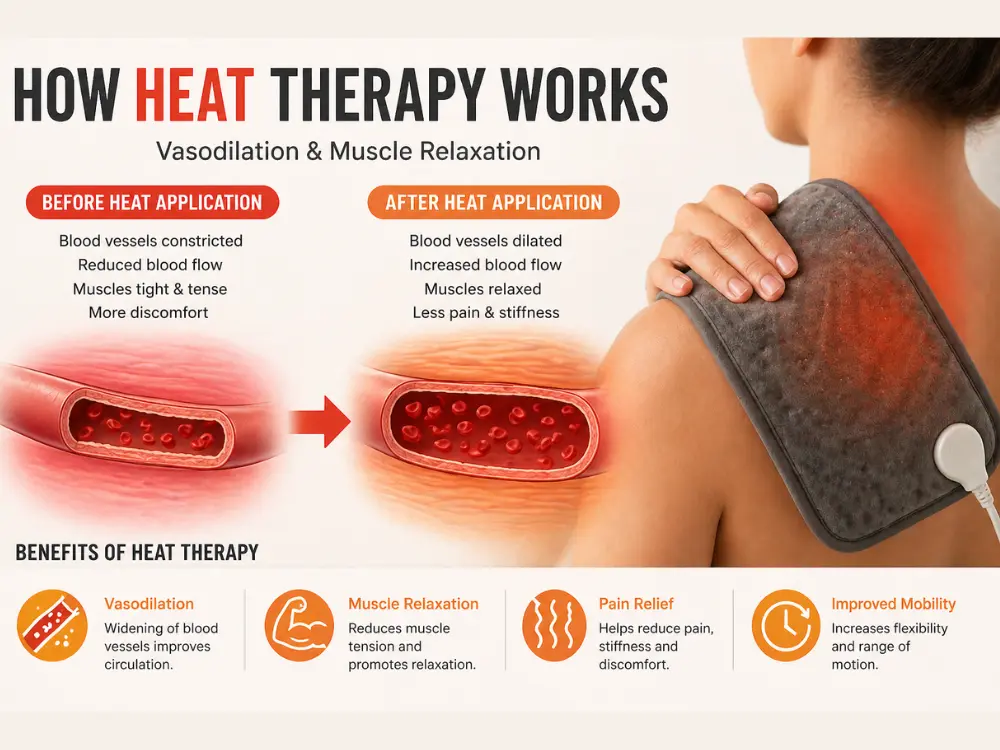
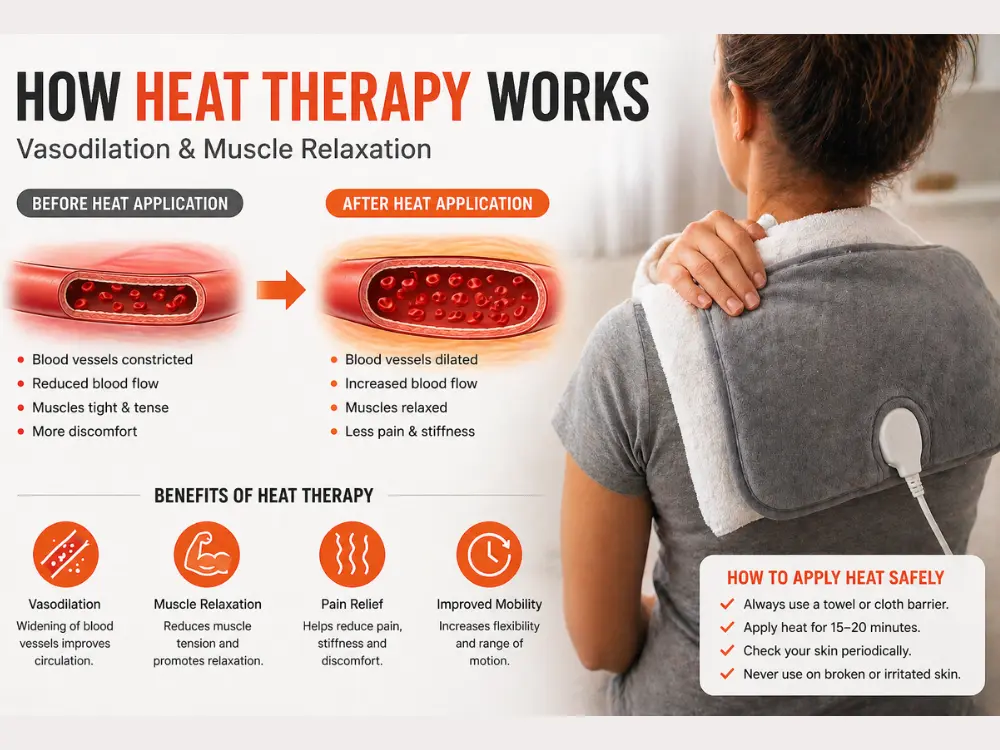
Heat therapy works by increasing blood flow, relaxing muscles and improving tissue flexibility. It is most effective for stiffness chronic pain and tight muscles especially when there is little or no swelling. This is a key difference in heat vs cold therapy.
Many people apply heat to all types of pain but heat and cold serve very different purposes. Using the wrong one at the wrong time can slow recovery instead of helping it.
What Happens in Your Body During Heat Therapy
Heat stimulates circulation and soft tissue response. When applied correctly it creates several important effects:
1. Vasodilation (Increased Blood Flow)
Heat causes blood vessels to expand a process called vasodilation.
This increases oxygen and nutrient delivery to the area. If you’ve ever wondered, “does heat increase blood flow?”, the answer is yes and this is why heat therapy for pain relief works well for non-inflammatory conditions.
2. Improved Circulation and Waste Removal
Better blood flow helps remove metabolic waste from tissues.
This supports recovery and reduces lingering discomfort especially in cases of chronic muscle tightness or joint stiffness.
3. Muscle Relaxation
Heat helps relax tight or overworked muscles.
This is why many people prefer heat when dealing with spasms or tension. When asking, “heat or cold for muscle pain?”, heat is usually the better choice for stiffness-related discomfort.
4. Enhanced Tissue Elasticity
Warmth makes muscles and soft tissues more flexible.
This improves mobility and prepares the body for stretching, exercise or rehabilitation reducing the risk of further strain.
Primary Benefits of Heat Therapy
From what I’ve seen in real recovery situations the key benefits of heat therapy include:
- Relief from chronic pain and stiffness
- Reduced muscle tension and spasms
- Improved circulation to support healing
- Better flexibility and range of motion
When to Embrace Heat: Specific Scenarios
Heat therapy is best for muscle stiffness, chronic pain and tension especially when there is no swelling present. It helps relax muscles improve circulation and restore movement. This is a key part of using heat vs cold therapy correctly.
Many people ask, “should I use ice or heat?” without realizing that heat is not meant for early-stage injuries. It works best later in recovery when the focus shifts from reducing inflammation to improving flexibility.
When to Use Heat Therapy (Best Situations)
Chronic Muscle Stiffness and Tension
This is one of the most effective uses of heat.
Conditions like neck stiffness, shoulder tightness and heat or ice for back pain often respond better to heat especially when the discomfort is dull and linked to muscle tightness rather than injury.
Delayed Onset Muscle Soreness (DOMS)
Soreness that appears 24-48 hours after exercise is usually related to muscle repair.
In this phase, heat improves circulation and helps muscles relax. This is where ice vs heat therapy for sore muscles becomes clear cold is useful immediately after activity while heat supports recovery later.
Arthritis and Joint Stiffness
Heat is often more effective for ongoing joint stiffness.
For people dealing with heat or cold for arthritis consistent heat therapy can improve flexibility and reduce discomfort.
Pre-Activity Warm-Up
Applying heat before movement helps loosen muscles.
This prepares the body for:
- Exercise
- Stretching
- Rehabilitation
It also reduces the risk of strain.
Menstrual Cramps
Heat helps relax uterine muscles and reduce cramping.
This is a well-established use of heat therapy for pain relief particularly for lower abdominal discomfort.
Real Recovery Scenario
I’ve seen many cases where people rely only on rest for long-term stiffness without addressing muscle tightness.
A more effective approach:
Mark, dealing with chronic lower back discomfort used a warm compress for 15-20 minutes each evening. This helped relax his muscles and improved mobility over time.
Expert Tip: Moist Heat vs Dry Heat
Not all heat therapy works the same way.
Moist heat such as a warm, damp towel can penetrate deeper than dry heat (like heating pads). This makes it more effective for deeper muscle tension and stiffness.
Beyond the Basics: Using Heat to Improve Recovery
Preparing for Stretching or Therapy
Heat is especially useful before:
- Stretching routines
- Massage therapy
- Rehabilitation exercises
By improving tissue flexibility, heat allows safer and more effective movement. This is an often overlooked part of heat and cold therapy strategies.
How to Apply a Heat Compress Safely & Effectively
A heat compress should be applied at a comfortable temperature for 15-20 minutes using a protective barrier to prevent burns. Proper technique ensures you get the full heat therapy benefits while avoiding skin damage or irritation.
Many people assume heat is harmless but incorrect use like applying it for too long or directly on the skin can cause more harm than good. This is a common mistake when using heat vs cold therapy at home.
Step-by-Step: Safe Heat Therapy Application
1. Preparation
Choose your heat source such as a heating pad warm compress or hot water bottle. What matters most is controlled consistent heat not the specific product.
2. Control the Temperature
Start with a low to moderate heat setting.
If using an electric pad increase gradually. For other methods test the temperature first. Heat should feel warm and comfortable not intense.
This is especially important when comparing hot vs cold compress methods as heat requires closer monitoring.
3. Always Use a Barrier
Never apply heat directly to the skin. A simple towel or cloth helps prevent burns while still allowing effective heat transfer.
4. Apply to the Target Area
Place the wrapped heat source directly on the area of stiffness or discomfort.
For issues like heat or ice for neck pain or back tension targeted application provides better results than general warming.
5. Follow the Right Duration
Limit each session to 15-20 minutes.
Longer use does not improve results and increases the risk of irritation or burns. This is a key distinction in cold therapy vs heat therapy.
6. Use Multiple Sessions with Breaks
Heat can be applied multiple times a day but always allow breaks between sessions. This prevents overstimulation and keeps the therapy effective.
7. Monitor Your Body’s Response
Notice how your body responds during application.
If you feel increased discomfort, burning or unusual sensitivity remove the heat source immediately. Heat should relax the area not worsen symptoms.
Types of Heat Sources & Practical Options
Heat therapy can be applied using electric pads, moist heat packs or simple DIY methods what matters most is controlled temperature and safe application. The effectiveness of heat vs cold therapy depends more on how consistently and correctly it’s used than the specific tool including a reliable power adapter for your machine.
Many people focus on choosing the “best” product but in practice proper use is what delivers results.
Common Heat Therapy Options
Electric Heating Pads
One of the most reliable options for consistent heat.
They:
- Provide adjustable temperature control
- Reduce the risk of overheating (especially with auto shut-off)
- Work well for areas like the back, neck and shoulders
They’re particularly useful when managing heat or ice for back pain especially in chronic stiffness.
Microwaveable Heat Packs
Typically filled with rice or flaxseed these provide gentle moist heat.
Moist heat penetrates deeper into tissue making it effective for heat or cold for muscle pain when stiffness is the main issue.
Warm Towels
A simple and accessible option.
A warm, damp towel works well for neck and shoulder tension and is a practical choice when comparing warm compress vs cold compress methods at home.
Hot Water Bottles
A traditional but effective method.
Commonly used for:
- Lower back discomfort
- Abdominal pain (such as menstrual cramps)
DIY Heat Therapy Solutions
You don’t always need specialized tools.
Homemade Heat Pack (Rice Sock Method)
A simple option:
- Fill a clean sock with rice
- Heat it briefly in the microwave
Alternative:
- Use a warm, damp towel as a compress
Expert Tip: Always check the temperature before applying. Poorly prepared DIY packs can cause burns if overheated.
Enhancing the Effectiveness of Heat Therapy
Combining heat with simple recovery strategies can improve results.
Gentle Movement After Heat
Once muscles are relaxed light movement can improve mobility.
Try:
- Applying heat first
- Following with gentle stretching
This approach supports flexibility and maximizes heat therapy benefits.
Complementary Warming Products
Topical balms or creams can be used after heat therapy.
They can:
- Extend the warming sensation
- Support muscle relaxation
Heat vs Cold Therapy: Quick Decision Guide
Heat is best for stiffness and chronic pain while cold is ideal for swelling and acute injuries. Choosing correctly depends on whether your body needs improved circulation or inflammation control.
Heat vs Cold Therapy Comparison
| Factor | Heat Therapy | Cold Therapy |
| Mechanism | Increases blood flow (vasodilation), relaxes muscles, improves tissue flexibility | Reduces blood flow (vasoconstriction), controls inflammation, numbs pain |
| Primary Goal | Relieve stiffness, chronic pain and muscle tension | Reduce swelling, acute pain and inflammation |
| When to Use | Chronic pain, stiffness, arthritis, cramps, post-workout soreness (after 24-48 hours) | Acute injuries, swelling, inflammation, fresh bruises, immediate post-workout soreness |
| Duration | 15-20 minutes multiple times daily with breaks | 15-20 minutes with 20-30 minutes between sessions |
| Sensation | Warm, relaxing | Cold, numbing |
| Tools | Heating pads, warm towels, hot water bottles, heat packs | Ice packs, gel packs, frozen vegetables, instant packs |
| Safety | Avoid on swelling or fresh injuries use barrier | Avoid direct skin contact use barrier |
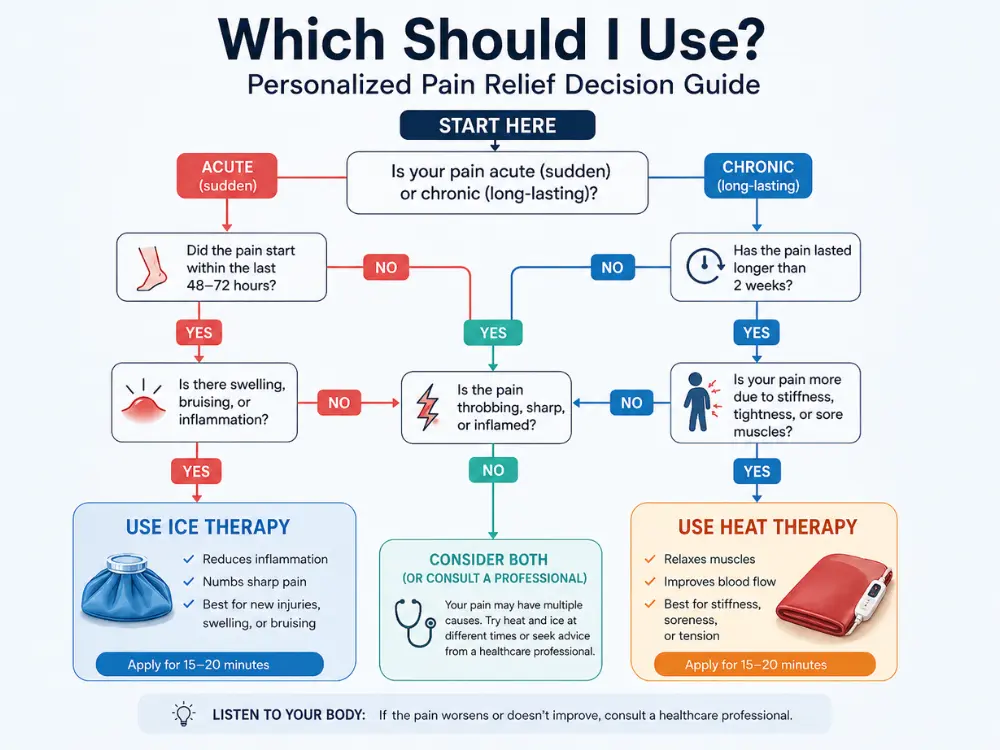
Common Pain Scenarios: Which Therapy to Choose?
The choice between heat vs cold therapy depends on the type of pain cold for swelling and inflammation, heat for stiffness and muscle tension. Using the right therapy at the right stage helps speed up recovery and prevent further irritation.
Most people don’t struggle with applying therapy they struggle with when to use heat or ice. That’s where incorrect decisions can delay healing.
Below are common real-life scenarios and the most effective approach for each.
Sprained Ankle (Acute Injury)
Recommendation: Cold therapy (first 24-48 hours)
If you’ve just injured your ankle the priority is controlling swelling.
When people ask, “ice or heat for swelling?”, cold is the correct choice.
Practical Tip: Use cold therapy along with elevation. Raising the ankle above heart level helps reduce fluid buildup more effectively.
Stiff Neck (Chronic Tension)
Recommendation: Heat therapy
Heat helps relax tight muscles and improve circulation.
For better results:
- Apply heat to the back of the neck
- Follow with gentle stretching or movement
This combination improves flexibility and reduces tension.
Period Cramps
Recommendation: Heat therapy
Heat relaxes uterine muscles and reduces cramping.
This is a well-established use of heat therapy for pain relief.
Post-Workout Soreness (DOMS – After 24-48 Hours)
Recommendation: Heat therapy
Once soreness appears after a day or two inflammation is no longer the main issue.
Heat improves circulation and helps muscles relax. This is where ice vs heat therapy for sore muscles often gets misunderstood cold works immediately after exercise while heat is better later.
Tension Headache
Recommendation: Cold or Heat (depending on cause)
- Cold therapy: Apply to forehead or temples for numbing relief
- Heat therapy: Apply to neck/shoulders if muscle tension is the cause
In some cases, a simple cold compress can significantly reduce headache intensity.
Chronic Back Pain
Recommendation: Heat therapy (primarily)
For long-term stiffness heat helps relax muscles and improve mobility.
When people ask, “heat or ice for back pain?”, the answer depends on the stage but chronic pain usually responds better to heat.
Expert Tip: In some cases, alternating heat and cold therapy may help but this should be done carefully.
Arthritis Flare-Up
Recommendation: Heat for stiffness, cold for inflammation
Arthritis often requires both approaches:
- Heat: Reduces stiffness
- Cold: Controls inflammation during flare-ups
Better results come from adjusting therapy based on symptoms rather than using only one method.
When NOT to Use Heat or Cold (Contraindications)
Heat and cold therapy should be avoided in certain conditions where they can worsen symptoms or cause harm. Using the wrong method at the wrong time especially with injuries poor circulation or numb areas can delay recovery instead of helping it highlighting the importance of cold therapy contraindications.
Most problems with heat vs cold therapy come from incorrect use rather than lack of use. Applying heat on swelling or cold on stiff muscles are common mistakes that can work against the body.
General Safety Rule
A simple guideline to follow:
- Avoid heat on fresh injuries or swelling
- Avoid cold on areas with poor circulation or numbness
This alone can prevent many mistakes when using hot and cold therapy at home.
When to Avoid Heat Therapy
Heat is effective for relaxation but not suitable in every situation.
Avoid heat in the following cases:
- Fresh injuries (first 24-48 hours)
Heat increases blood flow and can worsen swelling. This is why heat or cold for inflammation is not interchangeable cold is the safer option early on. - Open wounds, cuts or stitches
Heat may irritate damaged tissue and delay healing. - Poor circulation
Reduced blood flow makes it harder for the body to regulate heat safely. - Numb or desensitized skin
Lack of sensation increases the risk of burns. - Certain skin conditions (e.g., dermatitis)
Heat may worsen irritation. - Suspected malignancy (tumor areas)
Heat should only be used with medical guidance.
When to Avoid Cold Therapy
Cold is effective for inflammation but not always appropriate.
Avoid cold in the following cases:
- Open wounds
Cold may interfere with proper healing. - Poor circulation (e.g., Raynaud’s phenomenon)
Cold can further restrict blood flow. - Numb or desensitized areas
Risk of tissue damage increases when sensation is reduced. - Extreme sensitivity to cold
Some individuals do not tolerate cold well. - Chronic stiffness or tight muscles
Cold can worsen restriction. In these cases, heat vs cold therapy should be chosen carefully heat is usually more appropriate.
When to See a Doctor
Seek medical advice if pain is severe, persistent or not improving with home care.
Self-treatment works for minor issues but certain symptoms require professional evaluation:
- Pain that does not improve after several days
- Severe swelling, deformity or inability to move
- Numbness, tingling or loss of sensation
- Signs of infection (redness, warmth, fever, discharge)
- Pain that worsens despite using heat and cold therapy correctly
When to See a Doctor (Important Medical Advice)
You should see a doctor if pain is severe, worsening or not improving within a few days of home care. While heat and cold therapy can help manage minor pain they are not a substitute for proper diagnosis in more serious conditions.
A common issue I’ve noticed is over-reliance on self-treatment. People continue using heat vs cold therapy even when symptoms suggest something more serious.
Red-Flag Symptoms You Should Not Ignore
Seek medical attention if you experience:
- Pain that is severe or getting worse
- Pain with fever, chills or night sweats
- Sudden or unexplained swelling or bruising
- Numbness, tingling or weakness in a limb
- Pain after a fall or significant injury
- Inability to bear weight on an affected area
- Open wounds or signs of infection (redness, warmth, discharge)
- Pain that does not improve after a few days
- Chronic pain affecting daily movement or quality of life
Frequently Asked Questions (FAQs)
Use ice for swelling, inflammation or recent injuries and heat for muscle stiffness or chronic pain. Cold helps reduce inflammation while heat improves blood flow and relaxes muscles. Choosing the right option depends on the cause and timing of your pain.
Ice is better for swelling. Cold therapy reduces blood flow and helps control inflammation making it the preferred choice for injuries, sprains or bruising especially within the first 24-48 hours.
Use cold therapy for acute injuries and inflammation and heat therapy for stiffness and chronic pain. Cold works best immediately after injury while heat is more effective once swelling has reduced and muscles feel tight.
Yes, in some cases alternating heat and cold therapy can be helpful.
This method may:
- Reduce inflammation (cold)
- Improve circulation (heat)
However, it’s best used for chronic conditions and should be done carefully. If you’re unsure, consult a healthcare professional.
No heat does not reduce inflammation and can sometimes make it worse. Heat increases blood flow which may increase swelling in acute injuries. This is why cold therapy is preferred for inflammation.
Yes, cold therapy helps reduce inflammation. It works by constricting blood vessels and slowing the inflammatory response which helps control swelling and pain after injury.
It depends on the type of pain:
- Acute back pain (injury/swelling) → use ice
- Chronic back pain (stiffness/tension) → use heat
Most long-term back pain responds better to heat therapy.
- Cold therapy → best for immediate injury or inflammation
- Heat therapy → best for muscle stiffness, tightness or soreness after 24-48 hours
Understanding the cause of the pain helps you choose correctly.
A hot compress increases blood flow, relaxes muscles and improves flexibility. It is commonly used for stiffness, chronic pain and muscle tension.
A cold compress reduces blood flow, decreases swelling and numbs pain. It is most effective for injuries, inflammation and acute pain.
Conclusion: Empowering Your Pain Management
Heat and cold therapy are effective tools but only when used at the right time and for the right condition.
The key takeaways are simple:
- Cold therapy → best for swelling, inflammation and recent injuries
- Heat therapy → best for stiffness, muscle tension and chronic pain
- Safe use → always apply a barrier follow time limits and monitor your response
Many recovery setbacks happen not because people avoid therapy but because they use the wrong method at the wrong time. Understanding cold vs hot therapy removes that guesswork.
A Simple but Important Tip
Hydration plays an important role in recovery.
Proper hydration supports circulation, muscle function and tissue repair helping maximize both heat therapy benefits and cold therapy benefits.
Choosing the Right Cold Therapy Solution
While traditional ice packs and reusable gel packs work well for many minor injuries, they may not provide the consistent cooling needed after surgery or during intensive rehabilitation. In those situations, motorized cold therapy systems can offer longer treatment sessions, more stable temperatures and greater convenience for repeated daily use.
When comparing cold therapy machines, focus on practical factors such as temperature consistency, ease of setup, pad comfort, noise level, cleaning requirements and overall reliability rather than choosing based on brand name alone. If you’re exploring home recovery options, the FeelGoodEase Cold Therapy Machine is one example of a continuous cold therapy system designed for post-operative recovery and rehabilitation. As with any medical device, the best choice depends on your specific procedure, recovery goals, budget and your healthcare provider’s recommendations.
Final Thought
Effective pain management doesn’t require complicated solutions it requires informed decisions.
Use heat vs cold therapy thoughtfully pay attention to how your body responds and don’t ignore warning signs. If symptoms don’t improve getting professional advice early is always the safer choice.
