
🚚 Free Shipping (3-5 Business Days) | 🛡️ 30-Day Money-Back Guarantee | 🏆 6-Month Warranty | ⭐ Trusted by 1000+ Happy Customers
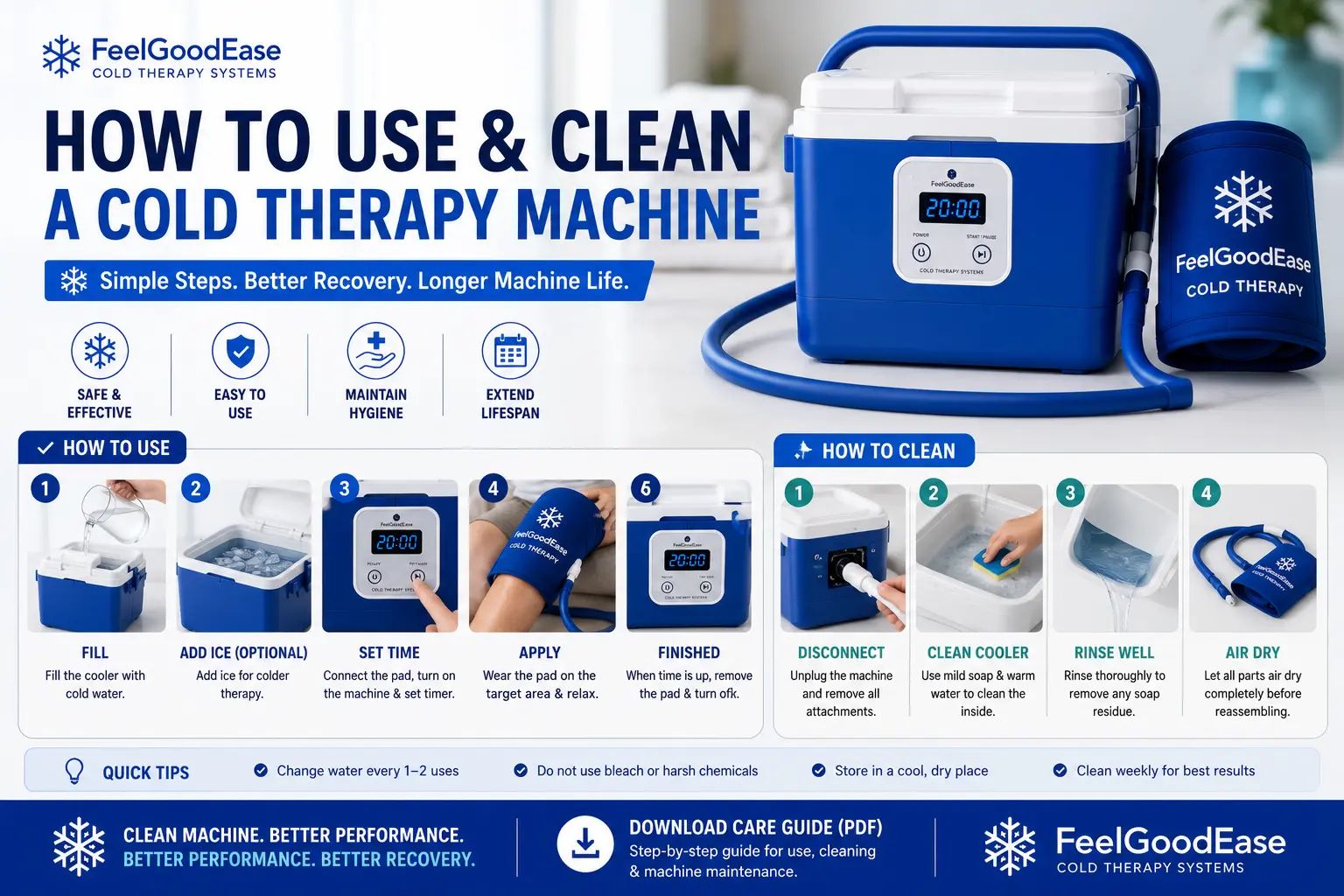

How to Use & Clean a Cold Therapy Machine After Surgery (Complete Guide)
Recovering from surgery is challenging enough yet many patients rely on basic ice packs expecting consistent relief for sore muscles only to face uneven cooling, persistent swelling and unnecessary discomfort. The intention is right but the execution is often missing one critical element proper guidance.
After procedures such as knee or shoulder surgery, pain and inflammation don’t just cause discomfort they can actively delay healing and limit mobility. When cold therapy is used incorrectly whether for the wrong duration without proper placement or without consistency it often leads to unpredictable results. In many cases recovery is slowed not because of the treatment itself but because patients were never shown how to use it effectively.
This is where a structured informed approach becomes essential.
A cold therapy machine also known as an ice therapy system or post-surgical cooling unit is designed to deliver controlled consistent cooling directly to the affected area. Unlike traditional ice packs these systems maintain a stable temperature over extended periods which is crucial for reducing inflammation safely and improving recovery outcomes.
From a clinical perspective consistency is what makes the difference.
Patients who understand how to properly use a cold therapy unit after surgery often experience:
- More effective pain relief
- Reduced swelling and inflammation
- Smoother more predictable progress in mobility
This guide is designed to provide that clarity.
You’ll learn how to set up and use your cold therapy machine correctly avoid common mistakes that limit its effectiveness clean and maintain your device safely and apply cold therapy in a way that supports rather than delays your recovery.
Everything shared here is grounded in real recovery experiences not just theory.
How These Machines Actually Work?
A medical ice machine works by continuously circulating chilled water from a reservoir through a connected therapy pad. This pad is designed to wrap securely around areas like the knee, shoulder or hip ensuring consistent contact with the treatment zone.
In practical use this is what creates a steady cooling effect something traditional ice packs struggle to maintain.
There are two main types of systems:
- Manual systems
These rely on gravity rather than a motor. They’re simpler in design but may provide less consistent circulation over time. - Motorized cold therapy machines
These use an electric pump to circulate water continuously delivering more even and controlled cooling especially beneficial after procedures like knee replacement or shoulder surgery.
You’ll also find pads designed for specific areas:
- Knee wraps for post-surgical recovery
- Shoulder pads for targeted stabilization
- Universal pads for general injuries
I’ve noticed that patients who use a properly fitted pad tend to get much better results compared to those using a generic option.
Key Benefits of Cold Therapy
Pain Relief
Cold therapy works by reducing nerve activity in the affected area which helps decrease the intensity of pain signals sent to the brain.
In real recovery scenarios, this is often the first benefit patients notice. Those using an ice machine after surgery usually report more consistent relief compared to short-term icing.
Accelerated Healing (Improved Flow)
When pain and swelling are controlled the body can focus more efficiently on repair.
From a clinical standpoint managing inflammation creates a more stable environment for tissue healing. I’ve found that patients using a surgical ice machine correctly often regain mobility sooner because they’re not constantly dealing with unmanaged swelling.
Why Proper Usage & Maintenance Matter
This is where many patients unintentionally go wrong.
It’s not uncommon to see someone using an ice machine for knee surgery for extended periods without proper skin protection or skipping cleaning altogether. Both can lead to avoidable complications.
From a safety perspective three factors make the biggest difference:
- Correct usage
Using the machine for the right duration and frequency - Skin protection
Always placing a barrier between the pad and skin - Regular cleaning
Preventing internal buildup especially in ice machines for after surgery
There’s also a practical side to consider.
A well-maintained cold therapy machine:
- Performs more consistently
- Lasts longer
- Delivers more reliable recovery support
Prioritizing Your Safety: Essential Precautions & Medical Considerations
Before You Begin: A Critical Safety Checklist
In practice, most issues with a cold therapy machine don’t come from the device itself they come from how it’s used.
A common assumption I see is:
“More cold means faster recovery.”
Unfortunately, the body doesn’t work that way.
When cold therapy is overused or applied incorrectly, it can slow healing, irritate the skin and in some cases lead to avoidable complications.
Consult Your Healthcare Provider First (Improved)
Every surgery and injury is different. Whether you’re using an ice machine after surgery or a cold therapy system for knee replacement your recovery plan should always be guided by a professional.
They will help you determine:
- When to start therapy
- How often to use it
- How long each session should last
I’ve come across patients who followed general online advice and ended up delaying recovery simply because it didn’t match their condition.
How Long Should You Use Cold Therapy Safely?
Cold therapy sessions should typically last 20-30 minutes with breaks in between. Longer exposure can damage skin and nerves without improving recovery outcomes.
One of the most common mistakes is overuse.
Safe guideline:
- 20-30 minutes per session
- Breaks between sessions
Using a cold therapy machine for knee or shoulder for extended periods without breaks can:
- Damage skin tissue
- Affect nerve sensitivity
- Disrupt natural healing processes
Consistency is important but more is not better.
Watch for Warning Signs (Improved Flow)
Your body gives clear signals when something isn’t right.
Stop using the machine immediately if you notice:
- Excessive redness
- Skin discoloration (pale, white or bluish tone)
- Blistering
- Numbness or tingling beyond normal cooling
If something feels unusual don’t ignore it. Acting early prevents more serious complications later.
Understanding Potential Risks (Improved Formatting)
Common risks include:
- Frostbite & Tissue Damage
Direct or prolonged exposure especially without a barrier can damage skin and underlying tissue - Nerve Sensitivity Issues
Leaving a surgical ice machine on too long may lead to temporary or prolonged nerve irritation - Delayed Recovery
Overuse can interfere with the body’s natural healing response which is necessary in controlled amounts
Step-by-Step Setup: Getting Your Cold Therapy Machine Ready for Use
Unboxing & Component Identification
I’ve seen many patients rush through setup assuming these machines are “plug-and-play.” That’s usually where problems begin poor circulation uneven cooling or small leaks that could have been avoided.
Taking a few extra minutes at the start makes a noticeable difference.
Improved List Formatting
Take a moment to lay everything out:
- Cooler unit (main reservoir)
- Therapy pad (knee, shoulder or universal)
- Connecting hoses
- Power adapter (for motorized systems)
Understanding how each component fits together helps prevent issues later on.
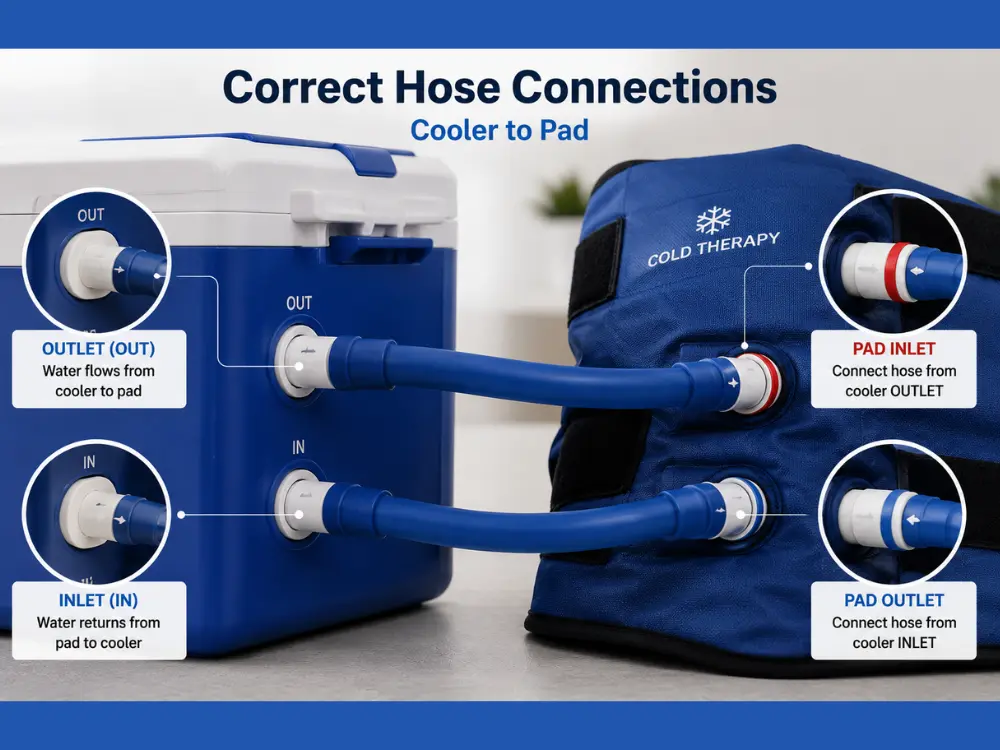
Connecting Section (Improved Variation)
This step is more important than most people realize.
What I often notice in practice is that inconsistent cooling in a cold therapy machine for knee or shoulder usually comes down to poor connections or restricted flow.
Here’s how to set it up correctly:
- Align the connectors (twist-lock or quick-release)
- Secure them until they feel firmly in place
- Make sure hoses are straight, not bent or twisted
Even a slight kink can affect how well your ice therapy machine circulates cold water.
Filling Section (Polished Flow)
This is where temperature control really starts.
Follow these steps:
- Open the cooler lid
- Add ice (about two-thirds full)
- Fill with water to the marked line
- Close the lid securely
Practical tip:
Using distilled water instead of tap water helps prevent mineral buildup inside your cold water therapy system keeping it running smoothly over time.
Another useful step:
Let the water sit with ice for 10-15 minutes before connecting the pad. This helps your post surgical ice machine reach effective cooling faster.
Powering On (Cleaner Flow)
Before applying the pad do a quick test.
Check the following:
- Plug the machine into a stable power source
- Turn it on (if motorized)
- Listen for a soft humming sound
- Look for water moving through the hoses
If there’s no circulation, recheck:
- Hose connections
- Water level
- Power supply
Using a medical ice machine without proper flow won’t deliver consistent results.
Why Proper Setup Directly Impacts Your Recovery
From a recovery standpoint setup isn’t just a technical step it directly affects your results.
A properly assembled cold therapy unit ensures:
- Consistent temperature delivery
- Even cooling across the treatment area
- Fewer interruptions during use
I’ve worked with patients who believed their ice machine after knee surgery wasn’t working when the issue was simply a minor setup mistake.
Optimizing Your Therapy Sessions for Maximum Benefit
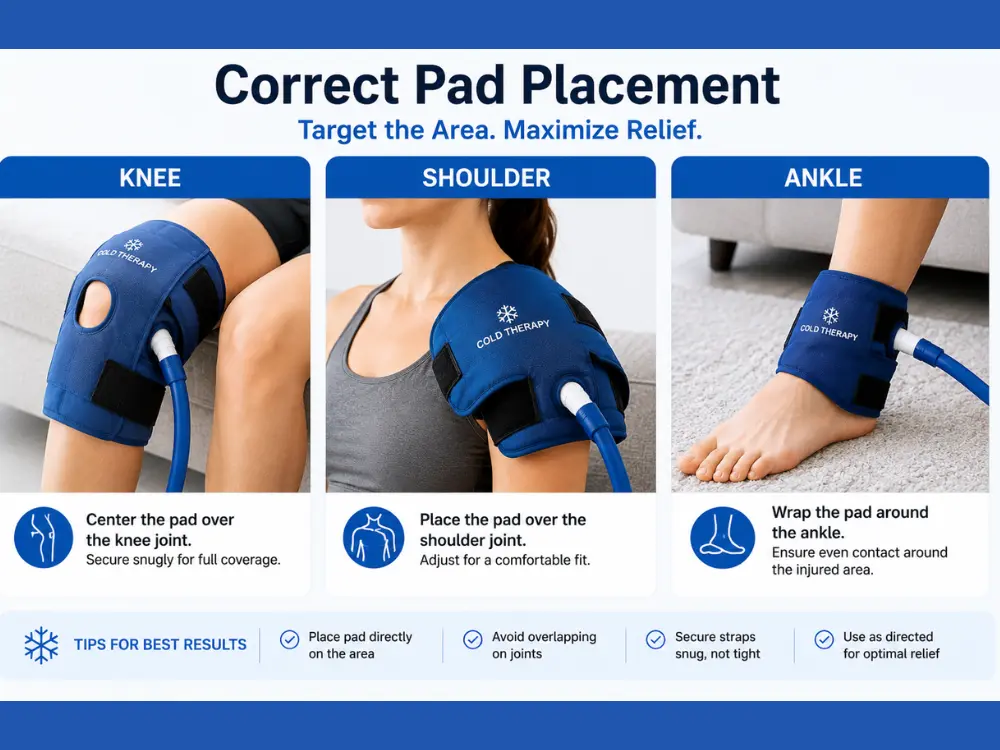
Proper Pad Placement
Even a high-quality cold therapy machine won’t deliver proper results if the pad isn’t positioned correctly.
A common issue I notice is slight misplacement especially after knee or shoulder surgery which leads to uneven cooling and slower swelling reduction.
Here’s what works best:
- Align the pad directly over the affected area
- Ensure full surface contact (no gaps)
- Use straps to secure it but avoid overtightening
If circulation is restricted, it can actually slow down recovery rather than help it.
Recommended Duration & Frequency
This is where many people get it wrong.
More isn’t better consistency is.
Short, repeated sessions are far more effective than long exposure. Patients using an ice machine after knee surgery in controlled intervals often recover more comfortably than those overusing it in one session.
General Guideline:
- 20-30 minutes per session
- Multiple sessions per day based on need
- Breaks between sessions to allow circulation
Managing Temperature & Comfort
Cold therapy should feel controlled not overwhelming.
A common misconception is that stronger cold leads to faster recovery. In reality, excessive cold can increase discomfort and reduce consistency in use.
To manage this properly:
- Always use a cloth barrier
- Start with a moderate temperature
- Adjust based on comfort not just settings
If you’re using a cold water therapy system the cooling remains consistent so monitoring your comfort becomes even more important.
Continuous vs Intermittent Cold Therapy: What’s Better?
Not all cold therapy machines for knee or shoulder operate the same way.
- Continuous mode
Delivers steady cooling typically used in early recovery to manage swelling - Intermittent mode
Cycles on and off often preferred later for comfort and gradual transition
In practice, many patients benefit from continuous cooling early on then shift to intermittent use as swelling improves.
Monitoring Your Skin During Therapy
This is one of the most overlooked but important steps.
Especially with a medical ice machine cooling can last longer than expected so regular skin checks are essential.
Watch for:
- Excessive redness
- Pale or bluish skin tone
- Tingling beyond mild cooling
- Any unusual discomfort
If something feels off stop immediately and reassess.
Why Proper Use Directly Affects Your Recovery
When used correctly, a cold therapy machine becomes more than just a pain relief tool it becomes a structured part of your recovery process.
Patients who:
- Place the pad correctly
- Follow proper timing
- Pay attention to their body’s response
…tend to recover more smoothly and with fewer setbacks.
Maintaining Hygiene: A Comprehensive Guide to Cleaning Your Machine
Routine Cleaning After Each Use
Hygiene is one of the most overlooked parts of using a cold therapy machine and also one of the most important.
You’re applying a post surgical ice machine directly to healing tissue. If the system isn’t cleaned properly, it can quickly become a source of bacteria increasing the risk of irritation or infection.
Here’s a simple routine to follow after every session:
- Drain all melted ice and water from the reservoir
- Wipe the inside of the cooler with a clean, damp cloth
- Clean the exterior surfaces and therapy pad
- Leave the lid open to air dry
Expert Tip: Make sure the reservoir, hoses and pad are fully dry before storing or reusing. Even a small amount of trapped moisture can lead to mold within a short time.
Why Proper Drying Is Critical for Safety
Moisture not dirt is usually the real issue.
A cold therapy unit that stays damp internally creates the perfect conditions for:
- Mold growth
- Mildew buildup
- Bacterial contamination
This becomes especially important when you’re using a medical ice machine repeatedly during recovery.
Drying isn’t just a maintenance step it’s part of safe therapy.
Periodic Deep Cleaning (Weekly or Bi-Weekly)
Routine wiping isn’t enough especially if you’re using your ice machine after surgery multiple times a day.
Here’s a more thorough cleaning method:
- Empty the reservoir completely
- Fill with warm water and a small amount of mild dish soap
- Run the machine for 5-10 minutes to circulate the solution
- Drain the soapy water
- Rinse thoroughly with clean (preferably distilled) water
- Repeat until no soap residue remains
This helps clean areas you can’t reach manually particularly inside hoses and internal channels.
Cleaning Tools & Smart Maintenance Tips
You don’t need anything complex but using the right tools helps.
- Use a soft cloth or sponge for the reservoir
- A small bottle brush or pipe cleaner can help clean hoses
- Avoid harsh chemicals that may damage the system
For the therapy pad:
- Wipe with a mild disinfectant suitable for plastics
- Rinse lightly if needed
- Let it dry completely before reuse
Using strong cleaners or skipping rinsing can affect the performance of your cold water therapy system over time.
Why Hygiene Directly Impacts Your Recovery
A clean machine isn’t just about maintenance it directly affects your recovery.
When using ice machines for after surgery:
- Skin sensitivity is higher
- Infection risk is increased
- Repeated use amplifies any hygiene issue
Keeping your cold therapy system clean ensures:
- Safe contact with healing tissue
- Consistent performance
- Greater confidence in using the device regularly
Preventing Mold, Mildew and Bacterial Growth
Why Drying Is the Most Critical Step
Cleaning alone doesn’t prevent problems drying does.
A common situation I’ve noticed is this everything gets cleaned properly but a small amount of moisture is left inside. A few days later, there’s odor, buildup or even visible mold inside the cold therapy machine.
The reason is simple moisture stays trapped.
Any ice therapy machine especially one used regularly after surgery naturally creates a damp internal environment. If that moisture isn’t fully removed it becomes a breeding ground for:
- Mold
- Mildew
- Bacteria
And when that system is applied to healing tissue hygiene becomes critical.
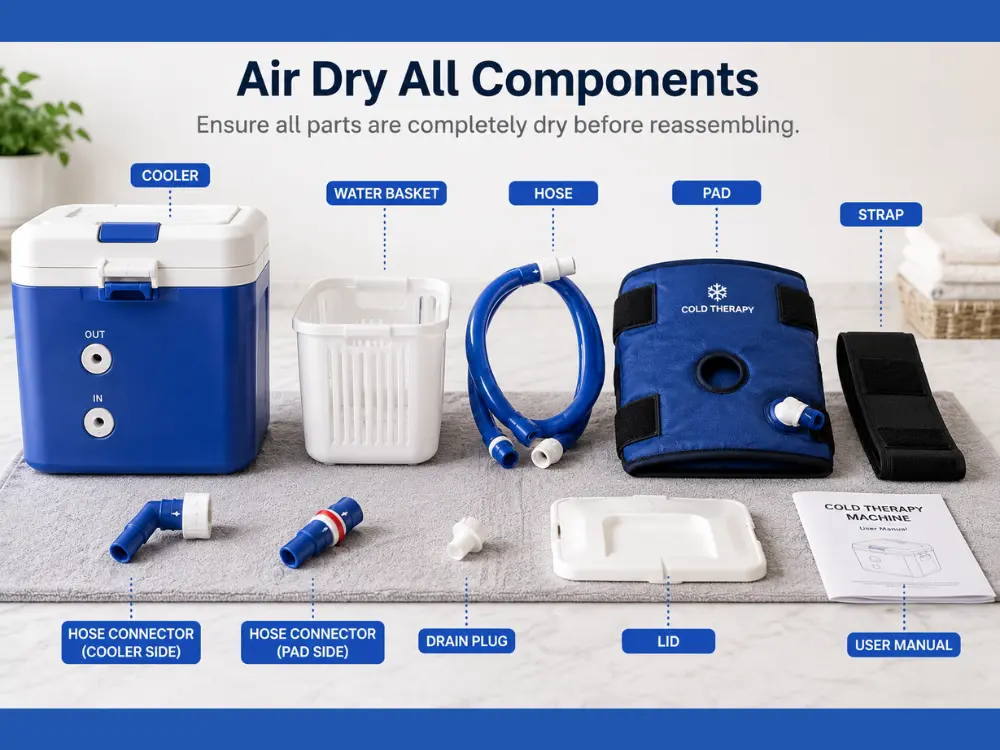
Proper Drying Techniques
Here’s a simple process that works reliably:
- Disconnect the replacement hose tube, pad and reservoir
- Leave all components open and separated
- Place them in a well-ventilated area
- Allow enough time for complete air drying
For accessible areas:
- Use a clean, dry towel to remove visible moisture
- Avoid storing or sealing the unit while damp
The most commonly missed areas are:
- Inside hoses
- Inner lining of the therapy pad
These areas hold moisture longer than expected especially in an ice machine after knee surgery used frequently.
Advanced Hygiene & Long-Term Storage Tips
If you’re storing your medical ice machine for a longer period or you’re in a humid environment small adjustments can make a big difference.
Practical steps:
- Place a desiccant packet inside the reservoir during storage
- Store the unit with the lid slightly open for airflow
- Use machine-safe cleaning solutions occasionally to prevent buildup
Even with distilled water residue can slowly form inside a cold water therapy system so occasional maintenance helps maintain performance.
Build a Simple Maintenance Routine (Improved Heading)
A simple routine makes everything easier.
Expert Tip: Set a recurring reminder for cleaning and drying.
It may seem minor but it prevents most of the problems I’ve seen with ice machines for after surgery.
Consistency helps you:
- Maintain hygiene
- Keep performance stable
- Avoid unexpected issues during recovery
Why Proper Drying Directly Affects Recovery
Hygiene isn’t just about the machine it’s about what touches your body.
A poorly maintained post surgical ice machine can:
- Irritate already sensitive skin
- Introduce bacteria to healing areas
- Make patients hesitant to use the device consistently
On the other hand a properly cleaned and dried system supports:
- Safe repeated use
- Better consistency in therapy
- More predictable recovery progress
Troubleshooting Common Issues & Finding Solutions
Leaks or Drips
Leaks are one of the most common and usually easiest issues to fix.
In many cases, the problem isn’t the machine itself but how it’s set up.
Start by checking:
- Are the hose connections fully locked in place?
- Is the reservoir lid tightly sealed?
- Are there any visible cracks in the hoses or pad?
Even a slightly loose connection in a cold therapy system can cause dripping during use.
If everything looks secure and the issue continues it may point to a worn or damaged component.
Insufficient Cooling or Water Flow
This is a common concern especially in the early days of using an ice machine after surgery.
If cooling feels weak or uneven check the following:
- Ice-to-water ratio (too little ice reduces effectiveness)
- Hoses for bends or blockages
- Pump operation (listen for a gentle hum)
Practical tip: Try elevating the cooler slightly above the treatment area. This can improve water flow particularly in systems that rely partly on gravity.
Even a small adjustment like this can noticeably improve performance.
Unusual Noises
Not all sounds indicate a problem but some are worth paying attention to.
- Gurgling sound
Often caused by air trapped in the system
→ Let the unit run briefly or gently tilt it to release air - Grinding or harsh noise
May indicate a pump issue in your medical ice machine
→ Best to stop and check before continuing
If the sound suddenly changes or feels unusual it’s better to pause and inspect the system.
Power Problems
Power issues are usually simple to resolve.
Start with basic checks:
- Ensure the adapter is securely plugged in
- Test the wall outlet with another device
- Inspect the cable for any visible damage
What seems like a machine fault often turns out to be a connection issue.
When to Contact Manufacturer Support
There’s a point where troubleshooting should stop.
You should reach out if:
- The issue continues after basic checks
- There’s visible damage to key components
- The pump isn’t functioning
- Cooling remains inconsistent
Using a faulty post surgical ice machine can affect both safety and recovery.
A Simple Troubleshooting Approach (Improved Heading)
A simple step-by-step approach makes troubleshooting much easier.
Follow this sequence:
- Identify the issue (leak, cooling, noise, power)
- Check the most common cause
- Apply a quick fix
- Re-test before use
Most problems can be resolved quickly with this method without disrupting your recovery routine
Preparing for Storage
Long-term performance of a cold therapy machine depends less on how often it’s used and more on how well it’s stored.
A common issue I’ve come across is this: the machine works perfectly during recovery but after a few months in storage it develops odor, buildup or internal damage. In most cases improper storage is the cause.
Here’s the right approach:
- Drain all water from the reservoir, hoses and pad
- Perform a full deep clean
- Leave all components open until completely dry
Expert Tip: Drying isn’t optional. Any moisture left inside a cold therapy unit can lead to mold and reduce the lifespan of the machine.
Optimal Storage Conditions
Where you store your cold therapy system makes a noticeable difference over time.
Avoid:
- Damp or humid areas (such as bathrooms or basements)
- Direct sunlight, which can weaken plastic components
- Extreme temperatures that may affect seals and internal parts
Instead:
- Choose a clean, dry, well-ventilated space
- Keep the unit covered to protect it from dust
- Store hoses and pads without bending or compressing them
Improper storage can lead to cracks or wear especially in components like hoses.
Pre-Use Check After Storage
Before using your cold therapy machine for knee or shoulder again take a moment to inspect it.
Check for:
- Cracks in hoses or connectors
- Signs of wear or stiffness in the therapy pad
- Loose or weakened fittings
Expert Tip:
Make this a habit before every use not just after storage. It helps prevent issues during therapy especially with ice machines for after surgery.
Run a Quick Test Before Use (Improved Heading)
Once everything looks fine run a quick test:
- Fill the reservoir with clean water
- Power on the machine
- Check for smooth water circulation
- Look for leaks or irregular flow
This ensures your cold water therapy system is working properly before it comes into contact with your skin.
Why Proper Storage Directly Impacts Performance
Maintenance doesn’t end after recovery it affects how the machine performs later.
A well-maintained post surgical ice machine:
- Remains safe to use
- Delivers consistent cooling
- Reduces the risk of unexpected issues
On the other hand poor storage habits can lead to:
- Hygiene problems
- Reduced cooling efficiency
- Component wear or failure
Recognizing When Self-Management Isn’t Enough
A cold therapy machine can support recovery but it’s not a replacement for medical guidance.
A situation I’ve come across more than once is patients continuing to use an ice machine after surgery even as symptoms worsen, assuming it’s part of normal healing. In many cases, that delay only makes recovery more difficult.
Knowing when to pause and seek advice is just as important as using the machine correctly.
Persistent or Worsening Symptoms
If your symptoms:
- Don’t improve over time
- Start getting worse
- Feel different than expected
…it’s time to speak with your doctor.
While a cold therapy system helps manage inflammation, it doesn’t address underlying complications. Ongoing symptoms may indicate:
- Improper healing
- Excessive inflammation
- A need to adjust your recovery plan
Adverse Reactions to Cold Therapy
Most patients tolerate cold therapy well but when reactions or contraindications occur they shouldn’t be ignored.
Watch for:
- Blistering or burning sensations
- Skin turning pale, white or bluish
- Numbness that doesn’t resolve after stopping
If these signs appear stop using the machine and seek advice. Early action helps prevent more serious issues.
Uncertainty About Treatment Protocol
Recovery isn’t one-size-fits-all.
If you’re unsure about:
- How long to use your cold therapy machine for knee
- How often sessions should be done
- Whether to use continuous or intermittent modes
…it’s always better to ask.
Getting clarity ensures your ice therapy machine is supporting not disrupting your recovery.
Machine Malfunction Affecting Safety
A faulty cold therapy unit isn’t just inconvenient it can become unsafe.
Stop using the machine if:
- Cooling becomes inconsistent or too intense
- Leaks continue despite basic checks
- The pump isn’t functioning properly
Continuing to use a compromised post surgical ice machine can lead to uneven therapy or skin-related issues.
Why Medical Guidance Matters Most
Tools like ice machines for after surgery are designed to support recovery not replace medical care.
This guide provides practical guidance for using a cold therapy machine but it cannot account for:
- Individual health conditions
- Surgical variations
- Unique recovery responses
Your healthcare provider remains the best source for:
- Diagnosis
- Treatment adjustments
- Safe recovery decisions
Your Daily & Weekly Cold Therapy Checklist
A structured routine can make a noticeable difference in recovery.
What I’ve noticed over time is that patients who follow a simple system rather than using their cold therapy machine randomly tend to recover more smoothly and with fewer setbacks.
This checklist helps you stay consistent with both therapy and maintenance.
You can also print this and use it daily during recovery.
Daily & Weekly Cold Therapy Routine
| Task Category | Action Item | Frequency | Completed (Y/N) |
| Daily Use | Check all hose connections are secure and properly locked | Before each use | ☐ |
| Ensure a protective skin barrier (towel or wrap) is in place | Before each use | ☐ | |
| Monitor skin for redness, numbness, or discomfort | During therapy | ☐ | |
| Drain all water and melted ice from the reservoir | After each use | ☐ | |
| Wipe down the exterior and therapy pad with a clean cloth | After each use | ☐ | |
| Weekly Maintenance | Perform deep cleaning of the reservoir (mild soap + warm water) | Weekly | ☐ |
| Run cleaning solution through hoses to remove buildup | Weekly | ☐ | |
| Ensure all components are completely dry | Weekly | ☐ | |
| Inspect hoses and pad for cracks, leaks or wear | Weekly | ☐ | |
| Review therapy duration and frequency with your recovery plan | Weekly / As needed | ☐ |
Why This Checklist Matters
Consistency is what makes cold therapy effective.
A pattern I’ve seen repeatedly is this patients start strong with their ice machine after surgery but over time they:
- Skip cleaning
- Rush setup
- Ignore small warning signs
That’s usually when problems begin.
Following a checklist like this helps you:
- Maintain safe and effective therapy
- Prevent hygiene-related issues
- Extend the lifespan of your cold therapy unit
- Stay aligned with your recovery plan
FAQ’s
How long does the ice last in a cold therapy machine?
Ice in a cold therapy machine typically lasts 4 to 8 hours depending on usage and setup. Using more ice, pre-chilled water and keeping the lid closed can extend cooling time.
Cooling time depends on setup more than most people think:
- Use enough ice (not just water)
- Keep the lid closed properly
- Start with pre-chilled water
Small setup details can significantly affect performance..
Can I put anything other than water and ice in the reservoir?
No, you should only use clean water and ice in a cold therapy machine. Adding substances like oils, salt or chemicals can damage the internal system.
Avoid using:
- Essential oils
- Disinfectants
- Salt or chemical additives
Stick to:
- Distilled water
- Clean ice
What if my machine is making a gurgling noise?
A gurgling noise in a cold therapy machine is usually caused by air in the system and is not a serious issue.
To fix it:
- Let the machine run for a few minutes
- Slightly tilt or adjust the unit
The sound typically resolves on its own.
Is it normal for my skin to feel numb after therapy?
Yes, mild numbness is normal during cold therapy as it helps reduce pain and inflammation. However, prolonged numbness may indicate overexposure.
- Mild numbness → normal
- Long-lasting numbness → reduce session time
How do I know if the temperature is correct?
The correct temperature in a cold therapy machine should feel cool and comfortable not painfully cold.
- Comfort is the best indicator
- Cooling should feel steady
- Adjust if it feels too cold
Can I use a cold therapy machine while sleeping?
No, it is not recommended to use a cold therapy machine while sleeping because you cannot monitor skin condition or adjust the device.
Risks include:
- Skin damage
- Overexposure
- Improper positioning
Where can I find replacement parts or therapy pads?
You can find replacement parts for a cold therapy machine through the manufacturer or authorized sellers. Always use compatible parts to ensure safety and performance.
Conclusion: Take Control of Your Recovery with Confidence
Recovery becomes much easier when you move from guesswork to a structured approach.
A cold therapy machine isn’t just a comfort tool it’s a controlled recovery system. When used correctly, it helps manage pain, reduce swelling and support the body’s natural healing process.
But the real difference comes from how consistently and correctly it’s used.
By following this guide you’re not just learning:
- How to set up a cold therapy unit
- How to clean and maintain it
- How to avoid common mistakes
You’re building a recovery routine that is:
- Safe
- Consistent
- Based on real-world use
Small habits like proper setup, regular cleaning and paying attention to your body make a bigger difference than most people expect.
Making Long-Term Recovery Easier
Cleaning and maintaining your cold therapy machine properly is just as important as using it correctly. A well-maintained system performs more reliably, stays more hygienic and can provide consistent cooling throughout your recovery. Regular cleaning, timely replacement of worn accessories and following the manufacturer’s maintenance instructions all help extend the life of the device.
If you’re choosing a cold therapy machine for home recovery, look for a system that’s easy to clean, simple to maintain and supported with readily available replacement accessories. The FeelGoodEase Cold Therapy Knee Machine is one example of a home-use system designed for regular post-operative recovery. Whatever device you use, consistent maintenance and following your healthcare provider’s instructions will help you get the most from your treatment.
Always keep in mind:
- Safety comes first
- Hygiene directly affects recovery
- Your healthcare provider’s guidance should always lead
When you combine the right knowledge with consistent habits tools like a medical ice machine or ice machine after surgery can genuinely improve how smoothly you recover.
