
🚚 Free Shipping (3-5 Business Days) | 🛡️ 30-Day Money-Back Guarantee | 🏆 6-Month Warranty | ⭐ Trusted by 1000+ Happy Customers
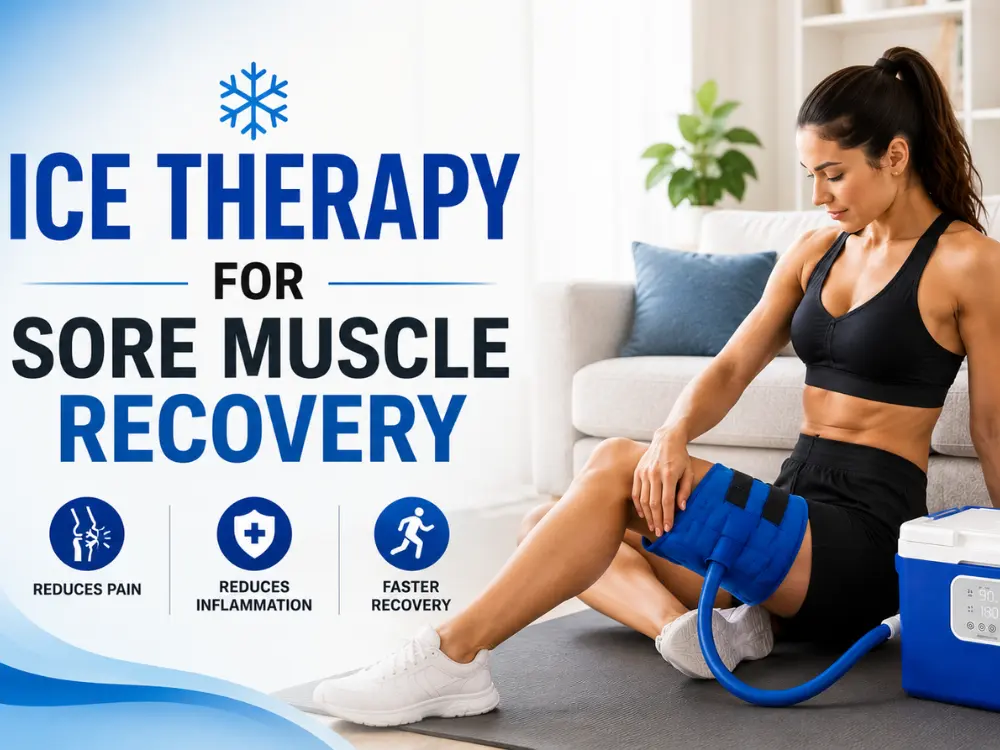

Ice Therapy for Muscle Recovery: Benefits, Timing & How to Use It
Muscle soreness has a way of interfering with everything training, movement and even simple daily tasks. What makes it more frustrating is that many people try different recovery methods without really understanding what their muscles actually need. The result is often inconsistent relief and slower progress.
In practice, this usually comes down to one issue unmanaged inflammation. Whether it’s after a workout or from physical strain, the body’s response can easily become excessive leading to prolonged stiffness and discomfort.
Ice therapy for sore muscles is one of the most effective ways to reduce inflammation, relieve pain and support faster recovery when used correctly. It works by controlling tissue stress and calming the body’s inflammatory response helping muscles recover more efficiently after strain or exercise.
From a recovery standpoint, cold therapy is simple but often misunderstood. Used at the right time, it supports healing. Used incorrectly, it can delay it.
In this guide, I’ll walk you through how to use cold therapy for muscle recovery in a way that actually works in real-life situations, including:
- What ice therapy is really doing inside your muscles
- When to use it and when to avoid it
- Practical methods that deliver consistent results
- The mistakes that often slow recovery without people realizing it
The goal is straightforward help you move beyond trial-and-error and use muscle soreness relief strategies that are safe, effective and reliable so your recovery becomes more predictable not frustrating.
What is Ice Therapy (Cryotherapy) for Muscles?
Ice therapy (cryotherapy) is the controlled use of cold to reduce inflammation, relieve pain and support muscle recovery after physical stress or injury. By lowering tissue temperature, it helps limit swelling calm irritated muscles and create better conditions for healing.
Defining Cryotherapy in Muscle Recovery
Cryotherapy works by influencing how the body responds to muscle stress.
When muscles are strained whether from exercise or overuse the body increases blood flow to the area, triggering inflammation. While this is part of the healing process excessive inflammation often leads to prolonged soreness and stiffness.
Cold therapy helps regulate this response keeping it controlled rather than excessive.
There’s also an important distinction that’s often overlooked:
- Targeted ice therapy → applying an ice pack directly to a specific muscle
- General cold exposure → methods like ice baths, cold plunges or cold showers affecting the whole body
Targeted application is typically more effective for localized pain while broader methods like an ice bath for muscle recovery are used to support overall recovery after intense physical activity.
A Brief Look at Its Use in Recovery
Cold has been used for pain relief for centuries including effective cold therapy for arthritis pain. The principle hasn’t changed but the way it’s applied has become more structured.
Modern recovery focuses on:
- Controlled duration
- Safe skin protection
- Consistent application
Without this structure icing often becomes ineffective or even counterproductive.
Primary Goals of Ice Therapy
Ice therapy supports recovery in three key ways:
1. Reducing Inflammation and Swelling
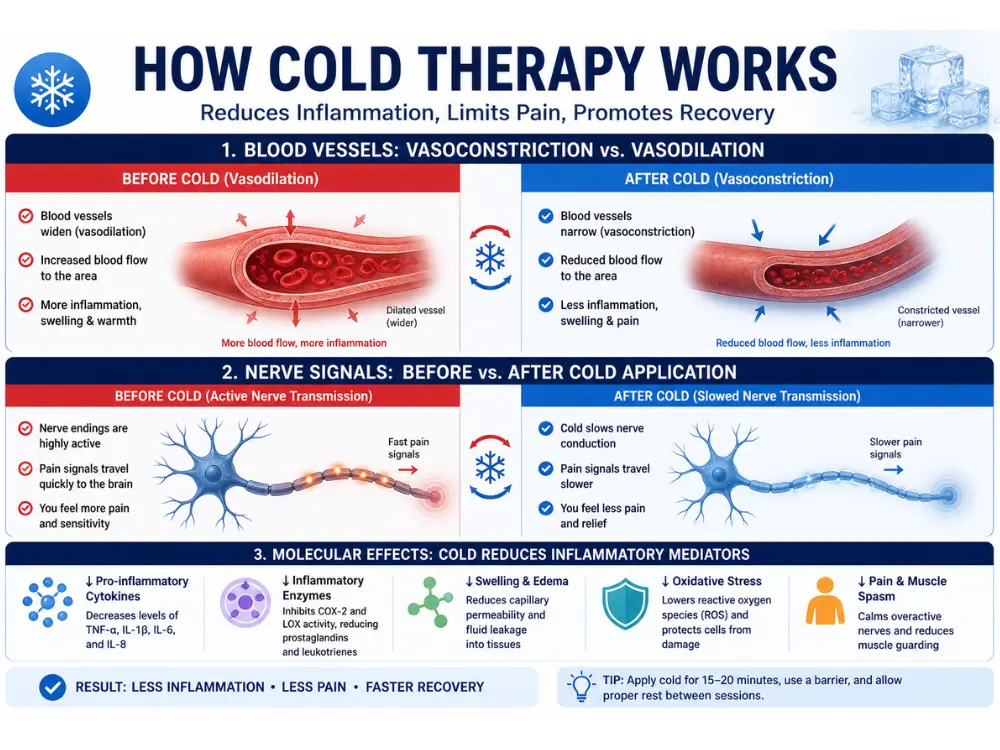
After muscle stress or injury, fluid builds up in the tissue. Cold helps constrict blood vessels, limiting excessive swelling and reducing internal pressure within the muscle.
2. Alleviating Pain
Cold slows down nerve activity in the affected area. This is why using an ice pack for sore muscles can quickly reduce discomfort especially after intense activity.
3. Supporting Tissue Recovery
By controlling inflammation, the body can focus more efficiently on repair. This makes cold therapy an important part of structured muscle recovery therapy rather than just short-term relief.
Types of Muscle Soreness Ice Therapy Helps With
Cold therapy is most effective in the following situations:
Acute Muscle Strains (Early Phase)
In the early stage of a strain or pull, inflammation rises quickly. Ice helps control that response and prevents excessive swelling.
Delayed Onset Muscle Soreness (DOMS)
This type of soreness appears 24-48 hours after exercise. While not an injury, it still involves micro-damage and inflammation. Cold therapy for muscle soreness can help reduce discomfort and improve recovery time.
Overexertion and General Muscle Fatigue
After prolonged physical effort muscles often become irritated and fatigued. Cold therapy helps calm this response and supports recovery.
The Science Behind the Chill: How Ice Therapy Works
Ice therapy works by reducing blood flow, slowing cellular activity and decreasing pain signals in the affected muscles. This helps control inflammation protect stressed tissue and support faster more efficient recovery.
Understanding Physiological Mechanisms
Cold therapy changes how the body responds to muscle stress at both a vascular and cellular level. It doesn’t just ease discomfort it helps regulate the conditions in which healing takes place.
Vasoconstriction
Vasoconstriction refers to the narrowing of blood vessels in response to cold exposure.
When this happens:
- Blood flow to the affected area decreases
- Swelling is kept under control
- Pressure within the muscle is reduced
Managing this early response is critical especially in muscle pain treatment where excessive swelling can delay recovery.
Reduced Metabolic Activity
Cooling the tissue slows down cellular activity.
In practical terms, this reduces how much oxygen and energy the muscle requires during a stressed state.
- Less strain on damaged cells
- Lower risk of secondary tissue damage
- Greater stability during early recovery
This becomes particularly important in muscle strain or overuse where the tissue is already compromised.
Anti-Inflammatory Effects
Inflammation is necessary for healing but too much of it can prolong soreness.
After muscle stress, the body releases inflammatory chemicals such as cytokines. These help initiate repair but when the response becomes excessive, it leads to stiffness and discomfort.
Cold therapy helps keep this response under control:
- Slows down inflammatory signaling
- Limits unnecessary swelling
- Supports a more balanced recovery process
This is why cold therapy for muscle soreness is commonly used after intense physical activity.
Pain Signal Modulation (Analgesic Effect)
Cold exposure also affects how pain signals travel through the nerves offering insights into ice therapy for sciatica.
- Nerve activity slows down
- Sensitivity in the area decreases
- Pain perception is reduced
This explains why ice for sore muscles provides quick relief even though deeper healing continues in the background.
Key Benefits of Applying Ice to Sore Muscles
Ice therapy helps reduce inflammation, relieve pain, protect muscle tissue and support faster recovery after physical stress or injury. By controlling how the body responds to muscle stress, it improves both comfort and the overall healing process.
Reduced Inflammation and Swelling
One of the main reasons ice is used in muscle soreness treatment is its ability to manage inflammation.
When muscles are stressed fluid and inflammatory chemicals build up in the tissue. This leads to swelling, stiffness and reduced mobility.
Cold application helps keep this response under control:
- Limits excessive fluid accumulation
- Reduces pressure within the muscle
- Prevents inflammation from becoming prolonged
When swelling is managed early recovery tends to be smoother and more predictable.
Effective Pain Relief
Pain relief is usually the first noticeable effect.
Cold exposure slows down how nerve signals are transmitted which reduces the intensity of pain.
In practical terms:
- Sharp or throbbing discomfort becomes less intense
- Movement feels easier
- Muscle tension begins to ease
Cold can also help reduce muscle spasms triggered by irritation or overuse making ice therapy for sore muscles particularly useful after intense activity.
Accelerated Muscle Recovery
Recovery depends on how well the body manages inflammation and tissue stress.
By keeping inflammation controlled ice allows the body to focus more efficiently on repair.
- Muscles return to normal function sooner
- Recovery time between sessions is reduced
- Training consistency improves
There’s also a secondary benefit when inflammation is regulated the body becomes more efficient at clearing metabolic byproducts that build up after exercise.
Prevention of Secondary Tissue Damage
This is often overlooked but highly important.
After a strain or injury or effectively after knee surgery nearby tissues can also become affected due to reduced blood flow and oxygen supply.
Cold therapy helps stabilize the area:
- Limits the spread of inflammation
- Reduces the risk of additional cellular damage
- Protects surrounding healthy tissue
Early control of this process can make a noticeable difference in how quickly and safely recovery progresses.
When to Reach for the Ice: Acute Injury vs. DOMS
Ice therapy is most effective immediately after an acute injury (within 24-48 hours) and can also help manage post-exercise soreness (DOMS) when inflammation is limiting movement. The key is timing because using ice at the right stage makes a measurable difference in recovery.
Acute Injuries (Sprains, Strains, Bruises)
With sudden injuries the early phase matters most.
Inflammation builds quickly in the first 24-48 hours and this is where ice has the greatest impact.
Why ice is used at this stage:
- Helps control bleeding and swelling
- Reduces pain early on
- Limits unnecessary tissue stress
A structured approach like the R.I.C.E. protocol is still one of the most reliable ways to manage early-stage muscle pain treatment:
Rest
Reduce movement to prevent further strain.
Ice
Apply cold therapy in short intervals (around 15-20 minutes) to manage swelling and discomfort.
Compression
Use a wrap or bandage to limit fluid buildup.
Elevation
Raise the injured area above heart level to help reduce swelling.
Early management often determines how long recovery will take especially in cases of muscle strain.
Delayed Onset Muscle Soreness (DOMS)
DOMS typically appears 24-72 hours after intense or unfamiliar activity.
Unlike acute injuries, it develops gradually and is linked to micro-damage within the muscle.
Where ice helps:
- Reduces lingering inflammation
- Eases stiffness and discomfort
- Supports recovery between training sessions
Expert Tip: Timing Matters More Than Method
One of the most common issues isn’t what people use it’s when they use it.
Applying ice early makes a noticeable difference:
- After injury → use ice as soon as possible
- After intense exercise → apply within the first few hours
Delaying cold therapy often reduces its effectiveness especially when inflammation has already progressed.
When NOT to Use Ice (Important Safety Considerations)
Ice isn’t suitable in every situation.
Use caution or avoid it if you have:
- Circulatory conditions such as Raynaud’s disease
- Open wounds or compromised skin
- Reduced sensation or nerve-related conditions
- Cold hypersensitivity
- Advanced diabetes affecting circulation
If the body can’t respond properly to cold the risk of tissue damage increases.
Crucial Advice for Recovery
If pain continues longer than expected or begins to worsen, it’s important not to rely only on self-treatment.
Ongoing discomfort increasing swelling or restricted movement may indicate a more serious issue that needs proper evaluation.
How-To Guide to Ice Therapy Methods
Effective ice therapy isn’t just about applying cold it’s about using the right method for the right duration with proper skin protection. When done correctly, it becomes a consistent and reliable part of sore muscles treatment.
Understanding the “Feel the Freeze” Sensation
Ice therapy rarely feels comfortable at first and that’s expected.
There’s a typical progression most people notice:
- Intense cold
- Tingling
- Mild burning
- Aching
- Followed by numbness
Reaching that final stage matters. It’s when the cold has fully influenced nerve activity and the surrounding tissue.
A common mistake is stopping too early, usually during the “burning” phase. That’s often where the therapeutic effect is just starting.
Allowing the area to reach mild numbness is what supports effective muscle soreness relief.
Ice Packs (Gel Packs or Crushed Ice)
This is the most practical and widely used method for ice therapy for sore muscles.
How to prepare:
- Use a gel pack or crushed ice
- Wrap it in a thin towel or cloth (avoid direct skin contact)
How to apply:
- Place it directly over the affected muscle
- Keep the area relaxed during application
Duration & frequency:
- 15-20 minutes per session
- Repeat every 2-3 hours in the early phase
Important safety note:
Always use a barrier. Direct contact increases the risk of skin irritation or ice burns.
This method works well for general muscle pain treatment and post-activity soreness.
Ice Massage
A more targeted approach especially useful for smaller or specific pain areas.
How to prepare:
- Freeze water in a paper cup
- Peel back the top to expose the ice
How to apply:
- Move the ice slowly in circular or back-and-forth motions
- Focus on the exact sore area
Duration:
- 5-10 minutes or until numbness develops
Best suited for:
- Localized muscle knots
- Trigger points
- Smaller muscle groups
This allows focused therapy for sore muscles without affecting surrounding areas.
Ice Baths / Cold Plunges
For broader recovery full-body cold exposure can be useful especially after intense training.
How to prepare:
- Water temperature: 10-15°C (50-60°F)
- Ensure enough water to cover the target area
How to apply:
- Enter gradually
- Keep movements slow and controlled
Duration:
- 10-15 minutes maximum
Benefits:
- Supports full-body muscle recovery after workout
- Helps reduce widespread soreness
- Improves recovery consistency
Cold Compression Therapy Devices
Which require a reliable power adapter combine cold exposure with controlled compression.
How they work:
- Maintain consistent cold temperature
- Apply gentle pressure to reduce swelling
Benefits:
- More controlled than standard ice packs
- Useful for joint-related recovery
- Helps manage swelling more efficiently
They’re particularly helpful when consistency becomes difficult with manual methods.
Comparative Analysis of Ice Therapy Methods
Choosing the right ice therapy method often makes a bigger difference than people expect. Each approach works slightly differently depending on the type of soreness and how widespread it is.
| Method | Best For | Application Time | Pros | Cons | Tips |
| Ice Packs (Gel/Crushed) | Localized soreness, acute injuries, general muscle pain treatment | 15-20 mins | Easy to use, reusable, effective for targeted areas | Crushed ice can be messy, cooling may not be uniform | Always use a cloth barrier, secure with a wrap for better contact |
| Ice Massage | Small muscle groups, trigger points, tender areas | 5-10 mins | Highly targeted, effective for deep, localized relief | Requires active effort, can feel intense initially | Keep the ice moving continuously, stop if skin becomes overly pale or irritated |
| Ice Baths / Cold Plunge | Full-body soreness, post-intense workouts, muscle recovery after workout | 10-15 mins (max) | Covers large muscle groups, useful for overall recovery | Very intense, requires setup, not suitable for everyone | Enter gradually, control breathing, avoid staying longer than recommended |
| Cold Compression Devices | Post-surgical recovery, severe swelling, joint-related muscle issues | As per device guidelines | Combines cold + compression for more controlled recovery | Expensive, less portable, sometimes requires medical guidance | Follow instructions carefully, ideal when consistent therapy is needed |
Ice vs. Heat: Making the Right Choice for Your Pain
Ice helps reduce inflammation and numb pain while heat improves blood flow and relaxes tight muscles. The right choice depends on what your muscle is dealing with active inflammation or lingering stiffness.
Understanding the Core Difference
This is one of the most common points of confusion in recovery.
- Ice (Cold Therapy):
Causes vasoconstriction (narrowing of blood vessels), which helps reduce swelling, inflammation and pain. - Heat (Thermal Therapy):
Causes vasodilation (widening of blood vessels), increasing circulation, relaxing muscles and easing stiffness.
These effects are opposite which is why using the wrong one at the wrong time can slow recovery instead of helping it.
When to Use Ice
Ice is most useful when inflammation is present.
Use ice for:
- Acute injuries (first 24-48 hours)
- Swelling, bruising or visible inflammation
- Sharp or throbbing pain
- Post-exercise inflammation
This is where ice therapy for sore muscles becomes particularly effective especially after strain or intense activity.
When to Use Heat
Heat becomes more useful once inflammation has settled.
Use heat for:
- Chronic muscle pain (after 48 hours)
- Stiff, tight, or aching muscles without swelling
- Before activity (light heat to improve flexibility)
- General muscle relaxation
In these situations heat therapy for sore muscles helps restore movement rather than control inflammation.
Ice vs. Heat Decision Guide
| Symptom / Condition | Use Ice | Use Heat | Why |
| Acute Injury (sprain, strain, fresh bruise) | ✅ | ❌ | Ice reduces swelling, inflammation and numbs acute pain |
| Delayed Onset Muscle Soreness (DOMS) | ✅ | ⚠️ (after 24-48h for stiffness) | Ice helps control inflammation early heat may help later stiffness |
| Chronic Muscle Stiffness / Aches | ❌ | ✅ | Heat increases blood flow and relaxes tight muscles |
| Swelling / Inflammation | ✅ | ❌ | Ice limits fluid buildup heat can worsen swelling |
| Muscle Spasms / Cramps | ✅ (initially) | ✅ (after initial pain) | Ice reduces irritation first heat helps muscles relax afterward |
| Arthritis Flare-up | ✅ | ✅ | Ice for inflammation heat for stiffness |
Where People Go Wrong
Applying heat too early is one of the most common issues.
When used on a fresh injury or inflamed muscle heat can:
- Increase swelling
- Delay recovery
- Intensify discomfort
At the same time relying only on ice for long-term stiffness can limit mobility and delay muscle relaxation.
Common Mistakes to Avoid & Safety Precautions
Ice therapy works well but only when it’s used correctly. Poor application can delay recovery or even cause tissue damage. Most problems come from small mistakes in timing, duration or technique rather than the method itself.
Common Mistakes
Certain patterns tend to lead to poor results in muscle soreness treatment.
Applying Ice Directly to Skin
This is a frequent mistake.
Direct contact increases the risk of ice burns or frostbite especially during longer sessions. A simple barrier makes a significant difference.
Icing for Too Long
More exposure doesn’t improve results.
Excessive icing can:
- Irritate the tissue
- Affect nerve function
- Trigger rebound swelling once circulation returns
Controlled duration is far more effective than prolonged application.
Ignoring Discomfort or Pain
Some discomfort is expected particularly at the beginning.
However, sharp pain, intense burning or unusual numbness should not be ignored. These are signs that the application needs to be adjusted or stopped.
Using Ice for Chronic Stiffness
Cold therapy is often used in situations where heat would be more appropriate.
If there’s no visible inflammation relying only on ice can:
- Reduce flexibility
- Delay muscle relaxation
Skipping Proper Diagnosis
Relying only on ice for a more serious issue can delay proper treatment.
Persistent or worsening pain should always be assessed. Ice can support recovery but it doesn’t replace diagnosis.
Essential Safety Protocols
A few simple guidelines make ice therapy much safer and more effective.
Follow the 15-20 Minute Rule
Limit each session to 15-20 minutes followed by a break.
This helps:
- Protect the skin
- Maintain healthy circulation
- Support effective cold therapy for muscle recovery
Always Use a Barrier
A thin cloth or towel between the ice and skin prevents most cold-related injuries.
Avoid Prolonged, Uncontrolled Exposure
Falling asleep with an ice pack or leaving it on too long increases the risk of tissue damage without immediate warning.
Monitor Skin Response
Pay attention to visible changes:
- Excess redness
- Pale or waxy skin
- Blistering or unusual discoloration
If any of these appear stop the application.
Pay Attention to Sensation
Cold exposure should follow a predictable pattern (cold → tingling → numbness).
If the sensation becomes sharp or uncomfortable beyond this range reassess the application.
When to Seek Professional Advice
Ice therapy has its limits.
You should seek professional evaluation if:
- Pain persists longer than expected
- Swelling continues to increase
- Movement becomes more restricted
- Symptoms feel unusual or severe
Early assessment often prevents longer-term complications.
Debunking Common Ice Therapy Myths
Myth: “Ice Stops Healing”
This comes from misunderstanding how inflammation works.
Ice doesn’t stop healing it helps control excessive inflammation. The goal is to keep the response balanced not eliminate it completely.
Myth: “You Should Never Use Ice After 48 Hours”
This depends on the situation.
- Acute injuries → ice is most useful in the first 24-48 hours
- Muscle soreness relief (DOMS) → ice can still help beyond that
- Chronic stiffness → heat is usually more effective
The condition of the tissue matters more than a fixed timeline.
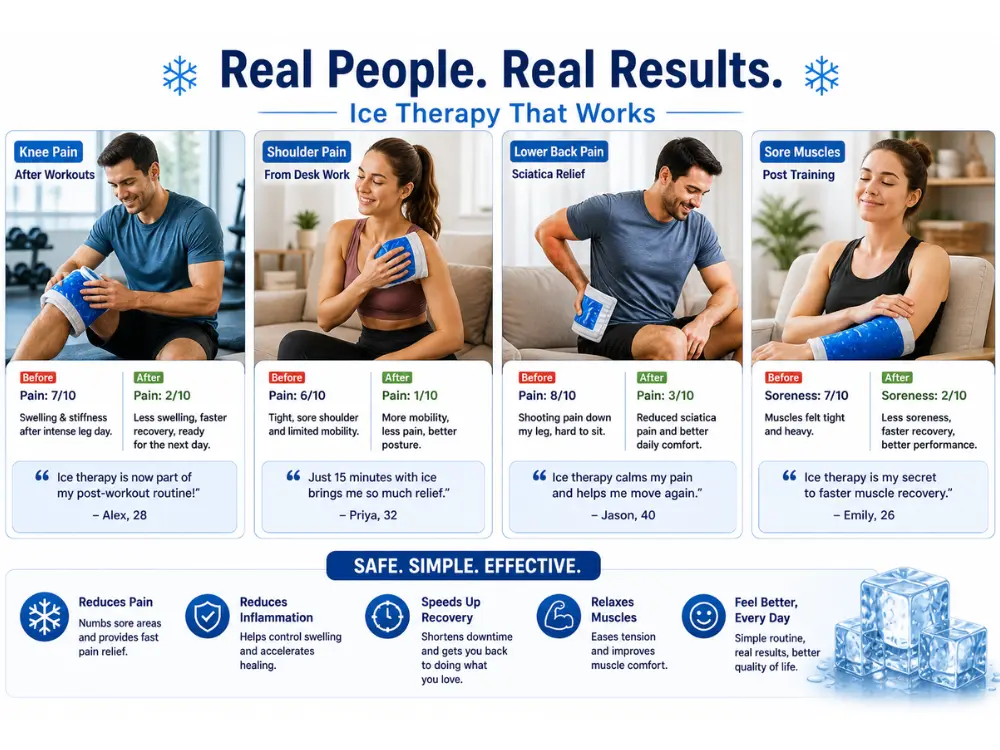
Real Stories of Recovery: How Ice Therapy Helped
When used correctly, ice therapy doesn’t just reduce pain it changes how reliably the body recovers. The difference often shows up in how quickly soreness settles and how consistently people can return to normal movement.
Here are a few real-world examples that reflect how cold therapy works in practice.
Athlete’s Quick Comeback
Frequent training often comes with recurring soreness especially after high-volume sessions.
A long-distance runner dealing with heavy leg fatigue after intense runs would typically need 2-3 days to feel normal again. This made consistent training difficult.
After introducing structured ice baths for muscle recovery immediately post-run:
- Soreness reduced within 24 hours
- Muscle heaviness became less noticeable
- Training frequency improved
As he described it:
“Before using ice baths my legs felt heavy for days. Now, I recover faster and can get back to light training much sooner.”
Full-body cold exposure can make a noticeable difference in situations like this where inflammation is widespread rather than localized.
Weekend Activity Turned Strain
Not all recovery challenges come from structured training.
Overexertion during occasional physical activity like gardening or lifting is a common cause of muscle strain.
In one case, a lower back strain caused sharp discomfort and limited movement. Instead of switching between different methods a consistent approach using ice packs for sore muscles was followed:
- 15-20 minute sessions
- Repeated at regular intervals
- Proper positioning to support the lower back
Within a short period:
- Pain levels dropped noticeably
- Movement became easier
- Daily activities were resumed sooner
Consistency made the biggest difference here more than the method itself.
Managing a Recurring Injury
Ongoing or recurring issues require a more controlled approach.
For someone dealing with persistent knee inflammation a specialized replacement knee wrap for cold compression therapy was introduced alongside a structured rehabilitation plan.
Over time:
- Swelling became easier to manage
- Pain levels stabilized
- Exercise tolerance improved
Their feedback was straightforward:
“Using cold compression regularly made my recovery more predictable. It helped me stay consistent with rehab.”
Predictability is often what separates short-term relief from long-term progress.
What These Stories Show
Across different situations intense training occasional strain or ongoing recovery the same principles apply:
- Timing affects results
- The method should match the type of soreness
- Consistency matters more than intensity
Cold therapy works best when it’s used with purpose rather than trial-and-error. When applied correctly, it supports not just pain relief but a more stable and reliable recovery process.
Beyond Ice: Complementary Recovery Strategies
Ice therapy is effective but it works best alongside movement, hydration, nutrition and proper rest. On its own, it helps control inflammation but long-term muscle recovery therapy depends on supporting the body as a whole.
A Holistic Approach to Muscle Recovery
Recovery doesn’t rely on a single method.
Relying only on ice while ignoring movement, hydration or sleep often leads to slower progress. Each of these factors plays a role in how efficiently the body repairs itself.
Active Recovery & Gentle Movement
Once initial inflammation settles complete rest can actually make stiffness worse.
Light movement helps restore circulation and keeps muscles from tightening further including using a wooden slant board for specific stretches.
Effective options include:
- Gentle stretching
- Low-intensity walking or mobility work
- Foam rolling or self-myofascial release
A simple and effective approach is to use ice therapy for sore muscles first then follow it with light movement. This supports both pain relief and improved mobility.
Strategic Hydration
Hydration has a direct impact on muscle function and recovery.
When fluid levels are low, muscles fatigue more easily and recover more slowly.
Key considerations:
- Stay hydrated before, during and after activity
- Maintain electrolyte balance especially after intense exercise
When paired with cold therapy for muscle recovery proper hydration helps the body clear metabolic byproducts more efficiently.
Optimal Nutrition
Recovery depends heavily on nutrition.
Muscles need the right building blocks especially protein to repair and adapt.
Focus on:
- Adequate protein intake
- Balanced meals for sustained energy
- Anti-inflammatory foods (whole, minimally processed options)
Without proper nutrition even effective muscle soreness treatment methods won’t deliver consistent results.
Adequate Rest and Sleep
This is where most of the actual repair takes place.
During sleep, the body:
- Rebuilds muscle tissue
- Regulates inflammation
- Restores energy
Poor or inconsistent sleep often leads to prolonged soreness and reduced recovery quality. Ice therapy can support recovery but sleep is what completes it.
Contrast Therapy (Cold + Heat)
For ongoing or stubborn soreness contrast therapy can be useful.
How it works:
- Alternate between cold and heat
- Example: 15 minutes cold → 5-10 minutes heat
Benefits:
- Improves circulation
- Helps reduce stiffness
- Supports ongoing recovery
This approach combines the benefits of heat vs cold for muscle pain rather than relying on just one.
Ice Therapy & Mental Resilience
Cold exposure also has a mental component.
Methods like a cold plunge for muscle recovery challenge comfort levels and require controlled breathing and focus especially considering cold plunging during pregnancy.
Over time, this can:
- Improve tolerance to discomfort
- Build discipline
- Support a more consistent recovery routine
Recovery isn’t only physical it’s also shaped by habits and consistency.
Conclusion: Embrace the Chill for Faster Healing
Ice therapy remains one of the most effective tools for managing muscle soreness relief when it’s used correctly. Its value lies in how it helps control inflammation, reduce pain signals and protect muscle tissue during the early stages of recovery.
What makes the real difference is not just using ice but using it with the right approach.
- Applying it at the appropriate time especially soon after strain or intense activity
- Choosing the right method based on the type of soreness
- Following safe duration and proper skin protection
When these factors are in place, ice therapy becomes a consistent part of muscle recovery therapy rather than something used only when discomfort appears.
It’s also a flexible method. Whether it’s an ice pack for a specific area a cold bath after a demanding session or a more controlled compression system each approach serves a purpose when matched correctly to the situation.
A noticeable shift happens when recovery stops being guesswork. Using cold therapy with intent leads to more predictable results, fewer setbacks and better overall consistency.
Making Recovery Easier to Maintain
For occasional muscle soreness, traditional ice packs or reusable gel packs are usually enough when applied correctly. However, athletes, active individuals and people going through regular rehabilitation may benefit from a recirculating cold therapy device that provides consistent cooling without the need to replace melting ice packs throughout a session.
If you’re considering a cold therapy machine for home recovery, focus on features such as consistent temperature control, comfortable wraps and ease of use rather than the brand alone. The FeelGoodEase Cold Therapy System is one example of a home-use option that can support regular recovery sessions when used as part of an overall rehabilitation or training plan.
If muscle soreness is a regular issue:
- Make ice therapy part of your routine not just a reaction to pain
- Combine it with movement, hydration and proper rest
- Pay attention to how your body responds over time
At the same time, persistent or worsening pain shouldn’t be ignored.
If soreness lasts longer than expected or begins to affect normal movement, it’s worth getting it properly assessed. What seems like routine discomfort can sometimes point to a deeper issue.
Ice therapy is simple accessible and effective when used properly. Applied with the right timing and method it supports a smoother and more reliable recovery process.
