
🚚 Free Shipping (3-5 Business Days) | 🛡️ 30-Day Money-Back Guarantee | 🏆 6-Month Warranty | ⭐ Trusted by 1000+ Happy Customers
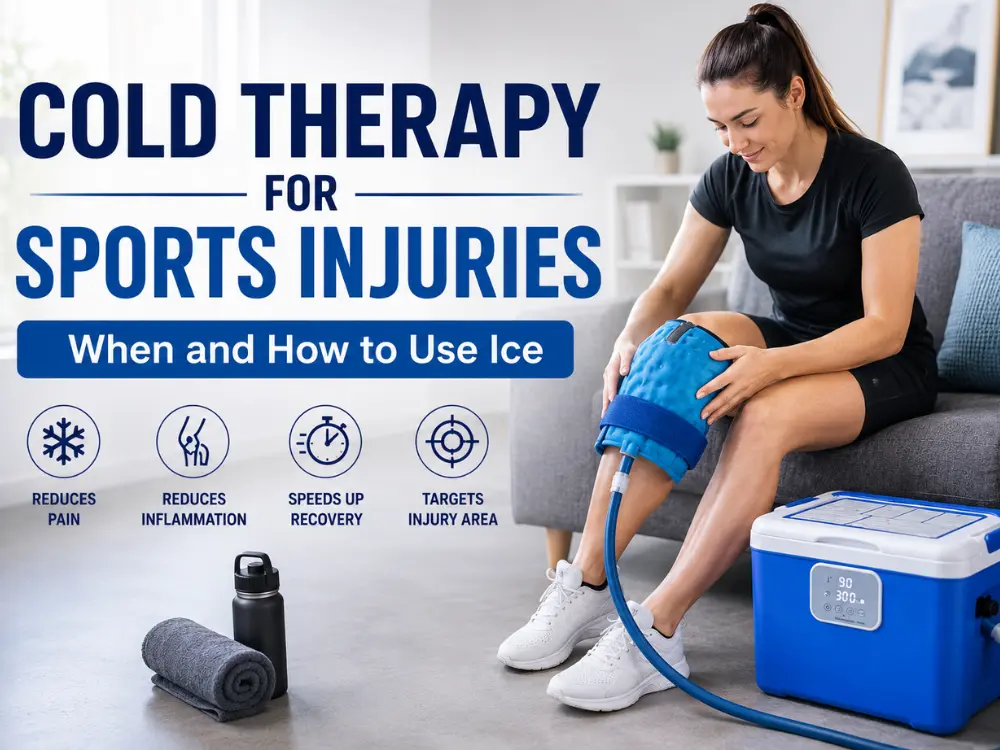

Cold Therapy for Sports Injuries: When and How to Use Ice
one of the biggest challenges after an injury is not just the pain but the confusion that follows. Most athletes aren’t sure what to do first and I’ve seen this hesitation lead to simple but costly mistakes especially when deciding between ice or heat.
The problem is the wrong choice at the wrong time can slow everything down. Using heat for swelling or delaying ice for injury often increases discomfort and extends recovery time. The first 24 to 72 hours are especially important because this is when inflammation builds and needs to be controlled properly.
This is where cold therapy becomes important. When used at the right time, it helps reduce swelling, manage pain and protect the injured area. I’ve also seen athletes get mixed results simply because they switch between methods without understanding when each one actually helps.
This guide will give you a clear practical direction. You’ll learn when to use ice or heat, how each works and how to apply them correctly for faster and safer recovery.
What is Cold Therapy (Cryotherapy)? Understanding the Basics
Defining Cryotherapy for Sports Injuries
Cryotherapy is the controlled use of cold on an injured area to reduce tissue temperature. It helps limit swelling, slow inflammation and relieve pain. In sports injuries, it is most effective during the early phase especially within the first 24 to 72 hours after damage occurs.
In simple terms, cryotherapy means applying cold to a specific area after injury or physical stress. What I’ve noticed is that many athletes treat it as simple icing but it’s actually a structured and purposeful recovery method. It also plays an important role when deciding between ice or heat early in recovery.
The goal is to control how the body reacts to injury. When tissue is damaged blood flow increases which leads to swelling and pain. Applying cold helps slow this response which is why ice is commonly used for swelling during the acute phase.
Cold therapy also affects how nerves and fluids behave in the injured area. It reduces nerve sensitivity and limits fluid buildup which helps manage pain and improves control. This is why using ice or heat at the right time makes a noticeable difference.
In sports medicine, cryotherapy is widely recognized and used in professional settings. It is not just a basic home remedy but a targeted method to manage inflammation and support recovery.
Common Forms of Cold Therapy
Different situations require different approaches. The most commonly used cold therapy methods include:
- Ice packs (crushed ice or gel packs)
- Cold water immersion (ice baths)
- Cold compression devices
- Instant cold packs
Each method works differently but the goal remains the same reduce swelling, manage pain and support early recovery.
The Science Behind the Chill: How Cold Therapy Works
Physiological Mechanisms of Cold Therapy
Cold therapy works by lowering tissue temperature which slows blood flow, reduces inflammation and decreases nerve activity. This helps control swelling and pain after injury. In sports recovery choosing between ice and heat depends heavily on this response especially in the first 24 to 72 hours.
In my experience, many athletes use ice without fully understanding what it’s doing inside the body. What I’ve noticed is that results improve significantly when people understand the purpose behind it not just the habit.
Cold therapy mainly affects circulation and nerve activity. These changes are what make it effective during the early stage of an injury when swelling and pain are still building.
To understand this better let’s break down what actually happens inside the body.
Key Mechanisms Explained
Vasoconstriction (Narrowing of Blood Vessels)
Cold causes blood vessels to tighten which reduces blood flow to the injured area. This helps control how much fluid accumulates early on. According to the American Academy of Orthopaedic Surgeons, this response plays a key role in managing initial injury damage.
Impact: Limits internal bleeding and reduces swelling.
Reduced Inflammation and Swelling
Lower temperatures slow down cellular activity which helps regulate the inflammatory response. Research available on PubMed shows that cold application can help control excessive inflammation after acute injuries.
Impact: Reduces tissue damage and relieves pressure on nearby nerves.
Pain Reduction (Analgesic Effect)
Cold reduces nerve sensitivity and slows how pain signals travel to the brain which is beneficial for ice therapy for sciatica. This is why ice often provides quick relief after injury. The National Athletic Trainers’ Association supports its use for short-term pain control.
Impact: Decreases pain and allows gentle movement earlier.
Decreased Nerve Activity
As tissue cools, nerve conduction slows down. This affects muscle response and helps reduce excessive muscle tension.
Impact: Limits muscle spasms and improves control around the injured area.
From a recovery perspective, these mechanisms work together. That’s why cold therapy is most effective early on. When used correctly, it doesn’t just reduce pain it creates a more controlled environment for healing.
Key Benefits of Cold Therapy for Sports Injuries
Immediate Pain Relief and Numbness
Cold therapy reduces pain by numbing nerve endings and slowing pain signals. This provides fast relief after injury. In the early stage using ice correctly helps athletes manage discomfort and regain basic movement without increasing damage.
In most cases, pain is the first concern after an injury. What I’ve noticed is that cold application often brings quick relief, sometimes within minutes. This happens because nerve activity slows down, making the area less sensitive.
Controlling Swelling and Edema
Cold therapy helps control swelling by reducing blood flow and limiting fluid buildup. This prevents excessive pressure in the injured area and supports better recovery in the early phase.
Swelling can quickly become the biggest obstacle in recovery. When it builds up movement becomes restricted and pain increases. Applying ice early helps keep this under control before it starts affecting mobility.
Reducing Muscle Spasm and Soreness
Cold therapy reduces muscle spasm by lowering nerve activity and calming overactive muscle responses. It also helps manage soreness after intense activity especially in the early stages.
After injury or heavy training muscles often tighten as a protective reaction. Cold application helps settle this response and makes the area easier to manage. This is especially useful when soreness starts affecting movement quality.
Expert Tip – Post-Activity Recovery: Cold therapy is not only for injuries. After intense sessions, applying cold can help reduce fatigue and improve readiness for the next workout.
Accelerating Tissue Repair and Recovery
Cold therapy supports recovery by controlling excessive inflammation. This creates a more stable environment for tissue repair and reduces unnecessary stress on the injured area.
Recovery is not just about healing but about controlling the process. Too much inflammation can slow things down. Managing it properly helps the body repair tissue more efficiently.
Preventing Secondary Injury
Cold therapy helps prevent further injury by controlling pain and swelling. This reduces the risk of poor movement patterns and unnecessary strain on other areas.
One pattern I’ve seen repeatedly is athletes adjusting how they move to avoid pain. Over time, this creates stress in other areas. Managing pain early helps maintain better movement control.
“Early cold application is one of the simplest ways to control pain and protect movement quality after injury.”
– National Athletic Trainers’ Association
When to Use Cold Therapy: Acute vs. Chronic Injuries
Acute Injuries: The Critical Early Window
Cold therapy is most effective within the first 24 to 48 hours after an injury. During this phase, swelling and inflammation increase rapidly. Using ice first helps control swelling, reduce pain and protect the injured tissue from further damage.
What I’ve noticed is that this is where most mistakes happen. Athletes either delay icing or apply heat too early which can make swelling worse. The body is actively sending fluid to the injured area, and without control that response can quickly get out of hand.
Applying cold during this window helps manage that process. It limits fluid buildup, reduces discomfort and keeps the injury more stable in the early stage.
Common Acute Injuries Where Cold Helps:
- Sprains (ankle, knee ligaments)
- Strains (hamstring, calf muscles)
- Contusions (direct impact bruises)
- Acute tendinitis flare-ups
Expert Tip – Timing Matters: The first 24 to 48 hours can shape the entire recovery. Consistent cold application during this phase helps prevent unnecessary swelling and complications later.
Chronic Injuries & Overuse Syndromes
Cold therapy can help manage chronic injuries especially after activity or during flare-ups, including cold therapy for arthritis pain. It reduces irritation and helps control symptoms when inflammation increases due to repeated stress.
Chronic conditions behave differently from fresh injuries. Swelling is usually lower but tends to increase after activity. Using cold after training can help calm this response and prevent symptoms from escalating.
This works best when combined with proper load management and recovery habits.
Common Chronic Conditions Where Cold Helps:
- Chronic tendinitis (Achilles, patellar)
- Shin splints (after activity)
- Arthritis (during flare-ups)
- Bursitis
Expert Tip – Consistency for Chronic Issues: For ongoing conditions, occasional use is not enough. Regular cold application after activity helps maintain control over symptoms.
The Transition Phase: When to Re-evaluate
As healing progresses, the role of cold therapy changes. Once swelling reduces heat may be more useful for stiffness and mobility. Understanding when to switch helps avoid slowing recovery.
In practice, injuries don’t stay in one stage. A common mistake is continuing to ice even when stiffness becomes the main issue. At that point, the focus should shift toward restoring movement.
Depending on symptoms combining or alternating cold and heat may become useful in later stages.
Types of Cold Therapy: Choosing Your Method
Ice Packs (Crushed Ice, Cubes)
Crushed ice remains one of the most effective ways to apply cold after an injury. It molds easily around joints which makes it especially useful for areas like the ankle or knee where contact matters.
Pros:
- Molds closely to the body
- Easy to access and low cost
- Works well for targeted application
Cons:
- Can get messy as it melts
- Loses cold quickly
- Needs a freezer
Reusable Gel Packs
Gel packs are a more convenient option for regular use. What I’ve seen is that athletes prefer them for routine recovery because they’re easy to store and reuse without preparation.
Pros:
- Cleaner and more convenient than ice
- Stays cold longer
- Reusable and easy to handle
- Available in different shapes for various body parts
Cons:
- Does not mold as closely as crushed ice
- Can feel too cold initially
Product Tip: Choose a size that fits the injured area properly. A well-fitted pack improves contact and makes the application more effective.
Instant Cold Packs (Chemical Packs)
Instant packs are useful when you need immediate action especially during games or outdoor sessions. They don’t require freezing which makes them a reliable backup option.
Pros:
- Activates instantly
- Easy to carry
- Useful in emergency situations
Cons:
- Single-use only
- Less intense cooling
- Creates waste after use
Product Tip: Keep one in your training bag. It’s often the difference between immediate care and delayed treatment.
Cold Compression Devices (Cryo-Cuffs, Wraps)
Cold compression devices combine cooling with pressure which helps manage swelling more effectively. What I’ve noticed is that they work especially well for joint injuries where consistent contact is difficult to maintain with regular ice.
Pros:
- Combines cold and compression
- Works well for joints like knee, shoulder, and ankle
- Maintains a steady cooling effect
Cons:
- More expensive than basic options
- Not very portable
- May require a pump or setup
Product Tip: These systems are particularly useful after surgery or ligament injuries where swelling control needs to be consistent and targeted.
Cold Water Immersion (Ice Baths)
Ice baths are commonly used after intense training sessions, especially when soreness affects multiple muscle groups. Instead of targeting one area this method works on the body as a whole.
Pros:
- Covers large muscle groups
- Provides deeper cooling
- Helps reduce overall soreness after heavy activity
Cons:
- Uncomfortable especially at first
- Requires preparation
- Not suitable for every type of injury
Cold Therapy Machines
Cold therapy machines are designed for controlled and continuous cooling. In more serious cases, where consistency matters these systems offer a more structured approach to recovery.
Pros:
- Continuous and controlled cooling
- Often combined with compression
- Adjustable settings for safer use
Cons:
- Expensive
- Requires setup
- Mostly used in rehab or post-surgical care
Product Tip: These are best suited for long-term recovery plans especially when regular icing is not enough to manage symptoms.
Expert Tip – Beyond Ice
Relying only on basic ice packs can limit recovery in some cases. Different situations require different approaches. Exploring options like compression wraps or immersion methods can help you manage recovery more effectively.
Choosing the Right Method
Not every method fits every situation. Ice packs work well for quick relief while compression systems are better for joint injuries. Ice baths are useful after intense sessions and machines are more suitable for structured recovery.
In the end, the right choice depends on the type of injury, how severe it is and where you are making a cold therapy machine buying guide helpful. Using the right method at the right time makes a noticeable difference in recovery.
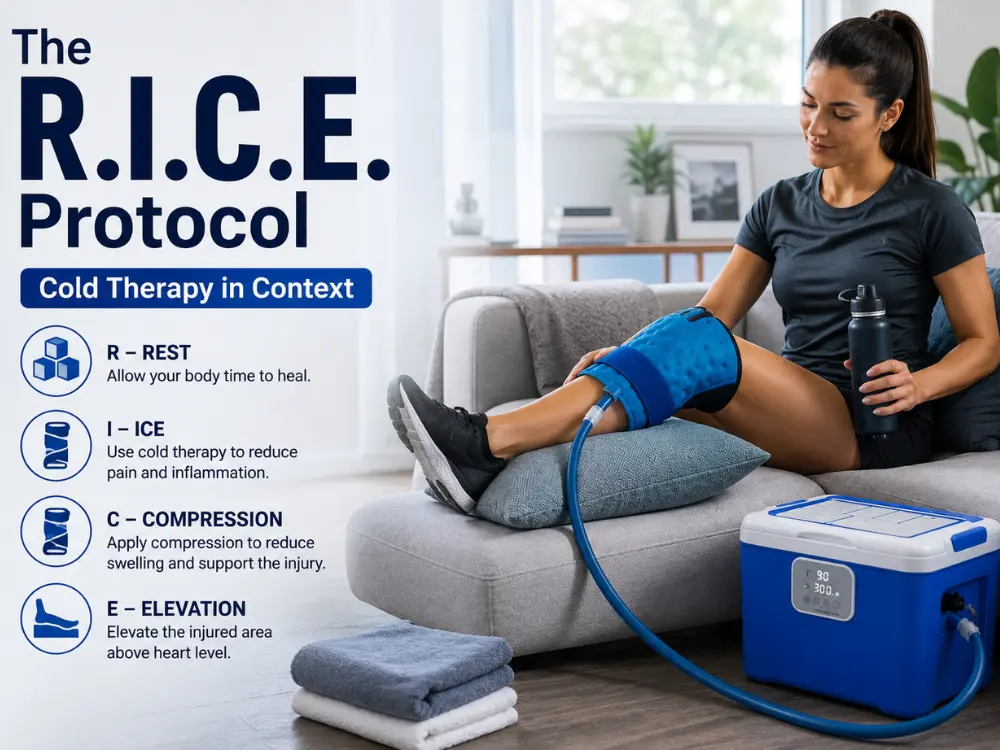
The R.I.C.E. Protocol: Cold Therapy in Context
R – Rest: Why It’s Crucial
Rest allows the injured tissue to stabilize and begin healing. Avoiding movement prevents further damage and reduces stress on the affected area. In early recovery combining rest with proper treatment helps control pain and swelling.
One of the most common mistakes I see is athletes trying to stay active too soon. This usually makes things worse. Giving the body time to settle inflammation early on makes a noticeable difference later in recovery.
I – Ice: The Role of Cold Therapy
Ice plays a key role in the R.I.C.E. protocol by helping reduce swelling, pain and inflammation. It is most useful in the early stage when the body’s response needs to be controlled.
Cold application helps limit fluid buildup and calm the injured area. Used early and consistently, it creates a more stable starting point for recovery.
C – Compression: How It Enhances Recovery
Compression reduces swelling by applying steady pressure to the injured area. When combined with cold, it improves control over fluid buildup and provides support.
What I’ve seen in practice is that compression often makes cold therapy more effective. Instead of fluid spreading pressure helps keep swelling contained.
Product Tip: Elastic bandages or compression wraps ike a replacement knee wrap can help keep cold packs in place and improve overall effectiveness.
E – Elevation: Assisting Fluid Drainage
Elevation helps reduce swelling by allowing fluid to drain away from the injured area. Keeping the limb above heart level limits buildup and supports recovery.
This step is often ignored but it plays a big role. Even simple elevation can reduce pressure and improve comfort in the early phase.
Integrating R.I.C.E. for Better Recovery
The R.I.C.E. protocol works best when all components are used together. Each step targets a different part of the injury response. Combining them improves pain control, reduces swelling and supports faster recovery.
Relying on just one method rarely gives the best results. When rest, cold application, compression and elevation are used together recovery becomes more controlled and predictable.
Expert Tip – R.I.C.E. Integration: Use all four elements together especially in the first 24 to 48 hours. This approach helps prevent small issues from turning into longer recovery problems.
How to Apply Cold Therapy Effectively: A Step-by-Step Guide
General Application Principles
Apply cold therapy for 15-20 minutes with a cloth barrier to protect the skin. Repeat every 2-3 hours during the first 24-48 hours after injury. Keep the area elevated if possible. Results depend on timing, consistency and safe application.
What I’ve seen over time is that results depend more on how you apply cold not just what you use. Many athletes either leave it on too long or apply it inconsistently, which reduces its effectiveness.
The goal is simple control swelling without irritating the skin. Getting the timing and protection right makes a noticeable difference in recovery.
Key Principles:
- Duration: 15–20 minutes per session
- Frequency: Every 2–3 hours in the first 24–48 hours
- Skin Protection: Always use a towel or cloth barrier
- Positioning: Keep the area relaxed and elevated if possible
Expert Tip – Find the Right Balance: More is not better. Around 15-20 minutes is enough to get the benefit without risking skin damage.
Product Tip: A simple thin towel is enough. It protects the skin and makes the application more comfortable.
Monitoring for Adverse Reactions
Stop immediately if you notice unusual numbness, increased pain or skin color changes. These can be signs of overexposure or irritation. Safe use depends on paying attention to how your body responds.
Ignoring early warning signs is a common mistake. If something feels off, it usually is. Cold therapy should reduce discomfort, not create new problems.
Stop If You Notice:
- Numbness beyond mild cold
- Throbbing or increasing pain
- Skin turning white, blue or blotchy red
- Blistering or signs of irritation
Expert Tip – Listen to Your Body: If the sensation changes from cold to painful stop immediately and reassess.
Cold Therapy Methods: Application Guide
| Method | Application Area | Duration / Frequency | Pros | Cons | Best For |
| Ice Pack (Crushed Ice) | Ankles, knees, shoulders, back, hamstrings | 15-20 mins every 2-3 hours | Molds well, affordable, versatile | Messy, melts quickly | Acute injuries |
| Reusable Gel Pack | Knees, elbows, wrists, larger muscles | 15-20 mins, every 2-4 hours | Convenient, reusable, less mess | Less moldable, very cold initially | Home recovery |
| Instant Cold Pack | Small areas (finger, wrist) | 10-15 mins, single use | Portable, instant | Less intense, single-use | On-field use |
| Cold Compression Device | Joints (knee, ankle, shoulder) | 15-30 mins, 2-3 times/day | Consistent cold + compression | Expensive, setup needed | Post-surgery |
| Cold Water Immersion | Whole body or large muscle groups | 5-10 mins (body), 10-15 mins (limbs) | Deep cooling, full coverage | Uncomfortable, prep needed | Post-workout |
In practice, the method matters less than how consistently and safely you apply it. Small adjustments in timing, protection and frequency often make a bigger difference than the tool itself.
Common Sports Injuries Treated with Cold Therapy
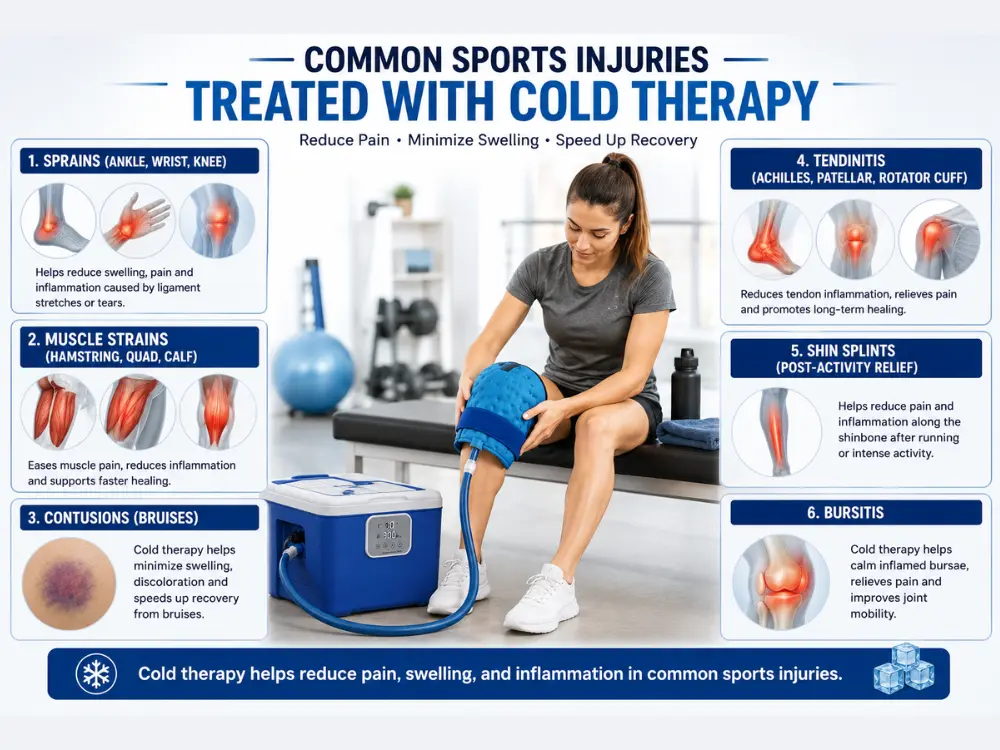
Sprains (Ankle, Wrist, Knee)
Cold therapy helps sprains by reducing swelling and pain after ligament injury similar to cold therapy after knee surgery. Applying ice early limits fluid buildup and protects the joint especially in the first 24 to 48 hours.
Ankle sprains are one of the most frequent injuries I come across. Swelling builds quickly and without control, it can limit movement for days. Early cold application helps keep that under control and protects joint stability.
Muscle Strains (Hamstring, Quad, Calf)
Cold therapy helps reduce inflammation and pain in muscle strains by slowing tissue response. It is most useful in the early stage to limit damage and improve comfort.
Muscle strains involve small tears that can worsen if not managed properly. A common mistake is applying heat too early which can increase swelling. Early cooling helps settle the area and makes movement easier to manage.
Contusions (Bruises)
Cold therapy helps bruises by limiting internal bleeding and reducing discoloration. Applying cold soon after impact minimizes swelling and pain.
Direct impacts often damage small blood vessels under the skin. If left unchecked, swelling and discoloration can spread. Early cold application helps contain that response and reduces visible bruising.
Tendinitis (Achilles, Patellar, Rotator Cuff)
Cold therapy helps tendinitis by reducing inflammation in irritated tendons especially after activity or during flare-ups.
Unlike sudden injuries tendinitis builds over time. Pain usually increases after repeated movement. Applying cold after activity helps calm irritation and prevents symptoms from getting worse.
Shin Splints (Post-Activity Relief)
Cold therapy helps shin splints by reducing inflammation in the lower leg after activity. It can relieve pain and prevent symptoms from progressing.
This is common in runners and high-impact sports. Pain often shows up after training rather than during it. Using cold post-activity helps manage that irritation effectively.
Bursitis
Cold therapy helps bursitis by reducing inflammation in fluid-filled sacs near joints. It is especially useful during flare-ups.
Bursitis often causes localized swelling and discomfort. Managing inflammation early helps reduce irritation and makes movement more comfortable.
Injury-Specific Cold Therapy Planner (Concept)
Many athletes struggle with one simple question: what should I do for this injury?
Instead of guessing, a simple planner can guide decisions based on symptoms. For example, users could select their injury type and receive:
- Whether cold or heat is more appropriate
- How long and how often to apply it
- The best method based on the injury
This kind of approach removes confusion and makes recovery more structured. Instead of trial and error, athletes can follow a clear plan that fits their situation.
Cold Therapy vs. Heat Therapy: Making the Right Choice
When to Use Cold: The Acute Phase (Initial 24-48 Hours)
Use cold therapy during the first 24–48 hours after an injury. It helps reduce swelling, control inflammation and manage pain. If you’re unsure, start with ice in the early phase to protect the injured area and prevent excessive swelling.
One pattern I keep seeing is heat being used too early. This usually makes swelling worse. In the first phase, the body is already sending fluid to the area so the focus should be on controlling that response.
Use Cold Therapy For:
- Reducing swelling and inflammation
- Managing pain after injury or flare-ups
- Supporting recovery after intense activity
Early cold application helps keep swelling under control and prevents unnecessary pressure in the injured area.
When to Use Heat: The Chronic / Rehabilitation Phase
Heat therapy is best used after swelling has reduced. It increases blood flow, relaxes muscles and improves flexibility. It is more useful when stiffness is the main issue rather than active inflammation.
A common mistake is continuing to ice even when the problem shifts from swelling to stiffness. At that point, heat tends to be more effective in restoring movement.
Use Heat Therapy For:
- Improving blood flow during recovery
- Relaxing tight or stiff muscles
- Reducing ongoing aches and stiffness
Using heat at the right stage helps restore mobility more efficiently.
Alternating Therapies: The Contrast Method
Contrast therapy involves alternating between cold and heat to improve circulation and reduce stiffness. It is usually used later in recovery once swelling is under control.
This method works by creating a pumping effect in blood vessels. Cold tightens circulation, while heat increases it. When timed correctly, it can help improve mobility and reduce lingering stiffness.
However, using this approach too early can increase inflammation. It’s best introduced in the later stages ideally with some guidance.
In practice, the real difference comes down to what your body is showing at that moment. If swelling and heat are present, cooling helps. If the area feels tight and stiff, warmth usually works better.
Potential Risks, Precautions and Contraindications
Who Should Avoid Cold Therapy?
Cold therapy is not suitable for everyone. Certain conditions can increase the risk of poor circulation or skin damage. If you have underlying health issues affecting blood flow or sensation, it’s safer to avoid cold therapy and seek medical advice before using it.
One thing I’ve noticed is that athletes often focus on recovery benefits and overlook safety. That’s where problems begin. In some cases, applying cold can do more harm than good.
Avoid Cold Therapy If You Have:
- Raynaud’s phenomenon
- Severe peripheral vascular disease
- Cold urticaria (cold allergy)
- Areas with poor circulation or nerve damage
- Open wounds or active infections
- Diabetes with reduced sensation
If any of these apply, it’s better to get professional guidance before using cold therapy.
Signs of Adverse Reactions
Stop immediately if you notice unusual symptoms such as numbness, burning pain or skin color changes. These may indicate overexposure or irritation.
A mistake I see quite often is ignoring early warning signs. Discomfort is not something to push through here. Cold therapy should ease symptoms not make them worse.
Watch for These Signs:
- Persistent numbness or tingling
- Sharp burning or stinging sensation
- Skin turning white, blue or blotchy red
- Blistering or unusual skin texture
- Pain increasing instead of decreasing
Catching these signs early helps prevent more serious issues.
Safe Usage Guidelines
Cold therapy is safe when used correctly. Keep sessions short protect the skin and monitor the area regularly. Following basic guidelines helps you avoid complications.
Most problems don’t come from the therapy itself but from how it’s applied or the cold therapy machine’s adapter. Leaving ice on too long or applying it directly to the skin are two of the most common mistakes.
Follow These Safety Rules:
- Always use a towel or cloth barrier
- Limit sessions to 15-20 minutes
- Avoid applying cold to open wounds
- Be careful around sensitive nerve areas
- Do not fall asleep during application
- Check the skin regularly
Expert Tip – Safety First: If something feels off, stop. Recovery should feel controlled and steady, not uncomfortable or unpredictable.
Myth Busting: Separating Fact from Fiction in Cold Therapy
Myth 1: Longer is Always Better for Cold Therapy
More is not better when it comes to cold therapy. Applying ice too long can damage skin and nerves. The ideal duration is 15-20 minutes with protection.
A mistake I see again and again is leaving ice on for extended periods. It might feel like you’re doing more, but it often slows recovery instead. Too much cooling can reduce circulation more than needed.
The key is balance enough to control swelling but not so much that it interferes with healing.
Myth 2: Ice Immediately Stops All Swelling Completely
Ice does not completely stop swelling. Swelling is part of the natural healing process. Cold helps control it, not eliminate it.
Some athletes expect swelling to disappear quickly after icing. When it doesn’t, they assume it’s not working. In reality, the goal is to keep inflammation within a manageable range.
Think of it as control, not elimination.
Myth 3: You Should Never Put Ice Directly on Skin
Direct ice contact can damage the skin if not controlled. Using a barrier like a towel is the safest approach for most people.
I’ve come across cases where direct contact led to irritation or even mild frostbite. A simple layer of protection makes a significant difference.
For everyday use there’s no reason to take that risk.
Myth 4: Cold Therapy is Only for Acute Injuries
Cold therapy is not limited to fresh injuries. It can also help with post-exercise soreness and flare-ups from overuse.
Some athletes stop using cold therapy after the first few days. In many cases, continuing to use it after training helps keep symptoms under control.
It’s a tool that can be used beyond the initial phase when applied correctly.
Misunderstandings like these often lead to poor recovery decisions. Once you understand what actually works, it becomes much easier to apply the right method at the right time.
“Cold Therapy Hacks”: Quick Tips for On-the-Go Relief & Optimal Application
DIY Solutions for Emergency Situations
If proper tools aren’t available simple household items can be used to apply cold quickly. The goal is to reduce swelling and pain as early as possible.
Injuries rarely happen at the right place or time. In many cases, quick action matters more than having the perfect setup.
Quick DIY Options:
- Frozen peas or corn (shapes easily around joints)
- A damp towel placed in the freezer for 15-20 minutes
- Cold running water when nothing else is available
Travel-Friendly Cold Therapy Options
Portable options make it easier to manage injuries while traveling. Having something ready can save valuable time in the early phase.
A common issue during travel is simply not having anything available. That delay can make swelling harder to control.
Best Travel Options:
- Keep instant cold packs in your bag
- Carry small reusable gel packs
- Use a bottle filled with ice when possible
Enhancing Effectiveness: Combine with Gentle Movement
After the initial phase, combining cold therapy with light movement can help improve flexibility and reduce stiffness.
Once swelling settles, stiffness becomes the main limitation. Introducing gentle movement at the right time helps restore mobility without stressing the injured area.
This should only be done after the early stage has passed.
Post-Workout Routine Integration
Cold therapy can also support recovery after intense workouts by reducing soreness and fatigue. Using cold after training can help manage muscle stress especially in areas that take repeated load.
Post-Workout Tips:
- Use ice baths or targeted cold packs
- Apply compression during cool-down
- Focus on high-stress muscle groups
Practical Insight: Making It Work Anywhere
Recovery doesn’t always happen in ideal conditions. What matters is how quickly and consistently you respond.
Athletes who stay prepared usually recover faster, not because they use advanced tools but because they act early and stay consistent.
Athletes Share Their Cold Therapy Journeys
Case Study 1: Marathon Runner with Patellar Tendinitis
Chronic knee pain is something I’ve seen quite often in long-distance runners. One runner I worked with was dealing with ongoing patellar tendinitis but didn’t want to stop training completely.
Instead, they started using cold application consistently after runs and during flare-ups. Over time this helped keep inflammation under control and reduced pain enough to continue training without setbacks.
“I didn’t realize how much difference consistent icing made until I stuck to it,” the runner shared.
Case Study 2: Basketball Player Recovering from Ankle Sprain
Ankle sprains need quick and structured care. One basketball player I worked with followed the R.I.C.E. approach immediately after injury.
Cold compression was applied within the first hour, which helped control swelling early. This made a noticeable difference in pain and joint stiffness. With guidance from a certified athletic trainer, the player returned to the court sooner than expected.
This case clearly showed how timing and early action can influence recovery speed.
Case Study 3: Youth Soccer Player with a Contusion
In youth sports, simple actions taken at the right time can make a big difference. In one case, a young soccer player took a direct hit to the thigh during a match.
The parents applied a gel pack almost immediately. This helped manage swelling and reduce discomfort early on. As a result, the bruising stayed limited and recovery was smooth.
These examples reflect a pattern I’ve seen repeatedly over the years. It’s not always about complex tools or advanced treatments. In many cases, consistent and timely action makes the biggest difference.
When to Seek Professional Medical Attention
Red Flags Indicating a Doctor’s Visit
Cold therapy can help manage many injuries but some situations require medical care. If pain is severe, swelling does not improve or movement is limited, self-treatment is not enough. Knowing when to stop and seek help is essential for safe recovery.
One pattern I’ve seen repeatedly is delaying proper care. Athletes often assume the injury will settle on its own but in some cases that delay makes things worse.
Seek Medical Attention If You Notice:
- Severe or worsening pain
- Inability to put weight on the limb
- Visible deformity or suspected fracture
- Numbness, tingling, or weakness away from the injury
- Symptoms not improving after a few days
- Fever along with injury symptoms
- Signs of infection such as redness, warmth, or discharge
Expert Tip – Don’t Wait Too Long: If symptoms aren’t improving or feel unusual, it’s better to get checked early rather than risk a longer recovery later.
The Role of Physiotherapists and Athletic Trainers
Physiotherapists and athletic trainers help diagnose injuries and guide recovery. They provide structured treatment plans including exercise, movement correction and appropriate use of recovery methods.
Recovery is not just about reducing pain. In many cases, strength, mobility and movement patterns also need attention. This is where professional guidance makes a real difference.
A structured plan often includes progressive exercises, hands-on treatment and controlled recovery strategies tailored to the injury.
If the injury is severe, persistent or not improving getting professional input early can prevent setbacks and help you return to activity more safely.
Frequently Asked Questions (FAQ)
Q: Can I leave an ice pack on overnight?
Answer: No, this is not safe. Leaving ice on for too long can damage the skin and underlying tissue. It also reduces blood flow more than necessary, which can slow recovery. Stick to 15-20 minutes per session then allow the area to return to normal temperature.
Q: Is it okay to apply ice directly to my skin?
Answer: In most cases, no. Direct contact can cause irritation or even mild frostbite. A simple towel or cloth barrier is enough to protect the skin while still getting the benefits.
Q: How long after an injury should I continue cold therapy?
Answer: It’s most important during the first 24-48 hour when swelling is highest. After that, you can still use it when needed especially after activity as long as you follow proper timing and avoid overuse.
Q: Does cold therapy slow down healing?
Answer: When used properly, it supports recovery by controlling pain and excessive inflammation. Problems usually happen when it’s overused or applied incorrectly.
Q: What’s the difference between an ice pack and a gel pack?
Answer: Ice packs use frozen water and provide stronger, short-term cooling. Gel packs stay cold longer and remain flexible. Both work well but using a barrier is important to protect the skin.
Conclusion: Empowering Your Recovery with Cold Therapy
Recap of Key Benefits and Best Practices
Cold therapy plays an important role in managing injuries when used correctly. It helps reduce pain, control swelling and protect the injured area in the early stage. Getting the timing, duration and skin protection right can make a clear difference in how smoothly recovery progresses.
Consistency matters more than intensity. Short, controlled sessions done regularly are far more effective than overdoing it once. Small habits like proper timing and monitoring how your body responds can significantly improve outcomes.
Encouragement for Proactive Injury Management
Recovery doesn’t happen on its own. Athletes who understand how to respond early tend to recover faster and with fewer setbacks. Acting at the right time helps prevent minor issues from turning into longer problems.
Building this awareness also improves long-term performance. When you know how to manage injuries properly, you reduce the chances of repeated strain or delayed healing.
Take Control of Your Recovery
Recovering from a sports injury isn’t about finding the most expensive treatment, it’s about following the right routine consistently. Paying attention to swelling, pain levels and how your joint responds after activity helps you decide whether you’re progressing or need to slow down. If symptoms continue to worsen or fail to improve, it’s worth checking in with your healthcare provider or physiotherapist rather than pushing through the pain.
For many athletes and active individuals, reusable ice packs remain an effective option during the first few days after an injury. As recovery continues, however, repeated icing sessions can become difficult to maintain, especially after surgery or during structured rehabilitation.
If you expect to use cold therapy several times a day for weeks rather than days, a recirculating cold therapy system may be worth considering. Instead of repeatedly replacing melting ice packs, these systems provide consistent cooling throughout each treatment session. The FeelGoodEase Cold Therapy Machine is one example designed for home recovery and can be discussed with your healthcare professional if ongoing cold therapy is part of your rehabilitation plan.
You now have a clear understanding of how to use it effectively. Apply it with purpose stay consistent and focus on recovery that actually moves you forward.
