
🚚 Free Shipping (3-5 Business Days) | 🛡️ 30-Day Money-Back Guarantee | 🏆 6-Month Warranty | ⭐ Trusted by 1000+ Happy Customers
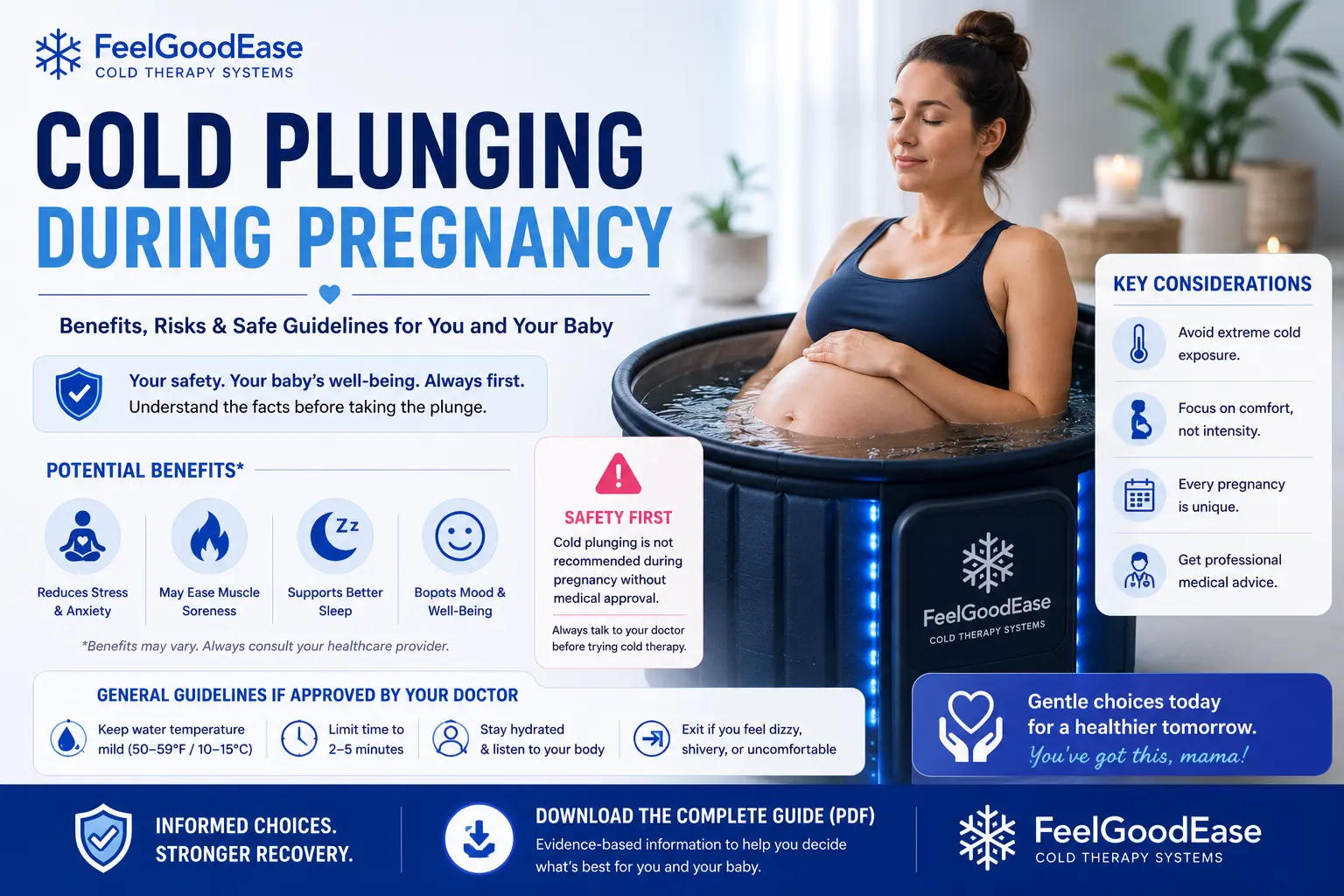

Can You Try Cold Plunging During Pregnancy? Risks, Benefits and Essential Medical Advice
Cold plunging has quickly become a popular trend in the fitness and wellness world, often praised for reducing inflammation, boosting energy and speeding up recovery. As a result many expectant mothers are now asking an important question is it safe to do cold plunging during pregnancy?
While the benefits may sound appealing pregnancy is a unique physiological state where the body undergoes significant changes. Common discomforts like swelling, joint pain, fatigue and poor sleep often lead women to explore new ways to feel better. Naturally, cold exposure methods like ice baths can seem like a simple solution.
However, what works for general recovery does not always apply during pregnancy.
One of the biggest challenges is the conflicting information available online. Some sources suggest cold plunging may improve circulation and reduce inflammation while others warn about the risks of sudden temperature changes especially during sensitive stages like the first and third trimesters. This uncertainty can make it difficult to know what’s truly safe.
In this guide, we’ll take a clear evidence-informed approach to answer these concerns. You’ll learn how cold exposure affects the body during pregnancy the potential risks involved and why most medical professionals remain cautious about practices like ice baths.
We’ll also explore safer more controlled alternatives to help manage discomfort so you can support your body without taking unnecessary risks.
Medical Disclaimer: Your Health, Your Baby, Your Doctor
From a clinical and safety standpoint this is one of the most important parts of this discussion.
This article is intended for informational and educational purposes only. It does not replace medical advice diagnosis or treatment. In my experience no two pregnancies are ever the same each comes with its own unique set of physiological changes, risks and considerations.
If you’re considering practices like cold plunge while pregnant or ice baths during pregnancy the only reliable and safe guidance must come from your healthcare provider.
I strongly recommend speaking with your OB/GYN, midwife or a qualified medical professional before introducing any new wellness routine whether that involves cold exposure, dietary changes or physical activity. During pregnancy even small decisions can have broader implications for both maternal and fetal health.
The Indispensable Role of Your Healthcare Provider
Personalized medical advice is essential during pregnancy because every individual’s health history, risk factors and pregnancy progression are different. Only a qualified healthcare provider can assess whether a specific practice is safe for both mother and baby.
Based on what I’ve seen in real recovery scenarios one of the most common mistakes is relying too heavily on general online advice without considering personal medical context.
Your healthcare provider plays a critical role because:
- Every pregnancy is different individual conditions, trimester stage and risk factors vary significantly
- Your doctor understands your full medical history and current pregnancy status
- They can assess the specific risks and benefits of cold exposure during pregnancy in a way that applies directly to you
From a safety-first perspective this level of personalized guidance isn’t optional it’s essential.
I often remind patients of this simple principle being cautious during pregnancy isn’t overthinking it’s responsible care.
Understanding the Allure: What is Cold Plunging and Its General Benefits?
Defining the Practice: Temperatures and Durations
Cold plunging refers to immersing the body in cold water for a short controlled period. In most cases water temperatures range between 39-59°F (4-15°C) with sessions typically lasting 1 to 10 minutes depending on individual tolerance and experience and knowing how long to ice an injury is crucial for safety.
In real-world settings, I’ve seen two main approaches:
- Traditional ice baths often set up using tubs filled with water and ice where temperature can vary and is harder to control
- Modern cold plunge systems designed to maintain consistent temperatures allowing for more predictable and repeatable exposure and a cold therapy machine buying guide can help you choose the right setup.
From a physiological standpoint the body reacts quickly to cold exposure. Blood vessels constrict to preserve core temperature followed by a rebound effect as circulation increases once the body begins to warm up.
Proposed Benefits for the General Population (Non-Pregnancy Specific)
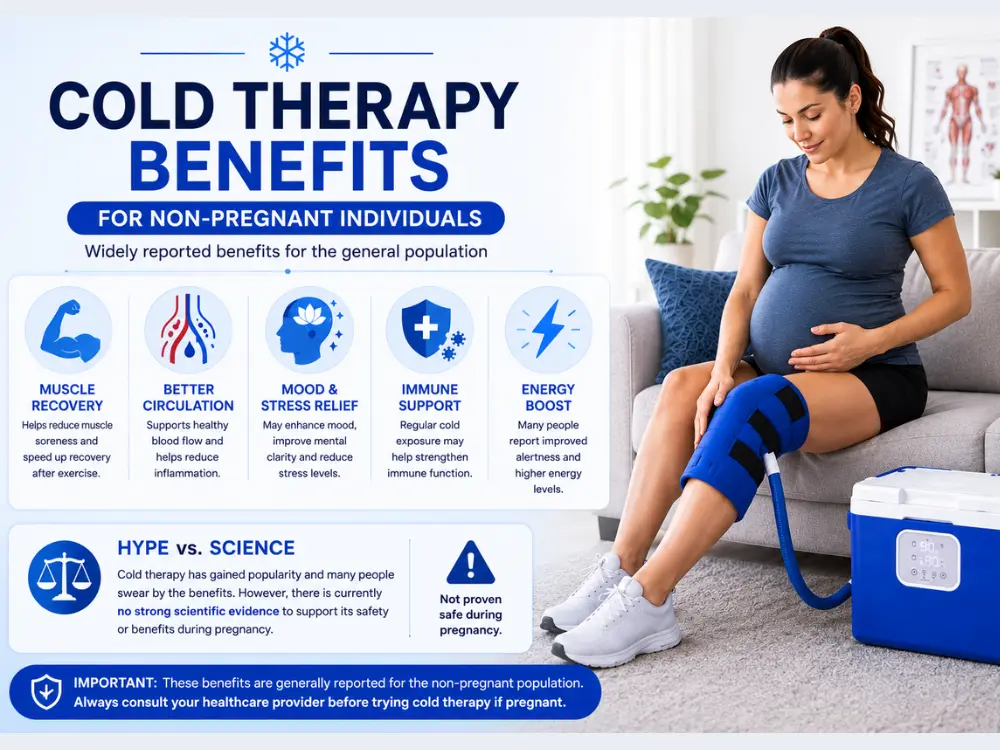
Cold plunging is commonly used by non-pregnant individuals to support muscle recovery, reduce inflammation and improve mental alertness and it is often part of a structured cold therapy rehabilitation protocol. These effects are linked to the body’s response to cold stress including circulation changes and nervous system activation. However these benefits have not been validated for pregnancy.
In general recovery settings people often turn to cold plunging for benefits such as:
- Reduced muscle soreness after intense exercise
- Improved circulation through vascular response cycles
- Temporary reduction in inflammation
- Increased mental alertness and focus
- A sense of relaxation following the initial shock response
- Short-term energy boost after exposure
That said, it’s important to keep this in perspective.
These benefits, such as ice therapy for sore muscles are primarily observed in healthy, non-pregnant individuals often under controlled conditions. What works well in a general recovery setting, such as cold therapy for sports injuries doesn’t always translate safely to pregnancy.
Deconstructing the Hype vs. Science
In my experience one of the biggest challenges with cold plunging is how quickly personal success stories turn into broad health recommendations.
There’s no doubt that many individuals report feeling better after cold exposure. However from a clinical standpoint feeling better doesn’t necessarily mean something is safe for every situation especially during pregnancy.
When we look at cold exposure in this context, the conversation changes. The body is already adapting to significant cardiovascular, hormonal and thermoregulatory demands. Introducing sudden cold stress into that system raises important questions that at this point haven’t been clearly answered by research.
Based on current medical understanding there is limited high-quality evidence confirming the safety or benefits of cold plunging during pregnancy.
A commonly accepted clinical perspective is:
“In the absence of clear evidence supporting safety particularly during pregnancy it’s best to avoid practices that introduce sudden physiological stress.”
This doesn’t mean cold therapy has no value. It simply means it needs to be approached with far more caution and context and many experts now recommend to stop icing, start modern cold therapy.
In real scenarios, I’ve seen people run into problems when they apply general wellness trends to situations that require individualized medical judgment and pregnancy is one of those situations, a pattern also seen in a PT’s audit of recovery mistakes.
Why Pregnancy Demands Extra Caution: Unpacking Physiological Changes
Increased Blood Volume and Cardiovascular Adaptations
During pregnancy, blood volume increases by approximately 30-50% and the heart works harder to circulate blood efficiently. These changes support fetal development but also make the cardiovascular system more sensitive to sudden stressors including rapid temperature shifts like cold immersion.
One thing I’ve consistently observed is how often this aspect gets overlooked when people consider practices like cold plunging while pregnant. The body isn’t functioning in its usual state it’s already working harder to support both mother and baby.
During pregnancy the cardiovascular system undergoes several key changes:
- Increased heart rate and cardiac output to meet higher oxygen and nutrient demands
- Reduced vascular resistance meaning blood vessels are more relaxed and responsive
- A 30-50% increase in total blood volume
These adaptations are well-documented by the American College of Obstetricians and Gynecologists (ACOG) and they highlight an important point the cardiovascular system is already under controlled strain.
When sudden cold exposure is introduced the body reacts quickly. Blood vessels constrict and blood pressure can shift rapidly. While this may be manageable under normal conditions the response can become less predictable during pregnancy.
Thermoregulation During Gestation
A pregnant body works continuously to maintain a stable internal temperature which is critical for fetal development. The fetus cannot regulate its own temperature and depends entirely on the mother. Sudden exposure to extreme temperatures hot or cold can disrupt this balance and is generally discouraged.
Temperature regulation becomes far more sensitive during pregnancy.
Many people are aware of the risks of overheating and rightly so. However what often gets overlooked is that extreme cold can also disrupt the body’s balance.
The fetus relies entirely on the mother to maintain a stable internal environment. Unlike adults the developing baby cannot adapt to rapid temperature changes.
Here are a few key points to consider:
- The maternal body is already working harder to regulate temperature due to increased metabolic demand
- The fetus depends completely on maternal thermoregulation
- While overheating risks are well studied the effects of cold stress are less understood but not necessarily safe
Because of this most medical guidance advises avoiding extreme temperature fluctuations altogether whether from hot baths, saunas or cold plunges.
In real recovery situations, I’ve found that consistency and stability always outperform extreme methods.
Hormonal Shifts and Vascular Responses
Hormonal changes during pregnancy particularly increases in progesterone and estrogen affect blood vessel behavior and circulation. Sudden cold exposure may amplify these effects causing rapid vasoconstriction and unpredictable changes in blood pressure.
Hormones play a major role in how the body adapts during pregnancy.
Progesterone and estrogen help:
- Relax blood vessels
- Support increased blood flow to the uterus and placenta
- Maintain stable circulation despite increased demand
What’s important to understand is how sensitive this balance can be.
When the body is suddenly exposed to cold water it reacts by constricting blood vessels to preserve core temperature, a process that differs between active and passive cold compression. Normally this is a protective response.
But during pregnancy, that same response may:
- Temporarily alter blood flow distribution
- Influence blood pressure regulation
- Create less predictable vascular reactions due to hormonal changes
This doesn’t automatically mean harm will occur but it does mean the body is being pushed outside its already adapted state.
Potential Risks: What We Know (and Don’t Know) About Cold Plunging in Pregnancy
Fetal Hypothermia Concerns
Cold plunging during pregnancy may pose a theoretical risk if the mother’s core temperature drops. Since the fetus depends entirely on maternal temperature regulation even short-term changes could affect the fetal environment particularly during early development when stability is critical.
One thing I’ve noticed is that many people assume short exposure to cold is harmless because the body warms up quickly afterward. In a non-pregnant state, that’s often true but pregnancy changes the equation.
The fetus cannot regulate its own temperature and relies completely on the mother’s internal environment. That’s where the concern begins.
A few important factors to keep in mind:
- The placenta plays a role in heat exchange between mother and baby
- A drop in maternal core temperature may indirectly influence fetal temperature
- Early pregnancy stages are especially sensitive where stable internal conditions are crucial for development
To be clear there isn’t strong direct evidence linking cold plunging to fetal hypothermia. However from a safety standpoint the absence of evidence doesn’t mean it’s risk-free.
That’s why most healthcare professionals take a cautious approach because even theoretical risks deserve attention when fetal development is involved.
Maternal Cardiovascular Stress: Blood Pressure Fluctuations & Vasoconstriction
Cold plunging activates a stress response that causes blood vessels to constrict and blood pressure to rise. During pregnancy when the cardiovascular system is already under strain this reaction may increase the risk of dizziness, fainting or complications.
To understand this better it helps to look at how the body reacts in real time.
The moment you enter cold water:
- Blood vessels constrict rapidly (vasoconstriction)
- Heart rate can increase suddenly
- Blood pressure may spike as the body works to preserve core heat
For a healthy non-pregnant individual this is usually a temporary and controlled response.
During pregnancy, however the cardiovascular system is already adapting to:
- Increased blood volume
- Changes in vascular tone
- Higher overall demand on heart function
Adding a sudden cold stressor into this system can:
- Cause sharp fluctuations in blood pressure
- Temporarily affect circulation
- Lead to symptoms like dizziness or lightheadedness
This becomes especially important for individuals with:
- Pre-existing hypertension
- Preeclampsia or related risk factors
- Cardiovascular sensitivity
One thing I’ve seen repeatedly is how easy it is to underestimate the intensity of this response. Cold immersion isn’t just refreshing it triggers a full-body stress reaction.
And during pregnancy even short-term stress responses need to be considered carefully, because they can influence the environment your baby depends on.
What We Don’t Know (And Why That Matters)
There is currently no strong clinical evidence confirming that cold plunging is safe during pregnancy. Due to this uncertainty medical guidance typically recommends avoiding practices that introduce physiological stress or have not been studied in pregnant populations.
This is the part that often gets overlooked.
There isn’t enough high-quality research to clearly define the risks but there also isn’t enough to confirm safety.
That uncertainty matters.
When we don’t have reliable data especially in something as sensitive as pregnancy the safest approach is to avoid practices that:
- Introduce rapid physiological stress
- Disrupt circulation or temperature regulation
- Haven’t been specifically studied in pregnant populations
From a practical standpoint, I’ve found that controlled predictable recovery methods are always the safer choice during pregnancy.
Risk of Premature Labor or Contractions
There is no direct evidence linking cold plunging to premature labor but sudden physiological stress and rapid temperature changes may theoretically influence uterine activity. Because pregnancy depends on internal stability most clinicians recommend avoiding extreme temperature exposure as a precaution.
This is one of those areas where people naturally want a clear yes-or-no answer but in reality it’s more nuanced.
The body reacts to sudden cold exposure as a stress event. That response can affect circulation, hormone release and even muscular activity. While research hasn’t directly connected cold plunging during pregnancy to contractions the concern lies in how the body behaves under stress.
A comparison I often share is this:
Medical professionals already advise limiting exposure to very hot baths or saunas during pregnancy because of their effect on core temperature and circulation. Cold plunges fall into a similar category not because they’re identical but because both introduce extreme temperature shifts that the body must rapidly adjust to.
For that reason, anything that could potentially stimulate uterine activity or disrupt internal balance is approached cautiously especially later in pregnancy.
Elevated Stress Hormones (Cortisol)
Cold exposure activates the body’s stress response increasing hormones like cortisol and adrenaline. While this may offer short-term benefits in non-pregnant individuals repeated or intense stress responses during pregnancy may not be ideal for maternal or fetal health.
It’s important to recognize that cold exposure isn’t just about how it feels physically it triggers a full internal response.
The moment you enter cold water:
- The nervous system activates a fight-or-flight response
- Stress hormones like cortisol and adrenaline increase
- Heart rate and alertness rise quickly
In non-pregnant individuals short bursts of this response can sometimes support recovery.
During pregnancy, however the body is already working in a highly adaptive state.
Repeated or intense stress activation can place added strain on:
- Hormonal balance
- Cardiovascular stability
- Overall recovery capacity
This doesn’t mean a single exposure will automatically cause harm. But it highlights an important point not every “beneficial stress” remains beneficial during pregnancy.
Physical Safety: Falls, Injury and Infection Risks
From a practical standpoint these are some of the most immediate risks and often the most overlooked.
Many people focus only on internal effects but the physical environment around cold plunge setups also matters and cleaning a cold therapy machine properly reduces infection risk. During pregnancy, balance, coordination and stability naturally change which increases risk.
Here are some key concerns:
- Falls: Wet and slippery surfaces combined with dizziness and a shifting center of gravity can significantly increase fall risk
- Injury: Cold exposure may lead to muscle stiffness, cramping or numbness making movement less stable
- Infection: Poor water hygiene can introduce bacteria or fungi and the immune system is more sensitive during pregnancy
Even minor incidents can become more complicated during this phase, which is why these risks shouldn’t be underestimated and preventing ice burns is a key part of cold therapy safety.
The Absence of Direct Research: Why Caution Matters
There is limited high-quality research on cold plunging during pregnancy. Because of this uncertainty medical professionals generally recommend avoiding practices that introduce physiological stress or have not been specifically studied in pregnant populations.
This is the point I always emphasize most.
There simply isn’t enough reliable research to confirm safety and that matters.
Most of what we understand comes from:
- Established physiological responses
- Clinical knowledge of pregnancy adaptations
- Data from non-pregnant populations
Sometimes people interpret this lack of evidence as reassurance. In reality, it’s the opposite.
When strong data is missing especially in pregnancy medical guidance leans toward caution.
That’s not being overly careful. It’s responsible care.
Expert Tip: Prioritize Fetal Safety Above All
At the end of the day, every decision during pregnancy should come back to one principle protecting the health and stability of the developing baby.
If a practice:
- Lacks clear safety data
- Introduces unnecessary physiological stress
- Has safer alternatives available
…it’s best approached cautiously or avoided altogether.
In real recovery scenarios the most effective strategies aren’t the most intense they’re the ones that are controlled, consistent and aligned with the body’s needs during pregnancy.
The Current Medical Stance: A Call for Caution, Not Endorsement
Lack of Official Guidelines from Major Medical Bodies
There are currently no official guidelines from major health organizations on cold plunging during pregnancy. This includes the American College of Obstetricians and Gynecologists, Centers for Disease Control and Prevention and World Health Organization. The absence of recommendations reflects limited research and a precautionary approach to maternal and fetal safety.
When patients ask whether cold plunge while pregnant is safe they’re often expecting a clear definitive answer backed by official guidance.
But the reality is more nuanced.
At this time no major medical organization provides specific recommendations or endorsements for cold plunging during pregnancy and that’s intentional.
When strong evidence is lacking, healthcare bodies avoid making recommendations that could carry unknown risks, and they often refer to established cryotherapy contraindications for guidance. This approach is based on what’s known as the precautionary principle which plays an important role in maternal care.
The Principle of “First Do No Harm” in Obstetrics
Medical decisions in pregnancy follow the principle of “first, do no harm.” If a practice has uncertain safety such as cold plunging it is generally avoided to protect both the mother and the developing baby.
In clinical practice, this principle primum non nocere guides many decisions.
I’ve come across situations where a method might offer potential benefits but without clear evidence of safety, it’s usually not recommended during pregnancy.
Cold plunging is a good example of this.
A perspective often shared in medical settings is:
“If a practice introduces physiological stress and hasn’t been proven safe in pregnancy it’s better to avoid it until more evidence is available.”
This isn’t about being overly cautious it’s about maintaining predictability and safety in a sensitive physiological state.
Transparency and Nuance in Medical Guidance
There is no clear yes-or-no answer on cold plunging during pregnancy due to limited research. Medical guidance focuses on potential risks and unknowns to help individuals make informed safety-focused decisions.
One thing I always emphasize is the importance of being honest about uncertainty.
In areas like cold plunging during pregnancy where research is limited giving a simple “safe” or “unsafe” label can be misleading.
Instead responsible medical guidance uses terms like:
- Potential risks
- Theoretical concerns
- Insufficient evidence
This isn’t vague it’s accurate.
And in many cases, I’ve found that people feel more confident when they understand the full context rather than being given overly simplified answers.
Expert Tip: Beware of Anecdotal Evidence
This is where many people unintentionally get misled.
There’s a growing reliance on:
- Social media experiences
- Influencer recommendations
- Personal success stories
While these may be well-meaning they don’t replace medical evidence.
What works for one person especially outside of pregnancy doesn’t automatically apply in a completely different physiological state.
Every pregnancy is different. Every response is different.
That’s why decisions during pregnancy should always be based on clinical reasoning and personalized medical advice, not trends.
Empowering Your Conversation: Discussing Wellness with Your Healthcare Provider
Before discussing practices like cold plunging during pregnancy it helps to clearly define your goals, track your current routine and note specific symptoms. This allows your healthcare provider to give more personalized, safe and effective guidance.
In my experience, the quality of medical advice you receive often depends on how clearly you communicate your situation. When patients come prepared conversations become far more focused and much more useful.
Here’s how I usually suggest approaching it:
- Reflect on your “why”
Think about what’s driving your interest in something like cold plunge while pregnant. Is it for swelling, fatigue, stress relief or general recovery?
When your goal is clear your doctor can suggest safer targeted alternatives that serve the same purpose. - Document your current wellness routine
Make a simple list of what you’re already doing exercise, supplements, recovery methods and any exposure to heat or cold.
This gives your provider a clearer picture of how your body is already being supported. - Note specific pregnancy discomforts
Try to be precise. Instead of saying “I feel uncomfortable,” describe what you’re actually experiencing such as:
- Swollen ankles
- Lower back pain
- Poor sleep
- Persistent fatigue
- In real situations, these details make a meaningful difference in how recommendations are tailored.
‘Ask Your Doctor’: A Conversation Starter Checklist
To make things easier I often recommend using a simple checklist during your appointment. It helps keep the discussion focused and ensures you don’t forget anything important.
You can use questions like:
- I’m considering cold plunging (or another wellness practice) for stress relief or energy. What are your medical recommendations for this during pregnancy?
- Given my health history and current trimester are there specific risks I should be aware of with extreme temperature exposure?
- What safe, evidence-based alternatives would you suggest for managing my symptoms such as swelling, fatigue or aches?
- Are there any changes I should make to my current routine?
- What warning signs should I watch for that indicate I should stop an activity immediately?
- Can you recommend pregnancy-safe therapies or tools that support recovery and comfort?
Doctor’s Notes / Recommendations
From a practical standpoint this is where everything starts to come together.
I’ve seen many people feel overwhelmed by conflicting advice especially around topics like cold plunge while pregnant. But once the focus shifts to your own body, your symptoms and your medical history the path forward becomes much clearer.
What Information to Provide Your Doctor
To receive accurate personalized advice about practices like cold plunging during pregnancy, share your medical history, current pregnancy details and your specific goals. This helps your healthcare provider assess safety based on your individual situation rather than general assumptions.
In many cases, I’ve noticed that consultations fall short simply because there isn’t enough context. A common question is, “Is cold plunge safe while pregnant?” but without background details even a good doctor can only offer a general response.
If you want guidance that’s actually useful here’s what you should clearly communicate:
- Your full medical history
Include any pre-existing conditions such as hypertension, circulation issues or previous pregnancy complications. These factors can significantly influence how your body responds to cold exposure. - Details about your current pregnancy
Be specific about your trimester, symptoms and whether there have been any complications. For example, considerations in the first trimester can be very different from those in the third. - Your reason for considering cold plunging
Whether it’s swelling, fatigue, muscle discomfort or stress relief your “why” matters. When this is clear your provider can suggest safer more appropriate alternatives that meet the same need.
From a practical standpoint, the more complete the picture the more precise and useful the advice becomes.
Questions to Ask Your Healthcare Provider
When discussing cold exposure during pregnancy ask clear questions about safety, personal risk factors and alternatives. This ensures you leave with practical medically sound guidance tailored to your situation.
I always encourage asking specific questions rather than general ones it leads to clearer answers and better decisions.
You can use questions like:
- “What are the general safety guidelines for cold exposure during pregnancy?”
This helps you understand what is broadly considered safe or risky. - “How might cold plunging affect my specific condition or pregnancy stage?”
This is important because risk levels vary from person to person. - “Can you recommend safe evidence-based alternatives for my symptoms?”
In many cases, there are more controlled and pregnancy-safe options that provide similar relief.
In real conversations, the goal isn’t just to get a yes or no answer it’s to understand what’s appropriate for your body at this stage.
Safe & Soothing Alternatives for Pregnancy Wellness
Addressing Common Pregnancy Discomforts Safely
Cold plunging is not recommended during pregnancy but several safe, evidence-based alternatives can effectively manage swelling, pain, fatigue and stress. These approaches focus on gentle circulation, controlled movement and relaxation without exposing the body to extreme physiological stress and for non-pregnancy related pain, cold therapy for arthritis pain may be an option.
In my experience, this is where the conversation shifts from limitation to empowerment.
Many patients initially feel discouraged when they hear that options like cold plunging while pregnant may not be advisable. But once we focus on safer, targeted methods they often experience more consistent and reliable relief and a complete guide to cold therapy for pain relief can offer additional safe strategies.
From a practical standpoint, the goal is simple: support the body without adding unnecessary stress and understanding the difference between heat and cold therapy can help you choose the right approach.
Practical Alternatives for Common Pregnancy Discomforts
Here’s a simplified, easy-to-follow guide I often recommend:
Swelling (Edema in ankles/feet)
- What helps: Elevating the legs, compression socks, gentle walking
- Why it works: Improves circulation and reduces fluid buildup
- Keep in mind: Elevate legs above heart level for 15-20 minutes. Use properly fitted compression socks and stay hydrated
Fatigue & Low Energy
- What helps: Light exercise (walking, swimming), rest, balanced nutrition
- Why it works: Supports circulation, improves oxygen delivery, stabilizes energy levels
- Keep in mind: Aim for moderate activity if approved by your doctor. Avoid overexertion
Muscle Aches & Back Pain
- What helps: Prenatal yoga, gentle stretching, warm baths, supportive pillows, massage
- Why it works: Relieves tension, improves flexibility, supports posture
- Keep in mind: Keep bath temperature below 100°F (37.8°C). Avoid deep pressure on the abdomen
Stress & Anxiety
- What helps: Mindfulness, breathing exercises, light walks, support groups
- Why it works: Calms the nervous system and reduces cortisol levels
- Keep in mind: Consistency matters more than intensity. Seek help if symptoms persist
Sleep Issues (Insomnia)
- What helps: Consistent routine, comfortable sleep setup, reduced caffeine, light stretching
- Why it works: Supports circadian rhythm and relaxation
- Keep in mind: Keep your sleep environment cool, dark and quiet. Use pregnancy pillows for support
Leg Cramps
- What helps: Gentle stretching, hydration, magnesium-rich foods
- Why it works: Supports muscle function and reduces cramping
- Keep in mind: Stretch before bed and consult your doctor before supplements
Heartburn / Acid Reflux
- What helps: Smaller meals, upright posture, avoiding trigger foods
- Why it works: Reduces stomach pressure and acid reflux
- Keep in mind: Avoid lying down immediately after eating. Elevate your head slightly during sleep
Pelvic Pressure / Discomfort
- What helps: Support belts, pelvic floor exercises, rest
- Why it works: Provides structural support and reduces strain
- Keep in mind: Use properly fitted belts and avoid prolonged standing
Why These Alternatives Work Better
In real recovery scenarios, I’ve consistently seen that low-impact controlled approaches outperform extreme methods during pregnancy.
These options:
- Work with your body’s natural adaptations
- Support stable circulation and hormonal balance
- Reduce discomfort without triggering stress responses
- Are widely supported in pregnancy care
That’s the key difference.
Because while something like ice baths during pregnancy might seem like a quick fix, it introduces unpredictable physiological stress which is exactly what we try to avoid.
Product Recommendation: Pregnancy-Safe Comfort Tools
Pregnancy-safe comfort tools like supportive pillows, compression socks, warm Epsom salt baths and maternity belts can help manage common discomforts without exposing the body to extreme stress. These options support circulation, posture and relaxation making them far safer than practices like cold plunging during pregnancy.
In practice, I’ve seen how much of a difference the right tools can make. Small adjustments like proper support or improved circulation often lead to noticeable improvements in comfort and sleep.
The key is choosing solutions that work with your body’s natural changes not against them.
Recommended Comfort Tools
Here are some of the most effective options:
- Pregnancy pillows
Provide support for the back, belly and hips. Better alignment during sleep can significantly reduce discomfort and improve rest quality. - Compression socks
Help reduce swelling in the legs and feet by improving circulation. Especially useful if you’re standing for long periods or experiencing fluid retention. - Epsom salts (for warm baths)
When used in warm water (below 100°F / 37.8°C), they can help relax muscles and ease tension. This is a much safer option compared to ice baths during pregnancy. - Support belts
Help relieve pressure on the lower back and pelvis as your body adapts. Particularly beneficial in later stages of pregnancy.
Expert Tip: Explore Prenatal-Specific Wellness
One of the safest approaches is to choose activities specifically designed for pregnancy.
I often recommend:
- Prenatal yoga
- Swimming
- Walking
- Gentle stretching
These aren’t just lighter versions of exercise they’re designed to support circulation, reduce strain and improve mobility without triggering unnecessary stress.
In real scenarios, I’ve seen these methods provide more consistent and sustainable relief compared to extreme approaches like cold plunging while pregnant.
If possible look for certified prenatal instructors or programs that understand pregnancy-specific needs.
Expert Tip: Hydration is Key
Hydration is simple but it’s often overlooked.
Staying properly hydrated helps:
- Support circulation
- Reduce swelling
- Prevent fatigue
- Regulate body temperature
In many cases, I’ve seen noticeable improvements in symptoms like headaches, low energy and mild swelling just by maintaining consistent hydration.
A simple approach works best drink water regularly throughout the day rather than in large amounts at once.
Real Voices, Real Experiences: Choosing Safe Alternatives
In real situations, many people initially consider trends like cold plunging but shift once they understand the risks.
Here are a few examples that reflect that transition:
- “At around 30 weeks, I was considering cold showers for energy. After speaking with my doctor, I switched to short daily walks and light stretching and it actually worked better for me.”
- “We looked into ice baths for swelling but our OB recommended compression socks and leg elevation. Within a week, the difference was noticeable.”
- “Before pregnancy, I relied on intense recovery methods. Now, prenatal yoga and warm baths feel much more effective and a lot safer.”
These experiences highlight something important I’ve seen consistently when safety becomes the priority better alternatives naturally follow.
Looking Ahead: Postpartum Considerations and Continued Wellness
Cold plunging may be reconsidered after pregnancy but only with medical clearance and a gradual, controlled approach, similar to protocols for cold therapy after knee surgery. The postpartum phase involves recovery, hormonal shifts and healing so any reintroduction to cold exposure should be slow, monitored and aligned with your body’s readiness.
It’s completely natural to want to return to your normal routines after pregnancy especially if you were active beforehand.
That said, the postpartum period is not an immediate reset.
Your body is still recovering from childbirth, hormone levels are adjusting and depending on your situation, there may be additional factors like C-section recovery, breastfeeding demands or ongoing fatigue.
A more balanced approach tends to work better in the long run.
What I generally recommend is:
- Focus on recovery first prioritize rest, gentle movement and gradual strength rebuilding
- Wait for medical clearance before reintroducing more intense practices like cold plunging
- Start gradually for example with cool (not extreme) showers instead of full immersion
- Pay attention to how your body responds especially in terms of energy, circulation and comfort
In practice, I’ve seen much better outcomes when people take a steady patient approach rather than trying to return to everything at once.
Conclusion: Prioritizing Maternal & Fetal Health Above All
Cold plunging during pregnancy is not recommended due to limited research and potential risks. The safest approach is to avoid extreme cold exposure and consult your healthcare provider for personalized guidance.
If there’s one thing I would emphasize, it’s this:
When it comes to practices like cold plunging while pregnant the lack of clear safety evidence is reason enough to be cautious and in most cases to avoid it.
Pregnancy isn’t the time to experiment with extreme recovery methods. It’s a phase where stability, consistency and safety matter far more than intensity.
A few simple principles can help guide your decisions:
- Speak openly with your OB/GYN or midwife
- Evaluate any wellness practice through a safety-first lens
- Choose options that are clinically supported and pregnancy-appropriate
The Power of Informed Choice During Pregnancy
In my experience, the most confident pregnancies aren’t built on restriction they’re built on understanding.
When you know:
- How your body is changing
- What risks are involved
- Which options are actually safe
…you’re able to make decisions that support both your well-being and your baby’s development.
That’s real empowerment.
Not following trends but making choices that are right for you.
Continuing to Learn About Safe Recovery
Pregnancy is a unique stage of life and treatments that are appropriate at other times may not be suitable while you’re expecting. If you’re looking for ways to manage discomfort during pregnancy, always follow the advice of your obstetrician or maternity care provider.
If you later need cold therapy for an injury or post-operative recovery after pregnancy, FeelGoodEase provides educational information about evidence-based cold therapy and home rehabilitation to help people better understand their recovery options. Any treatment or equipment should always be used according to the guidance of a qualified healthcare professional.
